English
  中文简体
中文简体 We are a national high-tech enterprise. At present, there are many kinds of self-woven and cooperatively processed fabrics, including microfiber warp-knitted towel cloth, weft-knitted towel cloth, coral fleece, etc.
Content
Structural Interplay Between Thread Density and Graphic Definition
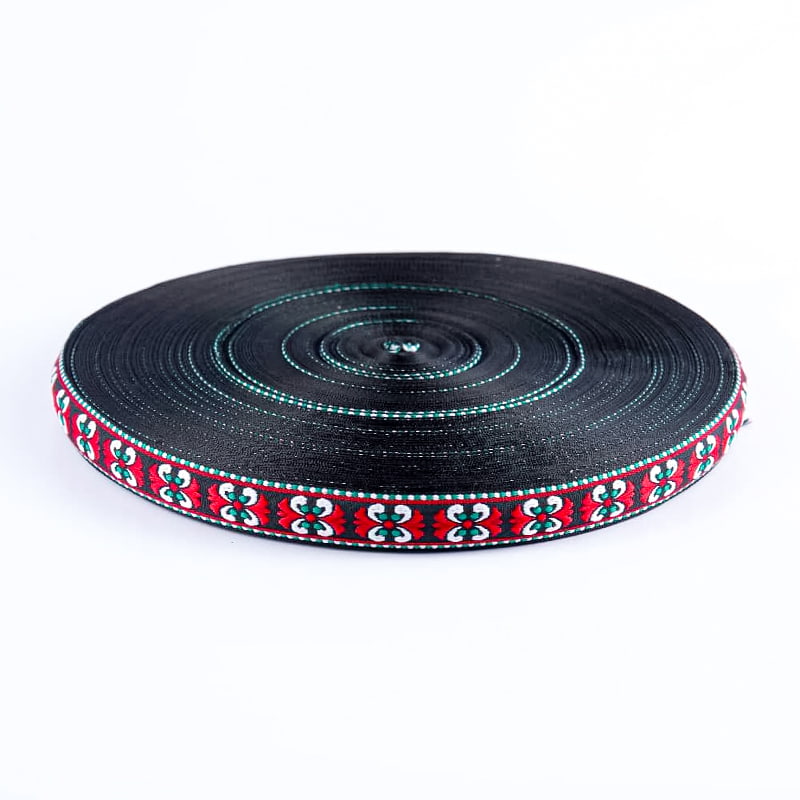
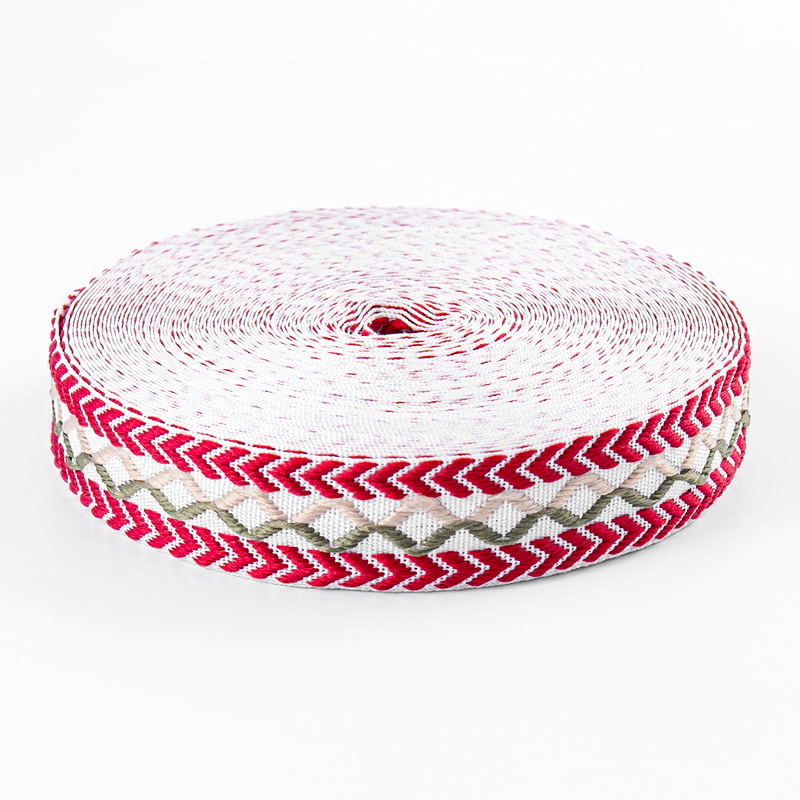
- The clarity of intricate logos within custom jacquard webbing is primarily governed by the pixels-per-inch equivalent of the warp and weft intersections. When analyzing how thread count affects jacquard patterns, engineers must calculate the "cover factor" to ensure that the base weave does not distort the high-definition branding elements during high-speed production.
- Utilizing high-tenacity polyester or nylon filaments requires a specific warp and weft density for clear logos. If the density is too low, the curvature of a logo will appear stepped or "pixelated," similar to a low-resolution digital image. By increasing the needle count on the electronic jacquard head (e.g., from 960 to 2400 hooks), the intricate logo resolution in jacquard weaving is significantly enhanced, allowing for the reproduction of fine serif fonts and complex geometric shapes.
- The benefits of high-density jacquard weaving extend beyond aesthetics. A tighter weave structure reduces the "float" length of the decorative yarns. Long floats are susceptible to snagging and abrasion, which can degrade the logo's integrity over the product's lifecycle. Thus, a high-density matrix ensures that the durability of custom jacquard designs meets industrial standards for outdoor and tactical gear.
Mechanical Properties and Tensile Integrity of Patterned Webbing
- When comparing custom jacquard webbing vs screen printed webbing, the former offers superior longevity because the logo is a structural component of the fabric rather than a surface application. However, the complexity of the weave can influence the tensile strength of jacquard webbing. Each interlacing point acts as a stress distributor; therefore, a balanced thread density is required to maintain a breaking strength that exceeds 5,000 Newtons for safety-critical applications.
- To determine if high thread density makes webbing stiffer, engineers measure the flexural rigidity using ASTM D1388 standards. While a higher thread count increases the material's "hand feel" and thickness, it can also reduce the webbing elongation at break. This trade-off must be managed during the design phase to ensure the webbing remains compatible with automated sewing machines and buckle hardware.
- The ra surface finish of jacquard textiles is another critical metric. A higher thread density results in a smoother, more lustrous surface that reduces the friction coefficient when the webbing passes through metal adjusters. This minimizes heat buildup and prevents the synthetic fibers from glazing or melting under dynamic loads.
Material Selection and Colorfastness Standards
- Achieving colorfastness in custom jacquard webbing involves the use of solution-dyed (dope-dyed) yarns. Because the color is integrated into the polymer melt before extrusion, it exhibits exceptional resistance to UV degradation and industrial laundering. This is why dope-dyed yarn is used for jacquard webbing: it ensures that the intricate logo remains vibrant even after 500 hours of accelerated weathering tests according to ISO 105-B02.
- Technical Comparison of Webbing Density Parameters:
| Density Grade | Warp Ends per cm | Weft Picks per cm | Logo Detail Capability |
| Standard Industrial | 20 - 30 | 12 - 18 | Block Letters (>5mm) |
| High-Definition Jacquard | 45 - 65 | 22 - 32 | Fine Lines (<1mm) |
| Tactical Specification | 50 - 70 | 25 - 35 | Complex Gradients/Patterns |
Quality Control and Automated Processing Compatibility
- Ensuring thickness uniformity in custom jacquard webbing is vital for high-speed automated assembly lines. Variations in the weave density can lead to "needle deflection" or skipped stitches during the bartacking process. Digital monitoring systems on the loom are used to maintain a tolerance of +/- 0.05mm across the entire production run.
- For sustainable custom jacquard webbing options, GRS-certified (Global Recycled Standard) rPET yarns are increasingly specified. These recycled fibers must undergo rigorous "whiteness" and "tenacity" testing to ensure they do not compromise the visual clarity or the breaking load of patterned webbing when compared to virgin petroleum-based polymers.
Engineering FAQ
- Does a higher thread density increase the cost? Yes, as it requires more yarn per meter and a slower loom speed to ensure precision interlacing.
- Can I weave a QR code into jacquard webbing? Yes, but it requires a high-definition 2400-hook jacquard machine and a specific contrast ratio between the warp and weft colors.
- What is the minimum width for an intricate logo? Typically, 15mm is the minimum width to maintain legibility for complex text, though simple logos can be achieved at 10mm.
- Does jacquard webbing shrink more than plain webbing? Patterned webbing can have higher thermal shrinkage due to the varied tension of the pattern yarns; pre-heat setting is recommended.
- How do I prevent the logo from "bleeding" into the background? Use high-density weft picking to ensure the background color is completely hidden by the pattern yarn "floats."
Technical References
- ISO 13934-1: Determination of maximum force and elongation at maximum force using the strip method.
- ASTM D6770: Standard Test Method for Abrasion Resistance of Textile Webbing (Hex Bar Method).
- Oeko-Tex Standard 100: Testing for harmful substances in textile products and accessories.