English
  中文简体
中文简体 We are a national high-tech enterprise. At present, there are many kinds of self-woven and cooperatively processed fabrics, including microfiber warp-knitted towel cloth, weft-knitted towel cloth, coral fleece, etc.
Content
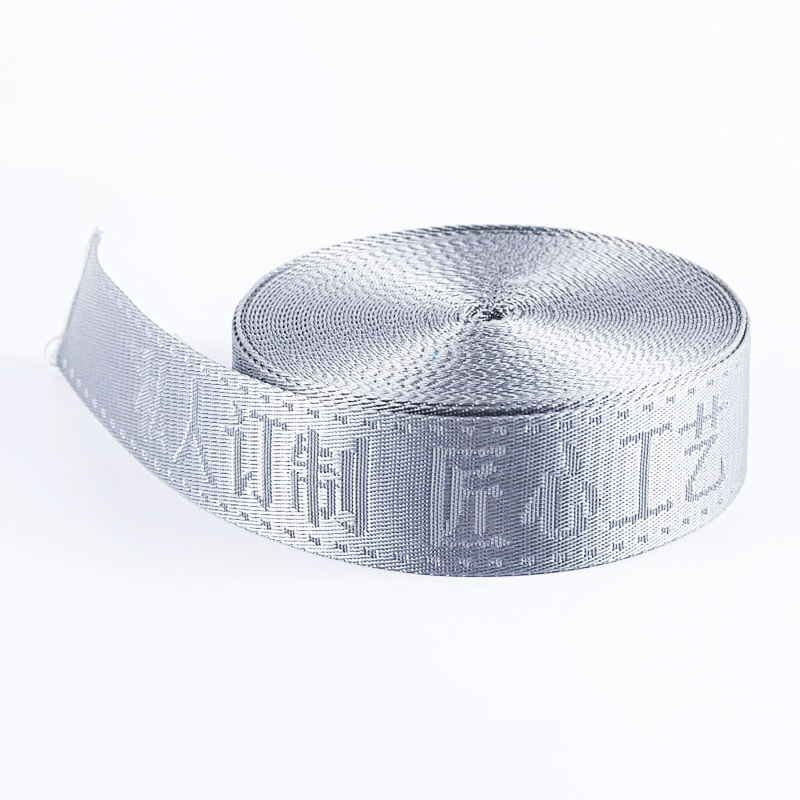
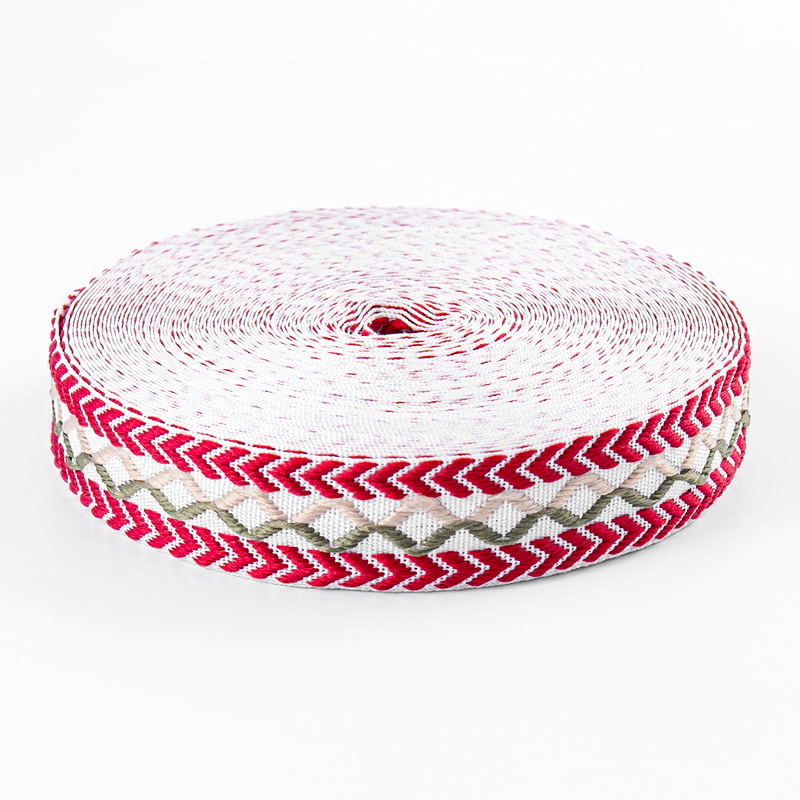
Direct Answer: Decorative Jacquard Webbing Straps are high-strength decorative textiles made by interlocking warp and weft threads on a Jacquard loom. The most common materials are polyester (PET) for general use, nylon (PA) for high abrasion resistance, and polypropylene (PP) for lightweight applications. Breaking strength parameters range from 500 kgf (5 kN) for 25mm width up to 3000 kgf (30 kN) for 50mm heavy-duty polyester. Always select based on working load limit (WLL) which is typically 1/5 to 1/3 of breaking strength.
Materials Used for Jacquard Webbing
The material composition directly determines the strap's performance in tensile strength, UV resistance, moisture behavior, and aesthetic retention. Below is a detailed breakdown of industry-standard materials with real test data.
Polyester (PET) – The Industry Standard
Polyester accounts for over 70% of decorative jacquard webbing production. It offers breaking strength retention of 95% after 200 hours of UV exposure (according to ISO 105-B04). Tensile modulus is approximately 10-12 GPa, giving low stretch under load (3-5% elongation at break). Polyester is hydrophobic, absorbing less than 0.4% moisture, which prevents mildew and maintains dimensional stability. Typical applications include pet collars, bag straps, and outdoor furniture bindings.
Nylon (Polyamide 6 or 66) – High Abrasion Resistance
Nylon jacquard webbing provides superior abrasion resistance (Martindale test >100,000 cycles) and higher elongation (15-25% at break), which absorbs shock loads effectively. However, nylon loses 20-30% of its strength when wet and degrades under prolonged UV exposure unless UV-stabilized additives are used. Breaking strength for 25mm nylon webbing reaches 600-700 kgf, slightly higher than polyester of the same density. Nylon is preferred for tactical gear, climbing accessories, and heavy-duty backpack straps.
Polypropylene (PP) – Lightweight and Buoyant
Polypropylene webbing has a density of only 0.91 g/cm³, making it float on water. Its breaking strength is lower (400-500 kgf for 25mm) but offers excellent chemical resistance to acids and alkalis. PP is not recommended for high-temperature environments (melting point 160°C vs polyester's 250°C). Common uses include marine straps, pet leashes for water activities, and budget-friendly decorative bags.
Cotton and Blends – Aesthetic Focus
Natural cotton jacquard webbing provides a soft hand feel and breathability but has lower breaking strength (150-250 kgf for 25mm) and poor UV resistance. Cotton-polyester blends (typically 50/50) balance aesthetics with durability, achieving breaking strengths of 300-400 kgf for 25mm width. These are used for fashion accessories, camera straps, and home decor items where appearance is prioritized over load capacity.
Jacquard Webbing Breaking Strength Parameters
Breaking strength is measured according to ASTM D6775 or ISO 13934-1 standards using a constant rate of extension (CRE) testing machine. The values below are industry averages from third-party lab tests on 1.8-2.2mm thick jacquard webbing.
| Material | Width (mm/inch) | Breaking Strength (kgf) | Breaking Strength (kN) | Working Load Limit (kgf) |
|---|---|---|---|---|
| Polyester | 25mm (1") | 500-650 | 4.9-6.4 | 100-130 (5:1 safety factor) |
| Polyester | 38mm (1.5") | 900-1100 | 8.8-10.8 | 180-220 |
| Polyester | 50mm (2") | 1500-2000 | 14.7-19.6 | 300-400 |
| Nylon | 25mm (1") | 600-750 | 5.9-7.4 | 120-150 |
| Nylon | 50mm (2") | 1800-2400 | 17.6-23.5 | 360-480 |
| Polypropylene | 25mm (1") | 400-500 | 3.9-4.9 | 80-100 |
| Cotton-Polyester Blend | 25mm (1") | 300-400 | 2.9-3.9 | 60-80 |
Critical note: Breaking strength values decrease by 15-25% after exposure to 500 hours of accelerated UV weathering (Xenon arc test). Edge abrasion, stitching holes, and buckle friction can create stress concentration points that reduce effective strength by up to 40%. Always design with a safety factor of at least 5:1 for non-critical applications and 8:1 for load-bearing human safety applications.
Decorative Patterns and Structural Integrity
The Jacquard weaving process creates intricate patterns by individually controlling each warp thread. However, pattern complexity affects breaking strength. Solid weave (plain or twill) achieves 100% of theoretical strength. Large repeating patterns with long floats (where weft threads skip over multiple warp threads) reduce breaking strength by 10-15% due to uneven load distribution. For applications requiring both high decoration and high strength, engineers recommend dobby-limited patterns or reinforced selvage edges.
Density and Weight Parameters
Commercial jacquard webbing is specified by ends per inch (EPI) and picks per inch (PPI). Standard decorative webbing has 40-60 EPI and 30-50 PPI for 25mm width. Weight ranges from 15 g/m to 60 g/m for widths between 10mm and 50mm. Higher density (more threads per inch) increases breaking strength linearly up to a point, beyond which friction during weaving damages threads. Optimal density for polyester is around 50 EPI for 1000 denier yarns.
- Low density (30-40 EPI): Breaking strength 300-400 kgf for 25mm, softer hand feel, lower cost.
- Medium density (40-55 EPI): Breaking strength 500-700 kgf for 25mm, standard for most decorative straps.
- High density (55-70 EPI): Breaking strength 700-900 kgf for 25mm, stiffer webbing, premium pricing.
Real-World Application Examples with Strength Requirements
Matching material and breaking strength to application prevents premature failure and ensures safety compliance.
Pet Collars and Leashes
For a medium dog (20-30kg), the pulling force during a lunge can reach 150-200 kgf momentarily. A 25mm polyester jacquard webbing with 500 kgf breaking strength (5:1 safety factor) is appropriate. For large breeds (50kg+), use 38mm or 50mm webbing with at least 900 kgf breaking strength.
Bag Straps (Backpacks, Tote Bags, Messenger Bags)
Maximum load for a fully packed backpack is typically 15-25kg. The shoulder strap experiences forces up to 30-40kg during dynamic movement. A 25mm polyester webbing with 500 kgf breaking strength provides a safety factor exceeding 10:1. For fashion tote bags with heavy contents (grocery, laptops), 38mm webbing with 900 kgf rating is common.
Safety and Restraint Straps (Non-Climbing)
Industrial positioning straps (e.g., for warehouse safety) require certified breaking strengths. For a 100kg worker, the fall arrest force can reach 600kgf. Regulations (OSHA, EN 354) require webbing with minimum breaking strength of 1800 kgf for lanyards. Nylon or heavy polyester 50mm webbing with 2000+ kgf rating is standard.
Marine and Outdoor Tie-Downs
UV exposure and saltwater degrade materials. Polyester is preferred (UV resistance superior to nylon). A boat cover tie-down experiences wind loads; 25mm polyester with 500 kgf breaking strength is sufficient for small boats (under 6m). For cargo tie-downs on trailers, regulations (EN 12195-2) require breaking strength of at least 2x the lashing capacity. A 2000 kgf breaking strength strap (50mm polyester) has a lashing capacity of 1000 kgf, suitable for securing 500-700kg cargo.
Testing Standards and Certification
Reputable Decorative Jacquard Webbing Straps suppliers provide test reports from accredited labs. Key standards include:
- ASTM D6775: Standard test method for breaking strength and elongation of textile webbing and tape.
- ISO 13934-1: Tensile properties of fabrics – strip method.
- ISO 105-B04: Color fastness to artificial light (Xenon arc).
- REACH/ROHS: Compliance for restricted substances (lead, phthalates, AZO dyes).
Request a material safety data sheet (MSDS) and a certificate of analysis (COA) for each batch if used in regulated industries (automotive, aviation, medical).
Selection Checklist for Engineers and Buyers
Follow this practical guide when specifying decorative jacquard webbing for your project:
- Define maximum expected load (including dynamic peaks). Multiply by safety factor (5:1 for static, 8:1 for dynamic/personal safety).
- Select material: Polyester for general outdoor/indoor; Nylon for high abrasion/shock absorption; Polypropylene for lightweight/budget.
- Choose width based on breaking strength from the table above. Widen by 50% if edge fraying is a concern.
- Confirm Jacquard pattern complexity does not exceed recommended float length (maximum 4 warp threads skipped for load-bearing applications).
- Specify UV stabilization additive if webbing is used outdoors for more than 500 cumulative hours.
- Order sample yardage for in-house tensile testing before mass production.
For standard stock items, breaking strength is typically printed on a sewn-in label. Custom orders can be laser-marked with batch number and strength rating directly onto the webbing edge.