English
  中文简体
中文简体 We are a national high-tech enterprise. At present, there are many kinds of self-woven and cooperatively processed fabrics, including microfiber warp-knitted towel cloth, weft-knitted towel cloth, coral fleece, etc.
Content
- 1 Introduction: The Strategic Component in Modern Manufacturing
- 2 Part 1: Technical Foundations – Deconstructing the Jacquard Weave Engine
- 3 Part 2: Material Science and Application-Specific Engineering
- 4 Part 3: The Fengrun Quality Assurance Protocol
- 5 Part 4: Conclusion – Engineering Trust into Every Strap
- 6 Frequently Asked Questions (FAQs)
- 6.1 1. What are the key technical differences between jacquard-woven and printed/sublimated webbing?
- 6.2 2. How do you ensure color accuracy and consistency across production runs for custom logo straps?
- 6.3 3. For a heavy-duty backpack, what specific mechanical properties should I prioritize in the specification?
- 6.4 4. Can you produce webbing that meets specific international safety or flammability standards?
- 6.5 5. What is the lead time and process for developing a completely new custom jacquard webbing design?
Introduction: The Strategic Component in Modern Manufacturing
In the intricate supply chain of fashion, furniture, and consumer goods, a decorative jacquard webbing strap is rarely just a trim. For engineers and procurement specialists, it is a critical load-bearing or interface component that must satisfy a complex equation of tensile strength, abrasion resistance, chemical stability, and precise aesthetic delivery. Founded in 2000 and rooted in China's textile hub of Haining, Fengrun Rope Weaving Co., Ltd. has evolved from a traditional manufacturer into a specialist in engineering these sophisticated textile solutions. This guide dissects the decorative jacquard webbing strap from an industrial engineering perspective, detailing the material science, mechanical weaving processes, and quality protocols that transform polymer resins into reliable, high-performance components for global brands.
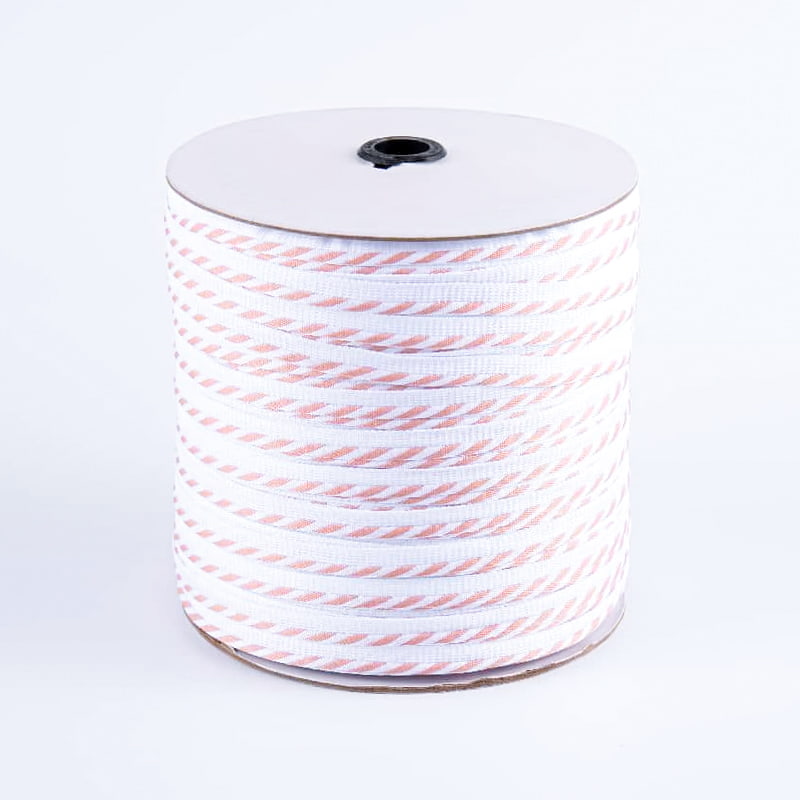
Part 1: Technical Foundations – Deconstructing the Jacquard Weave Engine
1.1 Beyond Decoration: Defining the Engineering-Grade Webbing
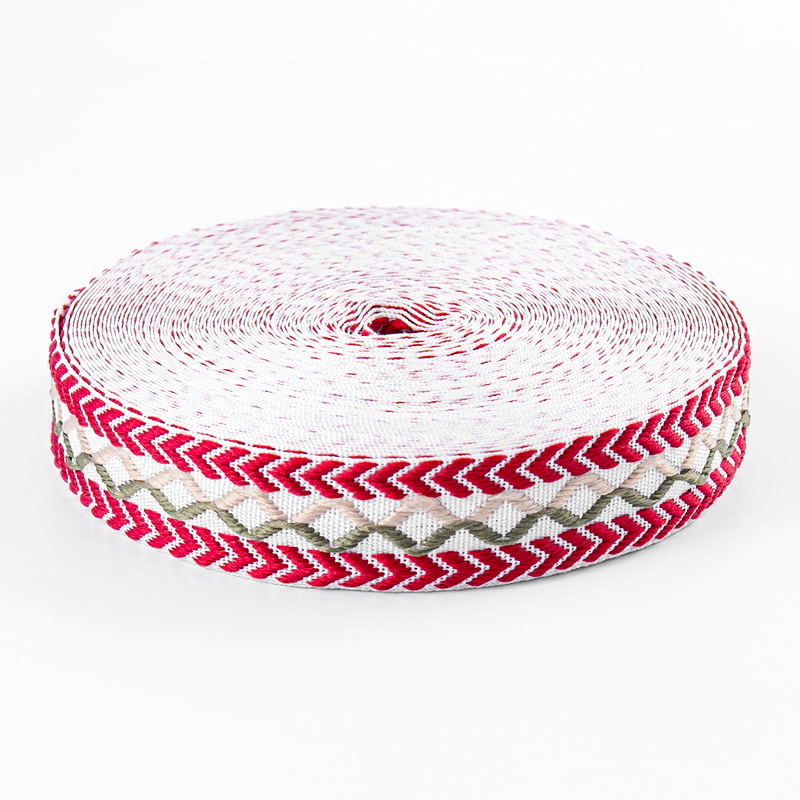
An engineering-grade decorative jacquard webbing strap is a integrally woven structure. Its pattern is not applied but constructed through the precise, programmed interlacing of warp (longitudinal) and weft (latitudinal) yarns using a Jacquard loom mechanism. This results in a monolithic material where the design and the base structure are one, leading to superior durability compared to surface-printed alternatives. Fengrun's progression from rope weaving to advanced webbing manufacturing is underpinned by this understanding of structural integrity. Our technical team focuses on how the weave architecture directly determines functional KPIs such as breaking strength, elongation at load, and fatigue resistance, ensuring that aesthetics do not compromise performance.
1.2 Core Process Analysis: Warp vs. Weft Jacquard Mechanics
The choice between warp and weft Jacquard weaving is a fundamental engineering decision with cascading effects on design capability and mechanical properties. The primary distinction lies in which set of yarns forms the pattern. This technical divergence dictates everything from minimum order quantity to optimal application.
A warp Jacquard system controls individual warp yarns to create patterns that are typically linear or geometric. Conversely, a weft Jacquard system uses a multi-shuttle mechanism to interlace colored weft yarns across the entire width, allowing for complex, pictorial designs like detailed custom logo straps. The mechanical and economic implications are significant.
| Engineering Parameter | Warp Jacquard Webbing | Weft Jacquard (Circular/Tubular) Webbing |
|---|---|---|
| Pattern Formation Mechanism | Pattern created by selective lifting and lowering of individual warp yarns. | Pattern created by interlacing multiple colored weft yarns across the full web width. |
| Design Flexibility & Color Placement | Limited to simpler, longitudinal patterns. Color changes are primarily in the warp direction. | High flexibility for complex, large-area graphics and multi-color designs anywhere in the webbing. |
| Structural Impact on Webbing | Often results in a firmer, less elastic hand feel. The weave can be denser. | Typically produces a more flexible, pliable tube or strap with excellent dimensional stability. |
| Prototype & Production Efficiency | Faster setup for simpler patterns; lower minimum run lengths can be more economical. | Setup is more complex due to multiple weft yarns; higher efficiency and speed for long runs of complex designs. |
| Ideal Fengrun-Recommended Application | Durable backpack straps where pattern is secondary to consistent tensile strength and abrasion resistance. | Custom logo straps for brand identity, jacquard dog collars requiring all-over prints, and modern furniture webbing with intricate patterns. |
Part 2: Material Science and Application-Specific Engineering
2.1 Polymer Performance: Selecting the Base Fiber
The selection of raw polymer is the first and most critical determinant of webbing performance. Fengrun's material portfolio—Polyester (PET), Nylon (PA), Polypropylene (PP), and Cotton—provides a spectrum of chemical and physical properties.
- Polyester (PET): The default choice for durable backpack straps and outdoor applications. Its hydrocarbon-ester chain provides excellent UV resistance, low moisture absorption (less than 0.4%), high tensile strength, and minimal creep. It is the preferred base for eco-friendly webbing trim when using recycled PET (rPET), which exhibits nearly identical performance to virgin polymer.
- Nylon (PA): Superior for dynamic fatigue applications. The amide groups in its backbone create strong intermolecular hydrogen bonds, granting exceptional toughness, abrasion resistance (up to 10x that of polyester in some tests), and elastic recovery. It is ideal for jacquard dog collars and leashes where flexibility and wear life are paramount.
- Polypropylene (PP): A lightweight, hydrophobic, and chemically inert option. Its low density makes it cost-effective by volume, but it has a lower melting point and is susceptible to UV degradation without stabilizers.
- Cotton: Offers a natural hand feel and biodegradability but lacks the strength and mildew resistance of synthetics. Often used in blends for specific aesthetic or comfort requirements.
The global push for circular economy models is decisively shaping material choices. According to the latest report by Textile Exchange, the adoption of preferred fibers, particularly recycled polyester, is accelerating. Their data indicates that rPET now accounts for a significant and growing share of the fiber market, driven by brand commitments to reduce virgin plastic use. This makes specifying eco-friendly webbing trim with certified recycled content a strategic and increasingly standard engineering specification.
Source: Textile Exchange - Preferred Fiber & Materials Market Report 2024 - https://textileexchange.org/knowledge-center/reports/preferred-fiber-and-materials-market-report/
2.2 Application Deep Dive: From Specification to Finished Product
Custom Logo Straps for Brand Integration
This process is a technical translation from brand asset to woven structure. Fengrun's engineering team converts vector artwork into a weave file, mapping each pixel to a specific yarn interlacing point. Key specifications include color matching under standard lighting (D65), the minimum repeatable pixel size (defining logo clarity), and the selection of weft Jacquard weaving to achieve unlimited color placement. The resulting strap is a permanent, wear-resistant brand identifier.
Durable Backpack Straps: A Load-Bearing System
Here, the webbing is a primary load path. Engineering focuses on the stress-strain curve: high tensile strength (often > 4,000 N) and controlled, low elongation (under 20% at break) to prevent sagging. The weave is engineered for uniform load distribution across all yarns. Abrasion resistance is critical, often addressed by using high-tenacity nylon or a polyester-nylon blend, and sometimes a textured filament yarn to increase surface durability.
Modern Furniture Webbing: Combining Tensile Strength with Aesthetics
In contemporary furniture design, webbing serves as both a structural support element in seat suspensions and a bold decorative accent. The engineering challenge is two-fold: the webbing must meet stringent static and dynamic load testing (e.g., simulating years of use) while maintaining colorfastness to light. For outdoor furniture, solution-dyed polyester is specified for its exceptional UV stability, ensuring the modern furniture webbing retains its color and strength through years of weather exposure.
Eco-Friendly Webbing Trim for Sustainable Audits
This specification is driven by compliance and ESG goals. The key is verifiable material content. Fengrun can produce webbing using Global Recycled Standard (GRS)-certified rPET yarns. The engineering data—strength, colorfastness, etc.—must match or approach that of virgin material, ensuring sustainability does not entail a performance compromise. This eco-friendly webbing trim is integral to products aiming for circular design principles.
Jacquard Dog Collars: Safety, Comfort, and Durability
Engineering for pet products requires a unique blend of safety and performance. Materials must be non-toxic and durable against moisture and repeated flexing. The tubular structure of weft Jacquard webbing is ideal as it lacks exposed selvage edges, maximizing comfort. Breakaway strength is carefully calibrated, and hardware attachment points are reinforced during the weaving or sewing process to prevent pull-out.
Part 3: The Fengrun Quality Assurance Protocol
Fengrun's principle of "Quality and Innovation in Equal Measure" is operationalized through a data-driven quality management system. Control begins at the raw material intake, with certification checks for yarn denier, tenacity, and composition. In-process controls monitor weaving tension, pick density, and pattern alignment.
Final product testing is where performance is validated. Key tests include:
- Tensile & Elongation Testing: Performed on constant-rate-of-extension machines to ASTM D5035 standards, generating definitive load-elongation curves for every batch.
- Abrasion Resistance: Evaluated using Martindale or Taber Abraser testers, providing quantifiable data on wear life.
- Colorfastness: Tested against light (AATCC 16), crocking (AATCC 8), and washing (AATCC 61) to ensure aesthetic longevity.
This regimented protocol ensures that every meter of decorative jacquard webbing strap not only looks precise but performs predictably in the field.
Part 4: Conclusion – Engineering Trust into Every Strap
Specifying a decorative jacquard webbing strap is an engineering decision with direct implications for product integrity, safety, and brand perception. It requires a supplier that understands the underlying science of polymers, the mechanics of weaving, and the rigors of end-use application. With over two decades of specialized manufacturing expertise, a commitment to vertical integration from yarn to finished strap, and a quality system rooted in measurable data, Fengrun Rope Weaving Co., Ltd. operates as a strategic engineering partner. We provide more than a component; we deliver a certified, performance-guaranteed material solution that allows our clients to innovate with confidence.
Frequently Asked Questions (FAQs)
1. What are the key technical differences between jacquard-woven and printed/sublimated webbing?
The difference is fundamental: integral construction versus surface application. Jacquard weaving builds the pattern into the material's structure through interlaced yarns, resulting in superior durability—the color and design cannot peel or crack as they are part of the yarns themselves. Printed webbing applies ink to the surface of a plain woven base, which abrades away over time and often has a different hand feel. For any application involving wear, friction, or outdoor exposure, jacquard weaving is the technically superior choice.
2. How do you ensure color accuracy and consistency across production runs for custom logo straps?
Color consistency is a function of controlled process engineering. We start with a lab dip approval using standardized lighting. We then use precisely formulated, batch-controlled dyes for yarn dyeing or source solution-dyed yarns where extreme colorfastness is required. During weaving, tension and density are tightly controlled to ensure uniform color presentation. Finally, we employ spectrophotometric analysis to compare production samples against the approved standard, allowing for objective, data-driven batch approval before shipment.
3. For a heavy-duty backpack, what specific mechanical properties should I prioritize in the specification?
Focus on three core mechanical properties: 1) Breaking Strength: This is the ultimate tensile load capacity. Specify a minimum value (e.g., 4000N) with a safety factor well above expected maximum load. 2) Elongation at Break: This should be relatively low (under 20-25%) to prevent the strap from over-stretching and causing load instability. 3) Abrasion Resistance (Martindale Cycles): Specify a high rating (e.g., 50,000+ cycles) to ensure the strap survives rubbing against clothing and equipment. Providing these KPIs ensures you receive a truly durable backpack strap.
4. Can you produce webbing that meets specific international safety or flammability standards?
Yes, compliance engineering is a critical service. We can develop webbing to meet a wide range of international standards, such as OEKO-TEX Standard 100 for harmful substances, EN 71-3 for toy safety (migration of elements), or specific flammability tests like NFPA 701 for drapery. This often involves selecting specific, certified yarns and sometimes incorporating flame-retardant additives during the fiber production stage. Early consultation on required certifications is essential for product development.
5. What is the lead time and process for developing a completely new custom jacquard webbing design?
The development process is collaborative and phased. Phase 1 (Technical Feasibility): We analyze your artwork, discuss application requirements, and recommend weave type, material, and specifications. Phase 2 (Sampling): Upon approval, we create a digital weave file and produce a lab sample (lead time: 10-15 business days) for your evaluation of design, color, and hand feel. Phase 3 (Production): After sample sign-off, we proceed to production weaving. Full lead time depends on yarn availability and order volume but typically ranges from 4-6 weeks for a new custom order. We manage this process through clear milestone approvals to ensure the final product matches your exact engineering and aesthetic requirements.