English
  中文简体
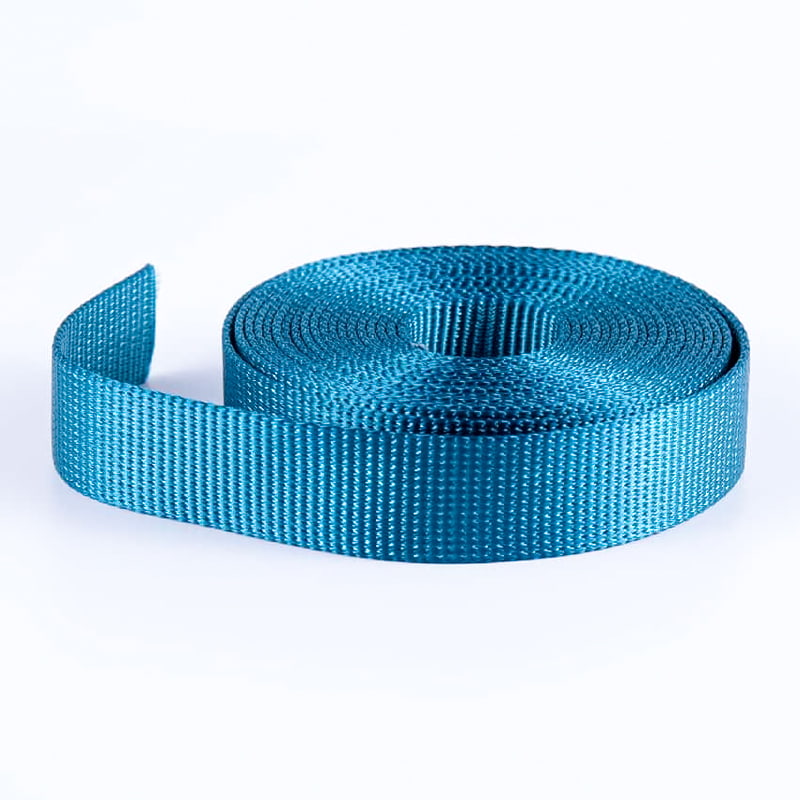
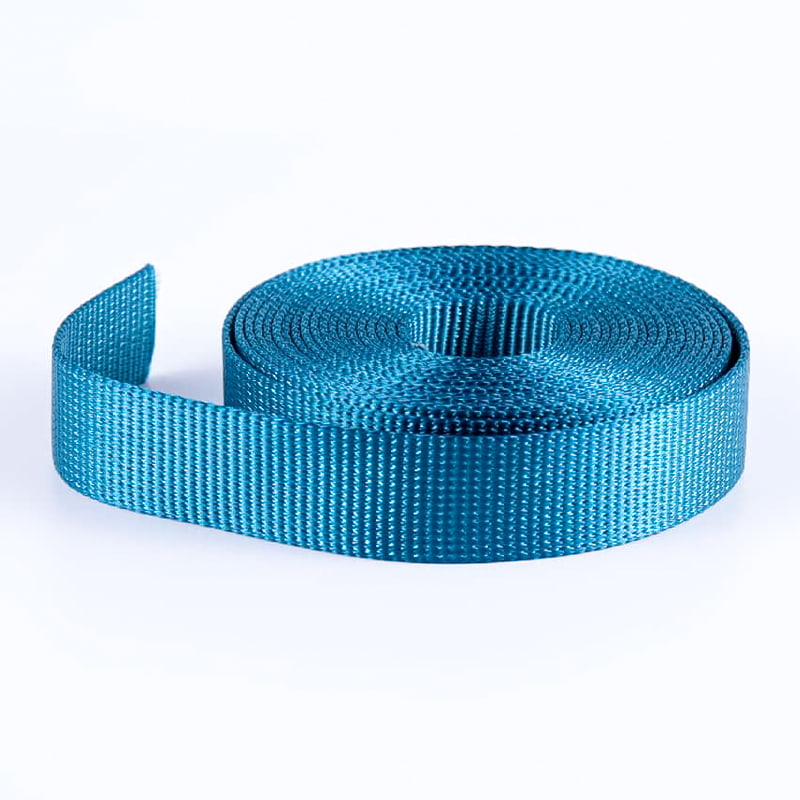
中文简体 Eco-friendly Nylon Webbing delivers the same tensile strength, abrasion resistance, and weather durability as conventional nylon, but is manufactured from recycled post-consumer waste such as rPET or recycled nylon 6 that diverts plastic from landfills and oceans. For brands and manufacturers under pressure to reduce Scope 3 emissions without sacrificing product performance, it is the most practical sustainable webbing upgrade available today.
What Makes Nylon Webbing Eco-Friendly
The term eco-friendly in webbing is not marketing language. It refers to specific, verifiable manufacturing inputs. Conventional nylon (polyamide) is derived from petrochemicals through an energy-intensive synthesis process. Eco-friendly alternatives replace virgin raw materials with one of three sourcing strategies.
| Material Type | Source | Key Certification | Best For |
| Recycled Nylon 6 (rPA6) | Fishing nets, carpet fiber, fabric offcuts | GRS, bluesign | High-load webbing, climbing gear |
| Recycled PET Blend | Post-consumer plastic bottles | GRS, Oeko-Tex | Cost-effective eco entry point |
| Bio-based Nylon 11 | Castor bean oil (renewable crop) | DIN CERTCO compost | Fully biodegradable applications |
Each pathway has different certification standards. Look for GRS (Global Recycled Standard), bluesign, or Oeko-Tex Made in Green certification to verify claims before procurement. Bio-based Nylon 11 achieves full biodegradability under industrial composting conditions while maintaining tensile strengths above 2,000 lbs in 1-inch configurations.
Advantages of Sustainable Webbing Materials Over Conventional Options
The performance case for Eco-friendly Nylon Webbing is stronger than most buyers expect. Concerns about reduced strength or durability are largely outdated. Here is how the materials compare across critical metrics.
| Property | Virgin Nylon Webbing | Eco-Friendly Nylon Webbing | Verdict |
| Tensile Strength (1-inch) | 4,000 - 6,000 lbs | 3,800 - 5,800 lbs | Within 5%, negligible |
| Abrasion Resistance | Excellent | Excellent | No measurable difference |
| UV Resistance | Good with stabilizers | Good with stabilizers | Equivalent with additives |
| Moisture Absorption | 3.5% - 4.5% | 3.5% - 4.5% | Identical |
| Carbon Footprint (kg CO2/kg) | 6.4 - 9.0 | 3.2 - 4.5 | 45% - 50% lower |
| Energy Use in Production | Baseline 100% | Approx. 57% | 43% energy savings |
| Cost Premium | Baseline | +8% to +20% | Narrowing as scale grows |
The cost premium is the primary remaining objection, and it continues to shrink. As recycled nylon supply chains mature and more manufacturers invest in closed-loop collection, price parity with virgin nylon is projected to be reached in most product categories by 2027 to 2029.
Recent Developments in Nylon Manufacturing: Recycled Options from Post-Consumer Waste
The past five years have produced significant breakthroughs in recycled nylon yarn quality and traceability that directly affect webbing manufacturing. These are the developments most relevant to procurement and product development teams.
Radici Group and Aquafil scaled chemical depolymerization of nylon 6 waste to commercial volumes. Unlike mechanical recycling, chemical recycling restores polymer chains to virgin-equivalent molecular weight, eliminating the slight strength reduction seen in earlier recycled webbing products.
Ghost fishing net collection programs in Southeast Asia and the Mediterranean now supply certified ocean-recovered nylon fiber to webbing manufacturers. Advances in filtration have yielded consistent yarn suitable for load-bearing webbing above 3,500 lbs minimum break strength.
Platforms such as TextileGenesis and Aware by Avery Dennison now allow webbing buyers to verify recycled content percentage from feedstock origin to finished roll, using fiber-level taggants embedded during yarn production. This closes a major gap in eco-certification credibility.
Leading webbing mills in Taiwan, China, and Vietnam have retooled needle looms and shuttle looms to run recycled nylon yarn without modifications to machine settings. Lead times and minimum order quantities for eco webbing now match conventional production, removing the last major operational barrier to adoption.
Best Uses for Eco-Friendly Nylon Webbing Across Industries
Eco-friendly Nylon Webbing performs across a wider range of demanding applications than most buyers assume. The following breakdown maps product types to the specific performance properties that make sustainable nylon the right choice.
Climbing harnesses, backpack shoulder straps, trekking poles, and tent guy-lines. Recycled nylon retains approximately 20% elongation before break, making it preferred over polyester for dynamic load absorption in fall arrest applications. Brands including Patagonia, Arc'teryx, and Black Diamond have transitioned harness webbing to recycled nylon 6.
Dog collars, leashes, and harnesses represent the fastest-growing segment for eco webbing. Surveys indicate 68% of pet product buyers consider sustainability a purchasing factor. Recycled nylon's smooth surface finish and color vibrancy after dyeing make it visually indistinguishable from virgin nylon at retail.
Belt straps, bag handles, luggage straps, and watch bands. The EU Digital Product Passport regulation, effective 2026, requires material transparency documentation. Switching to GRS-certified recycled nylon webbing now provides that documentation ahead of the regulatory deadline.
MOLLE systems, rifle slings, and load-bearing vests increasingly use recycled nylon webbing that meets MIL-W-17337 and MIL-W-4088 specifications. Several NATO procurement offices have issued sustainability preferences for recycled content in non-critical webbing components since 2022.
Cargo straps, tow straps, and seat belt components. Nylon's higher elongation versus polyester allows it to absorb shock loads without snap-back failure. Recycled nylon versions now achieve the 10,000 lbs working load limits required for Class 3 tow straps.
EN 361 and ANSI Z359 compliant full-body harnesses for construction and industrial work at height. Recycled nylon webbing has now passed third-party testing to these standards from multiple certified test houses in Europe and North America.
Core Advantages of Nylon Webbing That Sustainability Does Not Compromise
Understanding why nylon is chosen over polyester, polypropylene, or cotton in the first place helps confirm the specification choice. These core advantages are fully preserved in eco-friendly versions.
Nylon elongates 15% to 22% before breaking, compared to 8% to 12% for polyester. This elasticity absorbs energy in dynamic load scenarios, which is critical for climbing, towing, and fall arrest.
In Taber abrasion testing, nylon webbing withstands 500 to 700 cycles before fiber breakdown, compared to 300 to 450 cycles for polypropylene. This translates directly to longer product life in field use.
Nylon accepts acid dyes at depth, producing vivid, color-fast results that polypropylene cannot match without fiber modification. Essential for fashion, pet, and consumer goods markets.
Nylon resists oils, fuels, and most organic solvents, making it suitable for automotive, industrial, and marine environments where polypropylene degrades within months.
Nylon retains flexibility down to minus 40 degrees Fahrenheit, a specification that cotton and polypropylene webbing fail in alpine or arctic applications.
Recycled nylon webbing qualifies for the same safety certifications as virgin nylon, including CE marking under PPE Regulation (EU) 2016/425, critical for harness and fall protection markets.
How to Specify and Source Eco-Friendly Nylon Webbing Correctly
Specifying sustainable webbing correctly prevents greenwashing claims and ensures supply chain compliance. Use the checklist below as a starting framework for procurement documents and supplier qualification.
Industry standard is 50% recycled content minimum for GRS certification. Premium eco lines reach 100% recycled content. Specify the percentage in your purchase order, not just the label claim.
Each production step, including yarn, fabric, and finished webbing, requires its own transaction certificate. A single GRS certificate at yarn level does not certify the finished webbing roll.
Do not accept lower break strength tolerances simply because the material is recycled. Modern rPA6 meets virgin specifications. Demand documentation to prove it.
Eco webbing loses its environmental benefit if dyed with AZO dyes or heavy metal mordants. Request Oeko-Tex Standard 100 testing results or equivalent to verify chemical safety.
Supply chains using Aquafil ECONYL or Radici Group rPA6 provide the most traceable and consistent quality currently available. Avoid suppliers who cannot name the recycling facility and feedstock type.
Performance Without the Environmental Cost
Eco-friendly Nylon Webbing is no longer a compromise product. Advances in chemical recycling, ocean plastic collection, and yarn traceability technology have closed the performance gap to within 5% of virgin nylon across all critical metrics while cutting carbon footprint by nearly half. The 8% to 20% cost premium is a shrinking obstacle, not a permanent barrier.
For any manufacturer supplying outdoor gear, safety equipment, pet products, fashion accessories, or industrial strapping, the transition to recycled nylon webbing is both technically sound and commercially timely. Regulatory requirements in the EU and increasing consumer scrutiny of sustainability claims make early adoption a competitive advantage, not just an ethical preference.