English
  中文简体
中文简体 We are a national high-tech enterprise. At present, there are many kinds of self-woven and cooperatively processed fabrics, including microfiber warp-knitted towel cloth, weft-knitted towel cloth, coral fleece, etc.
Content
- 1 Introduction: Understanding the Basics of Jacquard Webbing
- 2 How Jacquard Webbing Is Made: The Technology Behind the Pattern
- 3 Material Matters: Choosing the Right Yarn for Your Jacquard Webbing
- 4 Key Applications: Where Jacquard Webbing Shines
- 5 Custom Jacquard Webbing: A Guide for Buyers
- 6 Quality Control and Standards in Jacquard Webbing Manufacturing
- 7 Conclusion: Finding the Right Jacquard Webbing for Your Needs
- 8 Frequently Asked Questions (FAQ)
- 8.1 Q1: What is the minimum order quantity (MOQ) for custom jacquard webbing?
- 8.2 Q2: How long does it take to develop a custom jacquard webbing sample?
- 8.3 Q3: Can I get jacquard webbing with my own logo or design?
- 8.4 Q4: What is the difference between printed webbing and jacquard webbing?
- 8.5 Q5: How do I care for and clean jacquard webbing products?
- 9 References
In the technical textiles industry, Jacquard webbing represents the pinnacle of functional aesthetics. Unlike printed or basic woven straps, Jacquard webbing integrates complex patterns directly into the fabric's structure during the weaving process. This guide provides a deep technical dive into its manufacturing, material science, and procurement considerations, tailored for B2B buyers, product developers, and wholesale distributors seeking high-performance textile components.
Introduction: Understanding the Basics of Jacquard Webbing
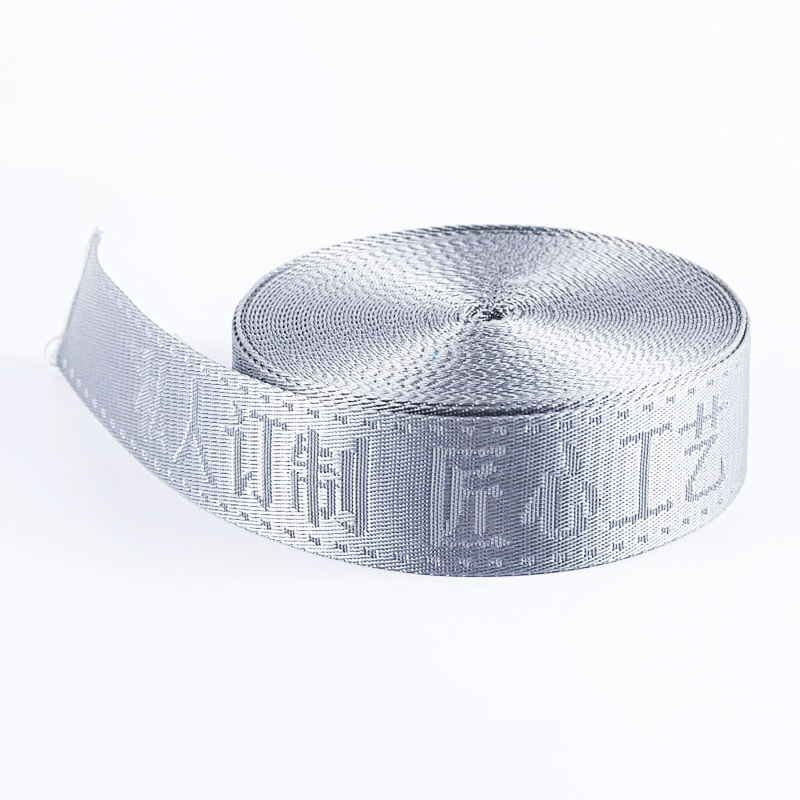
At its core, Jacquard webbing is a woven textile strap produced on a specialized loom that allows for individual control of each warp yarn. This capability enables the creation of intricate patterns, logos, and designs directly within the weave, resulting in a durable, long-lasting decoration that will not peel, fade, or crack—a critical advantage over printed alternatives. For industries ranging from pet accessories to military-grade load-bearing equipment, the choice of webbing impacts both safety and brand identity.
How Jacquard Webbing Is Made: The Technology Behind the Pattern
The Jacquard Loom Mechanism: A Historical Innovation
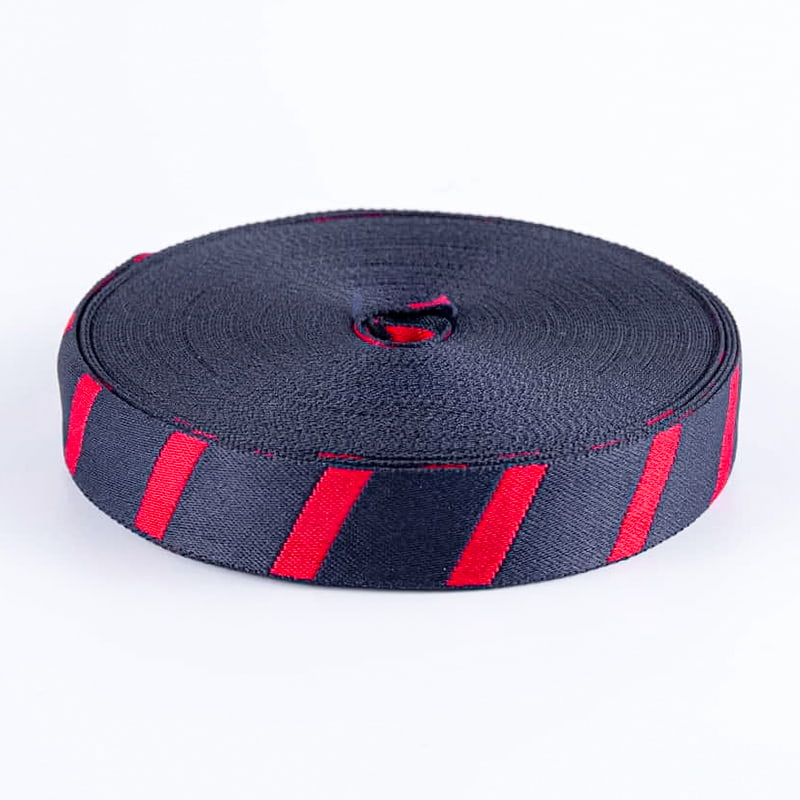
The foundation of Jacquard webbing lies in the Jacquard mechanism, a system patented by Joseph Marie Jacquard in 1804 that revolutionized textile manufacturing. Unlike a standard dobby loom, which controls small groups of warp threads, a Jacquard loom controls each individual warp end independently. This is achieved through a chain of punched cards (in historical contexts) or, in modern digital Jacquard machines, through electronic interfaces that communicate with solenoids to lift specific heddles. This independent control allows for the creation of patterns with unlimited complexity and repeat size, making it possible to weave intricate logos, floral motifs, and even photographic images directly into the jacquard webbing for bags straps or belts.
The Weaving Process: From Design to Finished Product
The transformation of a concept into a finished Jacquard webbing product involves a precise, multi-step engineering process:
- Design Digitization and Programming: A vector-based design (such as a company logo or jacquard webbing floral pattern wholesale design) is converted into a digital format using specialized CAD/CAM software. This software translates the visual pattern into a series of commands that dictate which warp threads are raised for each weft insertion.
- Warping and Dyeing: Yarns (typically polyester, nylon, or cotton) are prepared. For multicolored patterns, the required colors are dyed to precise Pantone specifications.
- Weaving: The programmed design is loaded into the digital Jacquard loom. The machine operates at high speeds, with the pattern being formed by the selective lifting of warp threads and the insertion of weft yarns. A key characteristic of Jacquard weaving is that the pattern is visible on both sides, though the reverse may be a negative image.
- Heat-Setting and Finishing: After weaving, the webbing passes through a heat-setting process to stabilize the fibers, set the weave structure, and ensure dimensional stability. This is critical for heavy duty jacquard webbing for belts that must maintain their width and thickness under stress.
- Quality Inspection: The final webbing is inspected for pattern accuracy, color consistency, and tensile strength to ensure it meets engineering specifications.
Material Matters: Choosing the Right Yarn for Your Jacquard Webbing
The material selection for Jacquard webbing is a critical engineering decision that affects mechanical properties, durability, cost, and application suitability. The three primary materials used are polyester, nylon, and cotton.
Polyester Jacquard Webbing: Durability and Color Vibrancy
Polyester jacquard webbing is the industry workhorse due to its excellent UV resistance, low moisture absorption, and high colorfastness. It maintains its structural integrity in outdoor environments, making it ideal for backpacks, outdoor gear, and marine applications. The fiber's ability to accept disperse dyes results in vibrant, sharp patterns that resist fading over time.
Nylon Jacquard Webbing: Strength and Elasticity
Nylon jacquard webbing (specifically Nylon 6,6) offers the highest tensile strength and energy absorption among common webbing materials. Its natural elasticity allows it to stretch under load, absorbing shock—a critical safety feature in applications like fall protection, automotive tie-downs, and tactical gear. However, nylon is susceptible to UV degradation and moisture absorption unless specifically treated.
Cotton Jacquard Webbing: Softness and Natural Aesthetic
Cotton jacquard webbing provides a soft, natural hand feel and breathability. It is the preferred material for apparel applications, such as waistbands and decorative belts, where comfort against the skin is paramount. While it lacks the high tensile strength of synthetics, its aesthetic appeal and eco-friendly profile make it a staple in the fashion and craft sectors.
Polyester vs. Nylon: A Technical Comparison
For B2B buyers, the decision between polyester and nylon is often the most critical. The following table provides a detailed technical comparison to guide material selection for specific applications like jacquard webbing for bags straps versus heavy duty jacquard webbing for belts.
| Property | Polyester Jacquard Webbing | Nylon Jacquard Webbing |
|---|---|---|
| Tensile Strength | High (typically 70-80% of nylon's dry strength). Excellent for general load-bearing. | Highest (superior dry strength). Industry standard for critical safety applications. |
| Elasticity (Stretch) | Low (minimal stretch under load). Ideal for applications requiring dimensional stability, such as backpacks. | Moderate to High (absorbs shock through stretch). Essential for energy absorption in tie-downs and safety lines. |
| UV Resistance | Excellent (inherently resistant to UV degradation). Suitable for long-term outdoor exposure. | Poor (degrades significantly in direct sunlight unless UV inhibitors are added). |
| Moisture Absorption | Low (0.4% absorption). Retains strength when wet; quick-drying. | High (4% absorption). Loses 10-15% of strength when wet; slower drying. |
| Abrasion Resistance | Good to Excellent. | Excellent (often superior to polyester). |
| Chemical Resistance | Resistant to most acids and bleaches. | Resistant to alkalis and oils; vulnerable to strong acids. |
| Cost | Moderate. | Higher (typically 20-30% more expensive than polyester). |
Key Applications: Where Jacquard Webbing Shines
Jacquard Webbing for Bags and Straps: Combining Function and Fashion
The demand for jacquard webbing for bags straps has grown exponentially as brands seek to differentiate their products. In this application, the webbing must balance several engineering parameters: it must bear the static and dynamic loads of the bag's contents (often 20kg+), resist abrasion from rough surfaces, and maintain the clarity of the brand's logo or design. Polyester is the dominant material here due to its excellent strength-to-cost ratio and UV stability, ensuring that the strap remains vibrant and functional for the life of the bag. The ability to weave complex patterns directly into the structure also serves as an anti-counterfeiting measure, as duplicating a specific Jacquard design requires access to the original program and loom settings.
Heavy Duty Jacquard Webbing for Belts: Strength Meets Style
When specifying heavy duty jacquard webbing for belts, the primary engineering considerations shift to tensile strength, edge abrasion resistance, and flex fatigue. Belts undergo repeated bending and stress, particularly at the buckle point. Nylon is often the material of choice for tactical and work belts due to its shock-absorbing properties and high breaking strength (often exceeding 3,000 lbs for 1.5-inch webbing). However, high-tenacity polyester variants are also popular for fashion belts requiring a stiffer, less elastic feel. The Jacquard weave allows for the incorporation of reinforcement threads along the edges and stress points, extending the belt's service life.
Decorative Applications: Floral Patterns and Beyond
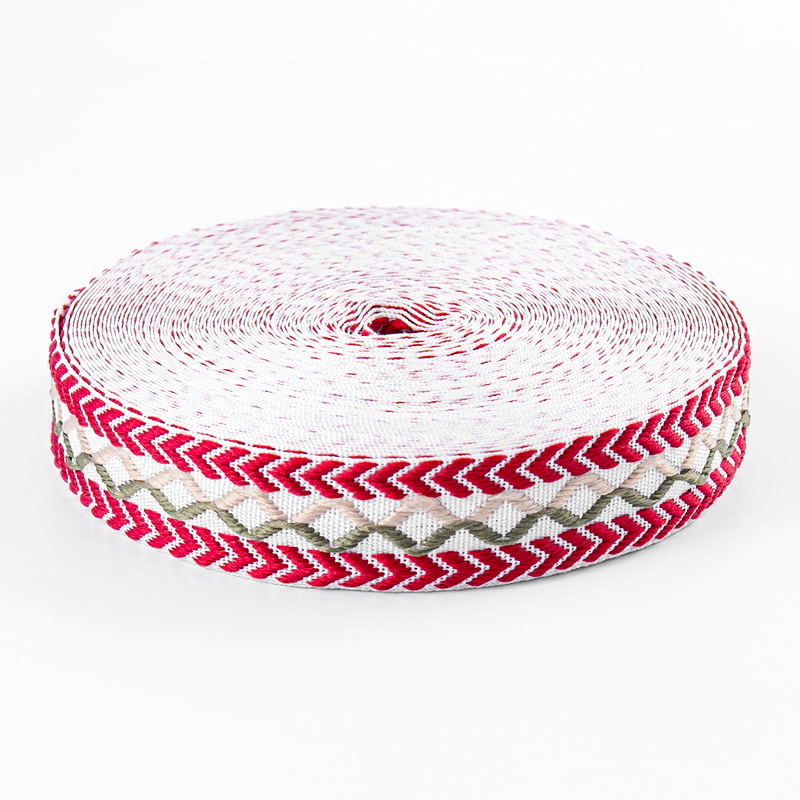
The wholesale market for decorative webbing, particularly jacquard webbing floral pattern wholesale, demonstrates the aesthetic power of this technology. Floral and ornate patterns are woven into ribbons, trims, and apparel straps using fine cotton or viscose yarns. These are not merely decorative; in high-end fashion, the Jacquard structure adds body and stability to garments, preventing the stretching that can occur with printed fabrics. Home textile applications, such as curtain tie-backs and upholstery borders, also rely on decorative Jacquard webbing for its three-dimensional texture and durability.
Custom Jacquard Webbing: A Guide for Buyers
Why Choose Custom Jacquard Webbing?
For brands and manufacturers, custom jacquard webbing is a strategic investment. It offers:
- Brand Identity: A woven logo is perceived as higher quality than a printed one, conveying a message of durability and attention to detail.
- Differentiation: Unique patterns and color combinations make products stand out in crowded retail environments.
- Anti-Counterfeiting: The complexity of Jacquard patterns makes them difficult for counterfeiters to replicate accurately.
- Durability: Woven designs are integral to the fabric and will not wear away like prints.
How to Work with Custom Jacquard Webbing Manufacturers
Selecting the right partner among custom jacquard webbing manufacturers requires due diligence. Companies like Fengrun Rope Weaving Co., Ltd., established in 2000 in Haining, Zhejiang, exemplify the capabilities required for high-volume, quality-assured production. As a professional manufacturer of ropes, webbing, braided belts, waistbands, and garment accessories, Fengrun operates with a variety of modern machinery and a robust technical team. The following factors are critical when evaluating a manufacturer:
Key Factors to Consider When Selecting a Manufacturer
- Production Capacity and Equipment: Assess the number and type of Jacquard looms. Modern electronic Jacquard machines offer faster setup times and greater pattern complexity than mechanical looms. Fengrun is equipped with a variety of modern machinery to meet diverse production needs.
- Quality Control Systems: Inquire about in-process inspections and final testing protocols. A strong quality control system ensures that each batch meets specified tensile strength, color accuracy, and dimensional tolerances.
- Sample Development Capability: The ability to turn a concept into a physical sample quickly and accurately is a hallmark of a capable manufacturer. The sample phase validates the design, material selection, and weave structure before mass production.
- Minimum Order Quantities (MOQs): Manufacturers have different MOQ requirements based on the complexity of the design and the materials used. Fengrun welcomes custom orders based on samples, offering flexibility to buyers.
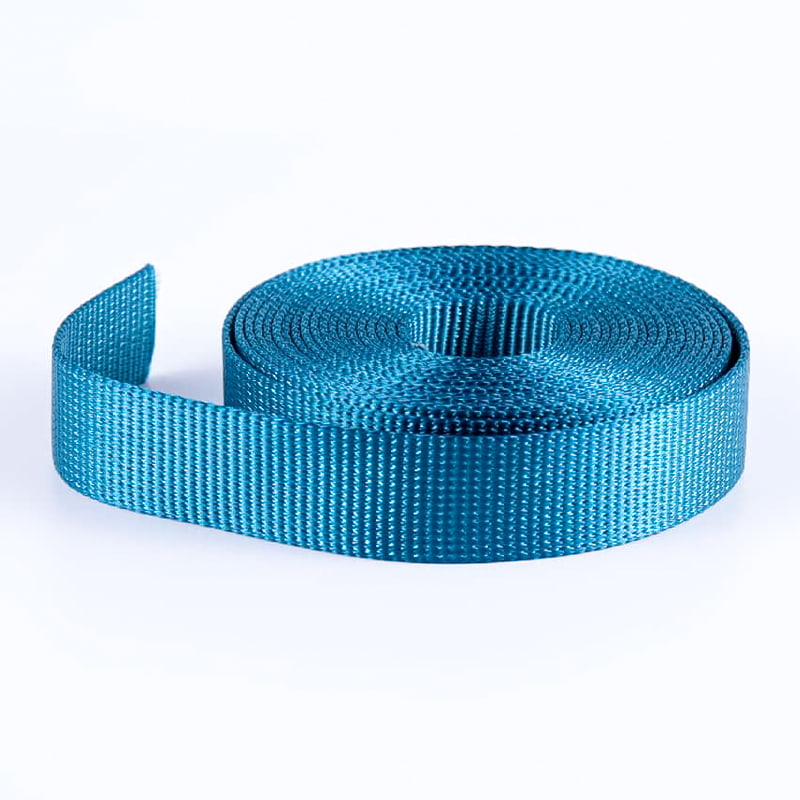
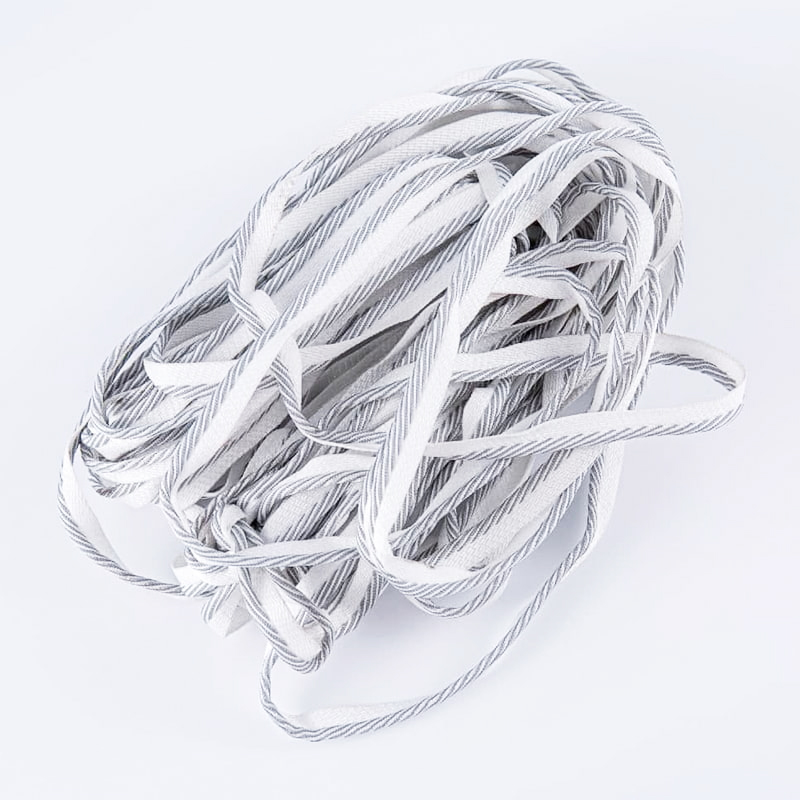
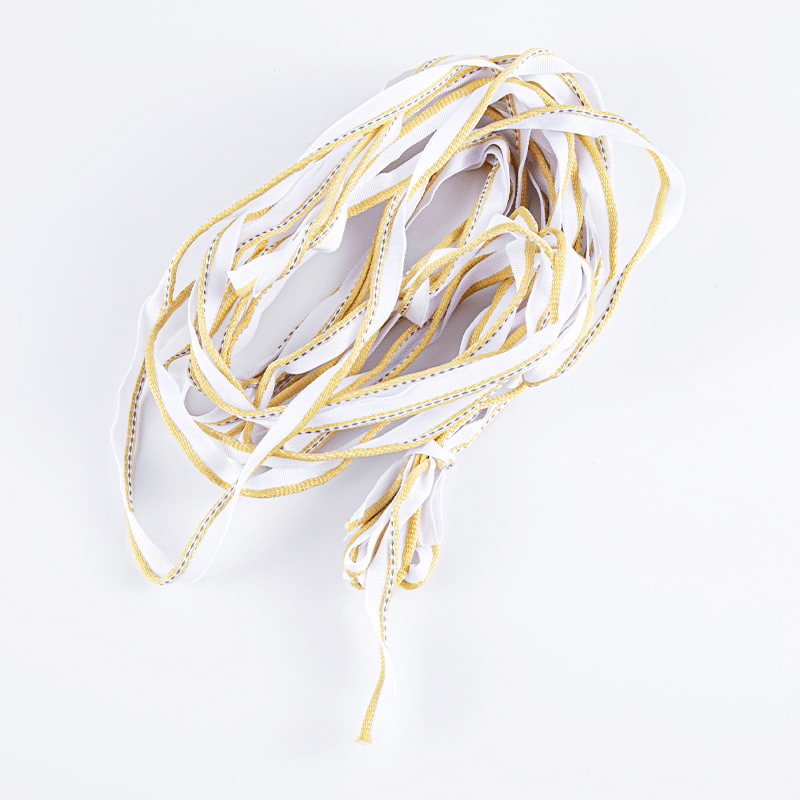
- Material Sourcing and Sustainability: Verify the manufacturer's ability to source specific yarns (e.g., recycled polyester, certified cotton). Fengrun produces ropes and webbing from materials including polypropylene, polyester, cotton, and nylon, available in multiple colors and specifications, catering to a wide range of applications from sofas and toys to bags, straps, and garments.
The Customization Process: From Concept to Finished Product
A typical workflow with a manufacturer like Fengrun involves:
- Inquiry and Technical Discussion: The buyer provides design files (AI, EPS, PDF) and technical specifications (width, thickness, material, breaking strength).
- Feasibility Analysis: The manufacturer's technical team analyzes the design for weavability and suggests any necessary modifications.
- Sample Development: A digital program is created, and a sample is woven on a test loom. This sample is sent to the buyer for approval.
- Quotation and Contract: Upon sample approval, the manufacturer provides a final quote based on the design complexity, material cost, and order quantity.
- Mass Production: Production is scheduled, with quality checks at every stage—warping, weaving, heat-setting, and finishing.
- Final Inspection and Shipping: Finished goods are inspected, packaged, and shipped according to the buyer's instructions. Fengrun ensures reliable quality, competitive pricing, and on-time delivery, guided by the principle of "Quality and Innovation in Equal Measure."
Quality Control and Standards in Jacquard Webbing Manufacturing
Professional custom jacquard webbing manufacturers adhere to rigorous quality standards. Key performance indicators include:
- Tensile Strength Testing: Measured in pounds or kilograms of force required to break a specific width of webbing. Standards such as ASTM D6775 are commonly used.
- Colorfastness: Assessed through washing, crocking (rubbing), and light exposure tests to ensure the dyed yarns retain their color. AATCC test methods are industry benchmarks.
- Dimensional Stability: The webbing's tendency to shrink or stretch after exposure to heat or moisture. Heat-setting is critical to controlling this.
- Pattern Registration: Visual inspection ensures that the Jacquard pattern is correctly aligned across the entire length of the webbing.
Fengrun's commitment to these standards is evident in its strict quality control体系和 strong technical team. Through years of steady growth, the company has built its own brand by focusing on innovation and quality, continuously improving both products and workforce, supported by an efficient management system.
Conclusion: Finding the Right Jacquard Webbing for Your Needs
Jacquard webbing is a sophisticated textile solution that merges engineering precision with design flexibility. Whether sourcing polyester jacquard webbing vs nylon for load-bearing straps, seeking jacquard webbing floral pattern wholesale for decorative trims, or developing a custom brand identifier with custom jacquard webbing manufacturers, the key to success lies in understanding material properties, manufacturing processes, and application-specific requirements. By partnering with experienced manufacturers like Fengrun Rope Weaving Co., Ltd., buyers can ensure they receive products that meet exact specifications, backed by decades of industry expertise and a commitment to durable, wear-resistant solutions. We welcome custom orders based on your samples and guarantee reliable quality, competitive pricing, and punctual delivery.
Frequently Asked Questions (FAQ)
Q1: What is the minimum order quantity (MOQ) for custom jacquard webbing?
The MOQ for custom jacquard webbing varies depending on the design complexity and the number of colors. For simple designs using common yarn colors, MOQs can start as low as 1,000 to 3,000 meters. For complex patterns requiring custom-dyed yarns, the MOQ may be higher to make the dyeing process economical. Reputable manufacturers like Fengrun are transparent about their MOQs and can often accommodate smaller trial runs for sample approval before committing to full production.
Q2: How long does it take to develop a custom jacquard webbing sample?
The sample development timeline typically ranges from 7 to 20 business days. This includes time for design analysis, program creation (punching or CAD conversion), setting up the loom, and weaving the sample. Factors that can extend this timeline include the complexity of the pattern, the need for custom-colored yarns, and the current workload of the manufacturer's sample department.
Q3: Can I get jacquard webbing with my own logo or design?
Yes, absolutely. That is the primary purpose of custom jacquard webbing. You can provide your logo, artwork, or specific pattern in a vector format (such as .ai or .eps). The manufacturer's technical team will then assess the design for weavability and create a digital program for the Jacquard loom. The result is a woven reproduction of your design that is durable and professional.
Q4: What is the difference between printed webbing and jacquard webbing?
The fundamental difference lies in how the pattern is created. Printed webbing involves applying ink or dye to the surface of a pre-woven base fabric. The print sits on the surface and can fade, crack, or wear off over time. Jacquard webbing is constructed with the pattern woven directly into the fabric. Different colored yarns are interlaced during the weaving process to form the design, making it an integral part of the webbing. Jacquard webbing is significantly more durable and has a higher perceived quality, but it is also more expensive to produce due to the specialized machinery and setup required.
Q5: How do I care for and clean jacquard webbing products?
Care instructions depend on the fiber content. For polyester jacquard webbing, machine washing in cold water with mild detergent and air drying is generally safe. For nylon jacquard webbing, hand washing is recommended to preserve the finish, and it should be dried away from direct heat sources to prevent degradation. Cotton webbing can often be machine washed but may shrink. For heavily soiled or critical-use items (like safety straps), professional cleaning or manufacturer-specific guidelines should be followed. Always test a small, inconspicuous area first.
References
- ASTM International. (2022). ASTM D6775 - Standard Test Method for Breaking Strength and Elongation of Textile Webbing, Tape and Braided Material. West Conshohocken, PA: ASTM International.
- AATCC. (2021). AATCC Test Method 61-2020, Colorfastness to Laundering, Home and Commercial: Accelerated. Research Triangle Park, NC: American Association of Textile Chemists and Colorists.
- Gandhi, K. L. (Ed.). (2012). Woven Textiles: Principles, Technologies and Applications. Woodhead Publishing. (Chapter on Jacquard weaving).
- McIntyre, J. E., & Daniels, P. N. (Eds.). (1995). Textile Terms and Definitions (10th ed.). Manchester: The Textile Institute.
- U.S. Department of Defense. (2018). MIL-W-4088H - Webbing, Textile, Woven Nylon. (Military specification for nylon webbing performance).
- Fengrun Rope Weaving Co., Ltd. (2025). Company Profile and Technical Capabilities. Haining, China.
- Textile World. (2020). "The Resurgence of Jacquard: Digital Looms Drive Customization." Textile World Magazine.