English
  中文简体
中文简体 We are a national high-tech enterprise. At present, there are many kinds of self-woven and cooperatively processed fabrics, including microfiber warp-knitted towel cloth, weft-knitted towel cloth, coral fleece, etc.
Content
- 1 What Animal Webbing Actually Is - and Where It Ends Up
- 2 Polyester, Nylon or Polypropylene: Pick the Fiber First
- 3 Matching Animal Webbing Width and Strength to the Animal
- 4 Weave Structure: Why Two Straps of the Same Width Age Differently
- 5 Reflective and Low-Light Features That Decide Winter Sell-Through
- 6 Ordering Custom Webbing From the Mill
- 7 Animal Webbing: Buyer FAQ
A 28 kg border collie that slams into the end of a taut leash at full sprint can briefly load the strap with several times its own body weight, and the strap has to survive that spike thousands of times in a working life. That fact explains why animal webbing is specified by width, weave and fiber rather than chosen for appearance: the woven strap is the load path in every leash, collar, harness and tiedown that pet brands, outdoor gear makers and livestock suppliers ship.
For purchasing teams, the difference between two visually identical straps shows up months later as fuzzed edges, color bleed in the wash or a warranty claim. The sections below show how to read those differences before an order is placed.
Working definition
Animal webbing is a flat, narrow-woven fabric - most commonly polyester, nylon, polypropylene or cotton - produced in widths from roughly 10 mm to 50 mm and sewn into leashes, collars, harnesses, training leads and restraint straps for pets, livestock and working animals.
What Animal Webbing Actually Is - and Where It Ends Up
The fastest way to scope a program is to work backward from the finished product, because width, edge construction and fiber all follow from what the strap must hold and how often it is handled.
- Leashes and training leads in 10 mm to 25 mm polyester, where grip, abrasion and hand feel matter as much as raw strength
- Collars and harness panels in 15 mm to 25 mm, usually with soft edges and branding woven into the body
- Large-pet tiedown and restraint straps at 25 mm, built thick with reinforced stitching lines
- Livestock halters, tie straps and cargo-grade restraints at 38 mm and above
- Pet carrier, backpack and travel-gear straps in 20 mm to 25 mm, where one strap often doubles as cargo lashing
10-50 mmwidths in a full animal webbing range
4fiber families commonly woven
25 mmstandard width for large-breed leashes
38 mm+livestock and restraint class
Pet and cargo specifications overlap more than buyers expect: a 2.0 cm safety-focused polyester strap sold into the leash channel routinely reappears as backpack and cargo lashing webbing, because loom setup, yarn and finishing are shared. Consolidating both categories with one narrow-fabric mill shortens the supplier list and keeps color matching consistent across a product line.
Polyester, Nylon or Polypropylene: Pick the Fiber First
For most animal products, woven polyester is the default: it keeps nearly all of its strength when wet, resists sunlight better than nylon and costs less at comparable quality. The textile data is blunt - polyester absorbs about 0.4 percent moisture against roughly 4.5 percent for nylon, which is why a nylon lead handles differently and gives up a share of strength on a wet walk.
| Fiber | Strength when wet | UV resistance | Hand feel | Best-fit animal products |
| Polyester | Nearly full strength retained | High | Firm, low stretch | Leashes, collars, training leads, tiedowns |
| Nylon | Typically drops 10 to 20 percent | Moderate | Soft, elastic | Harness panels, stretch straps, premium leads |
| Polypropylene | Unaffected, and it floats | Moderate | Light, slightly stiff | Camping straps, outdoor gear, printed designs |
| Cotton | Weakened and slow to dry | Low | Soft, natural | Sensitive-skin training leads, decorative trim |
Choose polyester when
- Products get wet, washed or left in the sun
- Low-stretch, predictable handling matters in a training lead
- Program cost and color consistency drive the decision
Choose nylon when
- Softness and slight elasticity improve harness comfort
- The design calls for stretch panels or elastic jacquard
- A premium line justifies the higher fiber cost
Polypropylene sits apart from both: it is the lightest and cheapest of the three, it floats, and it takes printed patterns well - a practical match for camping straps and outdoor gear accessories where loads stay moderate.
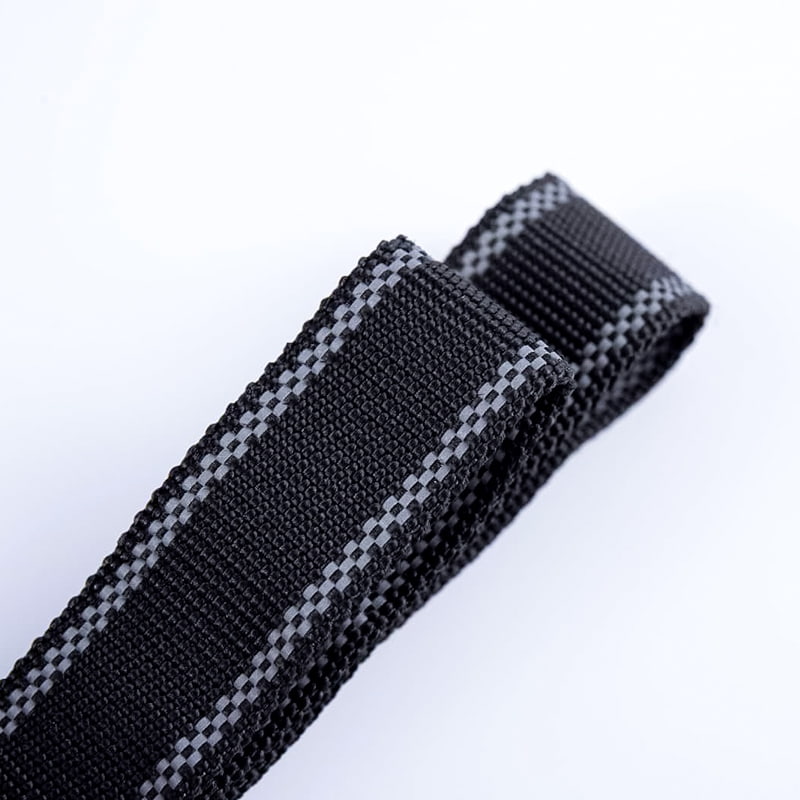 2.2cm Polypropylene Reflective Hollow Webbing for Outdoor GearThis lightweight polypropylene webbing floats, prints well, and adds reflective threads for visibility, making it a practical match for camping straps and outdoor accessories with moderate loads.View Product →
When a program needs a deeper head-to-head, this comparison of polyester vs nylon webbing breaks the decision down strength by strength and project by project.
Matching Animal Webbing Width and Strength to the Animal
Width is the most practical strength proxy a buyer has: within the common pet range, doubling the width roughly triples the rated breaking load of a polyester strap off the same loom.
Typical breaking strength of woven polyester webbing by width
10 mm300 kg
15 mm600 kg
20 mm1,000 kg
25 mm1,500 kg
38 mm2,400 kg
Indicative class values for woven polyester; actual breaking strength depends on weave density, yarn count and finishing, so confirm results on the supplied sample.
- Cats and toy breeds: 10 mm, which already rates near 300 kg - far above anything a small animal can generate
- Small to medium dogs: 15 mm to 20 mm for daily leads
- Large breeds from roughly 25 kg up: 25 mm in a thickened build
- Pulling and working breeds: 25 mm to 38 mm with reinforced stitching
- Livestock and restraint work: 38 mm and above
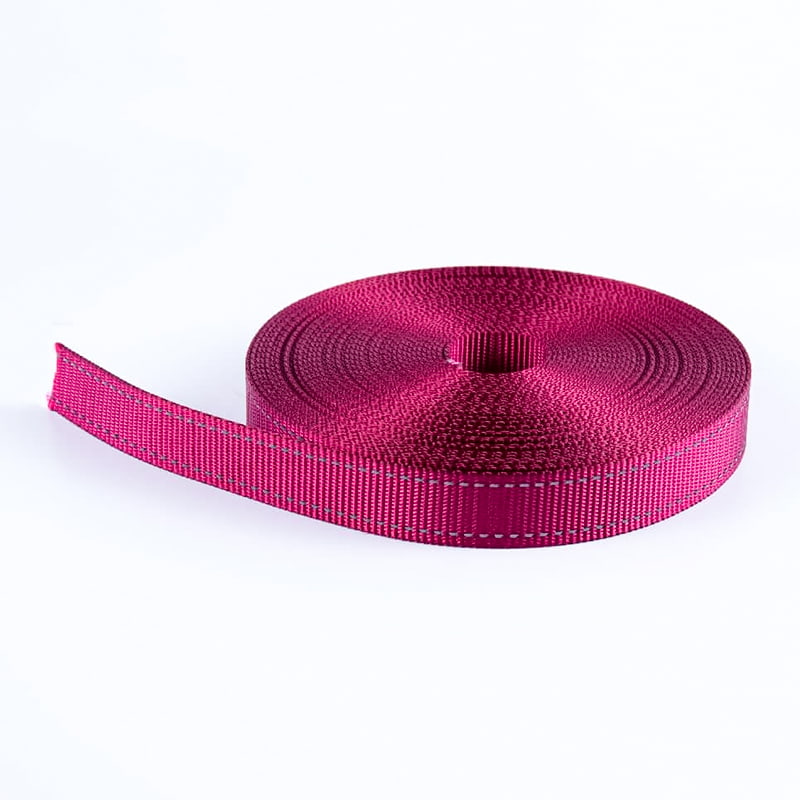
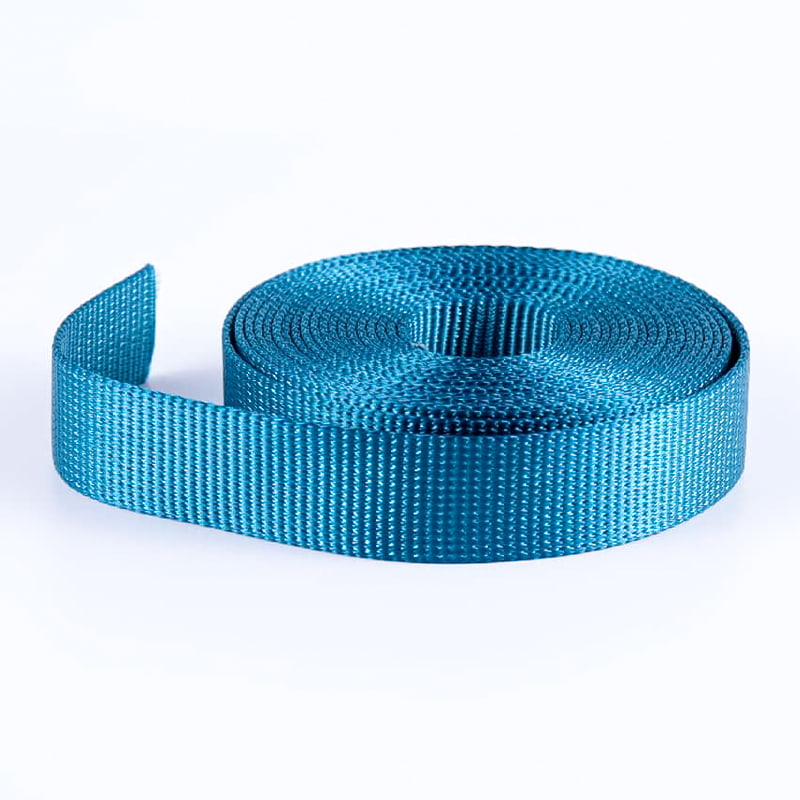 2.5cm Thickened Polyester Webbing for Large Pet LeashesBuilt for heavy pulling loads, this thickened 25 mm polyester webbing suits large dog leashes, where a high safety margin between breaking strength and working load keeps products solid over years of use.View Product →
Weave Structure: Why Two Straps of the Same Width Age Differently
Two 25 mm polyester straps can differ more in service life than a 25 mm and a 38 mm strap side by side, because the weave decides where failure starts.
Plain weave - the economical baseline, balanced in both directions, but surface yarns sit proud and fuzz where the strap runs through hardware.
Twill - the diagonal construction daily-use leads are built on; it flexes easily and resists abrasion from weld rings and buckles.
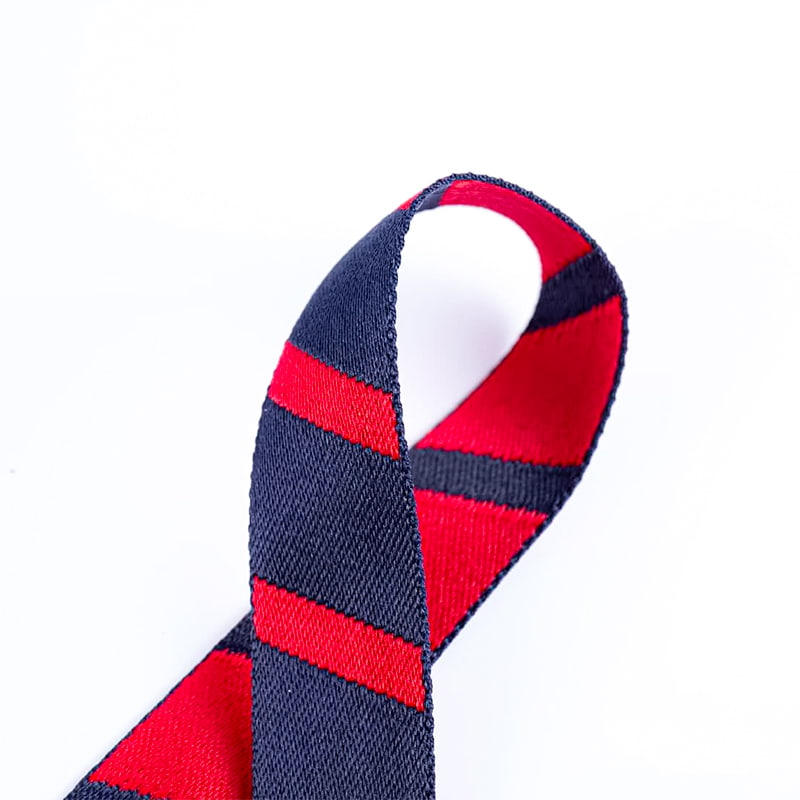
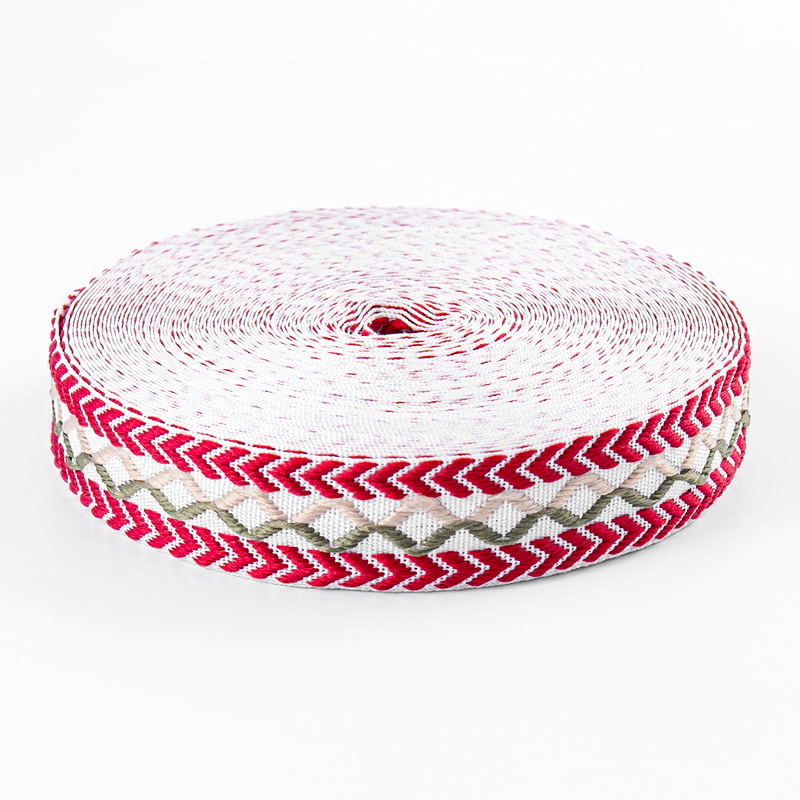
Jacquard - brand names and patterns woven into the body with colored yarns, replacing sewn-on labels; logo clarity depends on thread density, so review artwork at the loom stage.
Double-sided lockstitch and overlock edges - sealed edges that break the fraying cycle where the strap bends through metal hardware.
Hollow and tubular builds - a softer, rounder wrap for handles and pads, and a common base for printed polypropylene straps.
Field note
Most failures on returned leashes start at the cut edge, not the face: an unsealed edge wicks water, abrades against the weld ring and lets yarns snap one at a time until the strap thins. Edge construction is the cheapest service-life upgrade a buyer can specify.
For a channel-by-channel view of how these builds perform on finished products, this guide to animal webbing for pet leashes details collar, harness and training-lead specifications.
Reflective and Low-Light Features That Decide Winter Sell-Through
For pet lines shipping to northern Europe, Canada or the winter cities of Japan, night visibility has moved from nice-to-have to listing requirement, and it is engineered into the webbing in two complementary ways.
- Retroreflective yarns woven into the face fabric bounce headlight beams back toward the driver, keeping dog and handler visible at distance
- Fluorescent colors such as safety green carry visibility through overcast and dusk conditions
- The strongest specification pairs both on one strap: a fluorescent base with reflective yarn coverage
Woven-in reflectivity also survives repeated washing far better than glued-on tape, which is why mills integrate the function into the yarn rather than laminating it on afterwards.
Daytime spec: fluorescent yarns. Night spec: retroreflective yarns. One strap can carry both - and for winter markets that combination belongs in the purchase order, not in post-season negotiations.
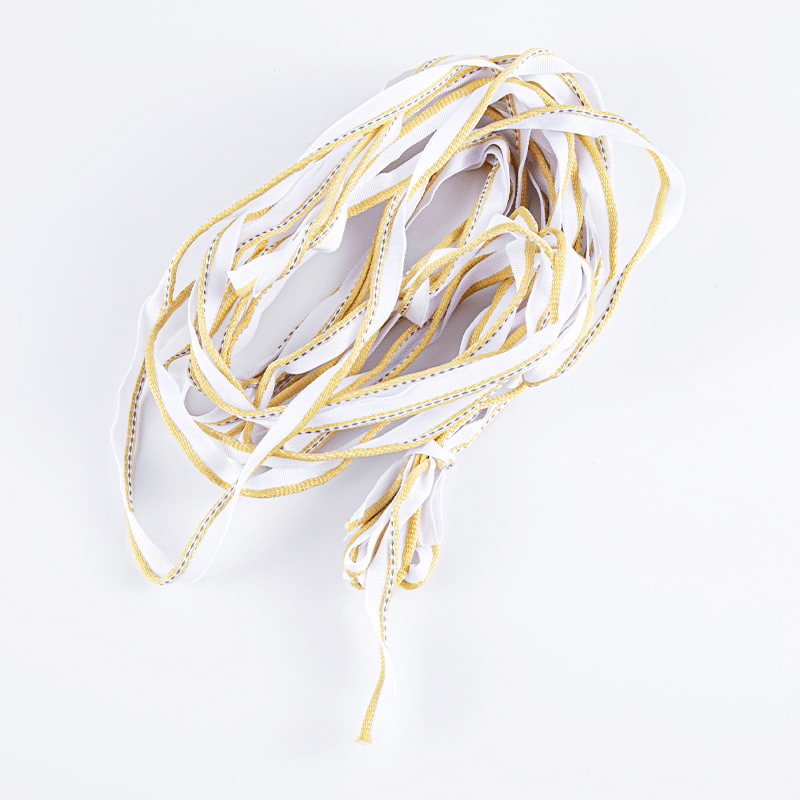
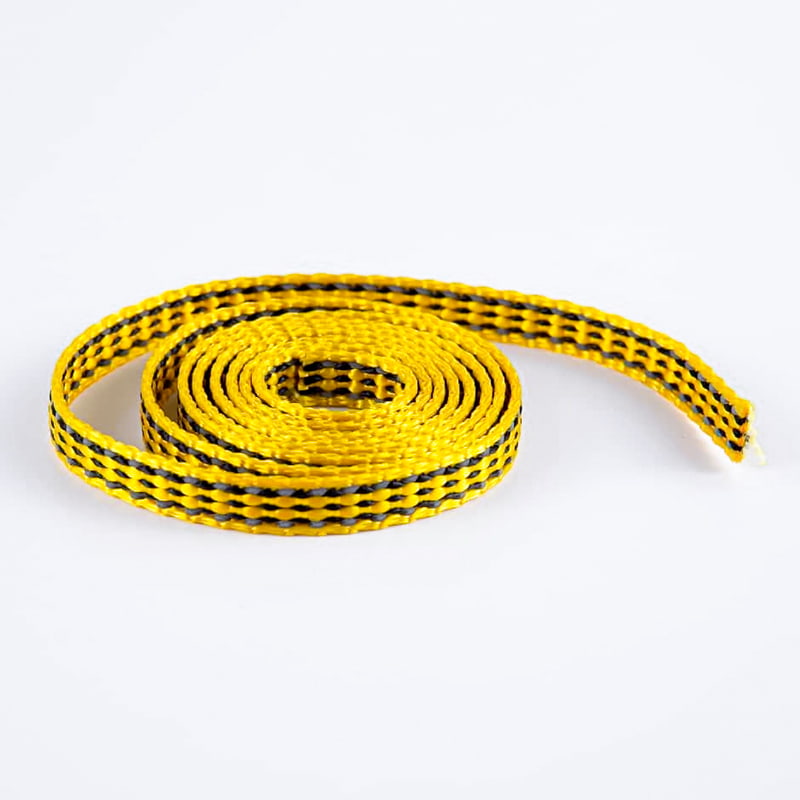 1.0cm Polyester Reflective Pet Training Leash WebbingThis narrow polyester webbing combines daytime fluorescent options with retroreflective yarn for low-light visibility, fitting winter pet markets and high-frequency training scenarios where color and width are fixed at the loom.View Product →
Ordering Custom Webbing From the Mill
Treat animal webbing as a custom component: color, width and woven logos are all fixed at the loom stage, and changes after bulk has started cost real money.
Send the reference. A physical sample or a written spec - width, fiber, target load, Pantone references - gives the mill something exact to quote against.
Confirm construction. Agree the weave, edge type, jacquard repeat and reflective yarn placement before any loom is threaded.
Approve a woven sample. Wash it, check colorfastness, handle it, and measure width consistency from end to end.
Release bulk with checkpoints. Set inspection milestones and keep the approved sample as the reference standard for the whole run.
Working with a weaver rather than a trading company shortens this loop. Haining Fengrun Rope Weaving Co., Ltd., a narrow-fabric mill in Haining, Zhejiang that produces polyester, nylon, polypropylene and cotton webbing and rope, accepts sample-based customization across colors and specifications and answers inquiries within 12 working hours - valuable when a brand is iterating on a seasonal color story.
Factory-direct: sample-based customization and 12-working-hour inquiry responseAnimal Webbing: Buyer FAQ
What width of animal webbing do I need for a large dog leash?
Twenty-five millimeters is the working standard for large breeds, ideally in a thickened polyester build with double-sided stitching at the handle and snap-hook ends. Woven polyester at that width typically rates around 1,500 kg of breaking strength - several times the worst load a large dog generates, which is exactly the margin a safety-critical product should carry.
Is polyester or nylon the better collar and harness material?
Polyester suits collars and outdoor harnesses because it barely absorbs water and holds color through repeated washing. Nylon earns its premium in harness panels and designs that benefit from softness or controlled stretch, such as elastic jacquard. Many brands split the program: polyester for leads and collars, nylon for comfort panels.
Can a brand logo be woven into animal webbing?
Yes. Jacquard weaving integrates logos and patterns directly with colored yarns, so branding cannot peel or wash off the way surface printing can. Clarity depends on thread density and line weight, so submit vector artwork with Pantone codes and approve a woven sample before bulk.
How is animal webbing different from cargo webbing?
The materials overlap, but the priorities do not. Animal webbing is judged on hand feel, edge softness, abrasion behavior and low-light visibility, while cargo webbing is judged almost purely on breaking load and hardware compatibility. Because the same looms often produce both, pet-line buyers can usually consolidate restraint webbing and cargo straps into one sourcing program.
Bottom line: choose the fiber for the environment, the width for the load, and the weave for the failure mode you care about most - then lock all three on a physical sample before committing to bulk.