English
  中文简体
中文简体 We are a national high-tech enterprise. At present, there are many kinds of self-woven and cooperatively processed fabrics, including microfiber warp-knitted towel cloth, weft-knitted towel cloth, coral fleece, etc.
Content
A sourcing manager for a workwear brand once described her first order of polyester belts this way: the samples looked perfect, the price was right, and the belts still failed in the field. After a humid summer, the waistbands stretched out, the color dulled, and the edges began to fray where they rubbed against belt loops. The belts were labeled 100% polyester, but the label was the only specification that mattered to the supplier.
The direct answer on durability is this: a durable polyester belt is made from high-tenacity yarn, woven densely enough to resist abrasion and edge fraying, cut to a width that matches its load, and finished so the edges stay locked. Polyester will not always beat nylon in a dry tensile test, but for belts that face sun, moisture, and repeated flexing, it is the more predictable material. This guide explains what to check before you place a bulk order.
What Makes a Polyester Belt Durable
Most buyers treat "durable" as one property. In webbing, it is actually four behaviors working together:
- Low stretch under load. A durable polyester belt typically shows less than 3% elongation at working loads. Higher stretch means the belt slowly sags and needs constant re-tightening.
- UV resistance. Polyester tolerates prolonged sunlight much better than nylon, whose polymer chains weaken under ultraviolet exposure. This matters for work belts, outdoor gear, and dog leashes that stay in the sun.
- Moisture stability. Polyester absorbs very little water, so its width, stiffness, and strength stay stable in humidity, rain, and sweat. Nylon absorbs more and loses a meaningful share of its strength when wet.
- Chemical and mildew resistance. Polyester does not feed mildew and resists most industrial chemicals, which is why it appears in marine straps and workshop equipment.
If a supplier cannot give you numbers for elongation, breaking strength, or weave density, you are buying commodity tape, not an engineered belt.
Nylon's Dry Strength Advantage Does Not Always Survive Real Use
Nylon has a higher dry breaking strength than polyester, which is why some buyers assume nylon is automatically the most durable belt material. In practice, nylon absorbs moisture from the air and from contact with skin, and it loses strength when wet. Its UV resistance is also weaker, so an outdoor polyester belt often keeps its integrity longer than a comparable nylon one. The trade-offs matter in procurement, and our polyester versus nylon webbing comparison covers the test logic and application fit in more depth.
| Property | Polyester | Nylon |
|---|---|---|
| Stretch under load | Low, typically under 3% | Higher; can creep under repeated tension |
| UV resistance | Strong; suitable for outdoor belts | Weaker; degrades with sun exposure |
| Moisture absorption | Very low; dimensions stay stable | Higher; loses strength when wet |
| Dry breaking strength | High | Higher |
| Best fit for belt applications | Outdoor, workwear, marine, cargo | Indoor load-bearing and elastic uses |
Width and Thickness: How Much Belt Do You Actually Need?
Width and thickness do not just change the look of a belt; they define its load envelope. A 1.0 cm strap can be perfectly durable as a lanyard or a light training lead, but the same construction in a 4.2 cm belt carries several times the breaking load because the cross-section is larger. Buyers typically make one of two mistakes: ordering a wide belt made with thin yarn, or ordering a thick belt with a loose weave that splits along the edges.
For load-bearing belts intended for cargo, backpacks, and heavy-duty waist wear, 2.0 cm to 2.5 cm is the practical working range. For apparel belts and decorative waistbands, 4.2 cm is the common choice because it leaves room for patterns while remaining comfortable to flex. If you are translating an end-product requirement into a webbing specification, a guide to choosing the right polyester webbing strap will help you avoid the most common sizing errors.
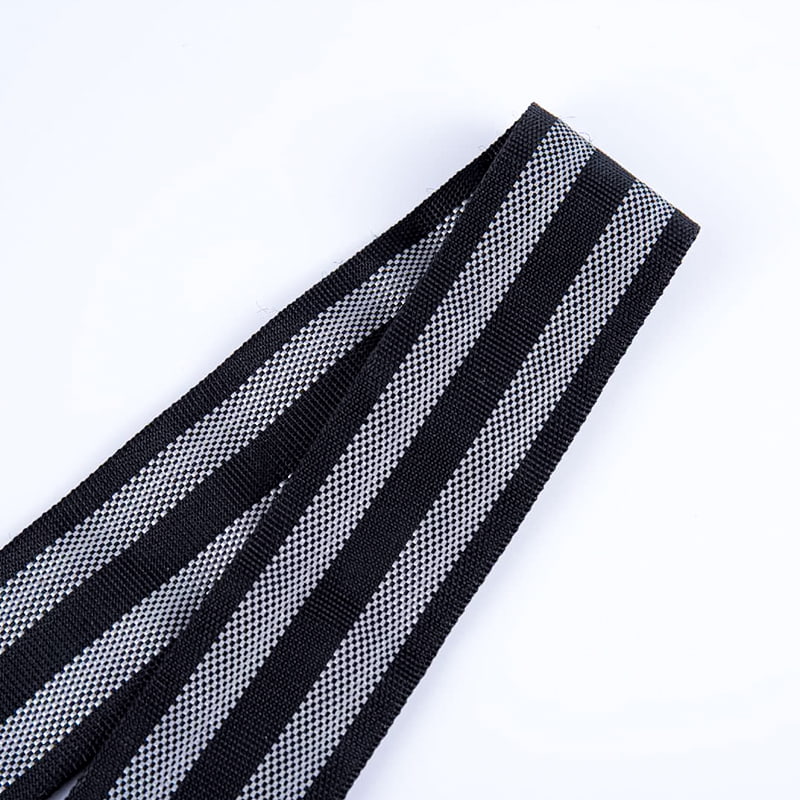
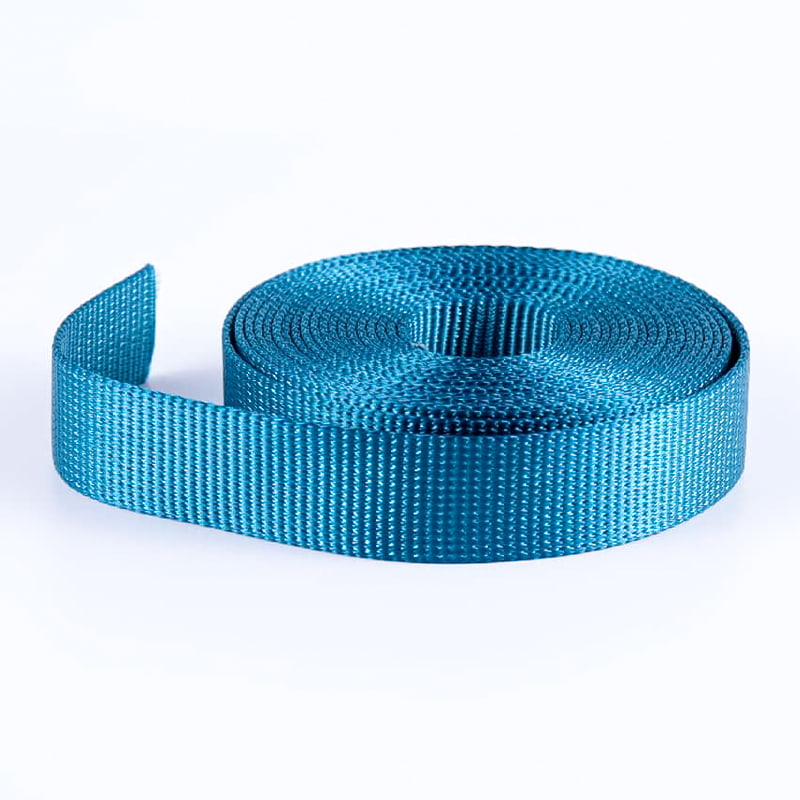
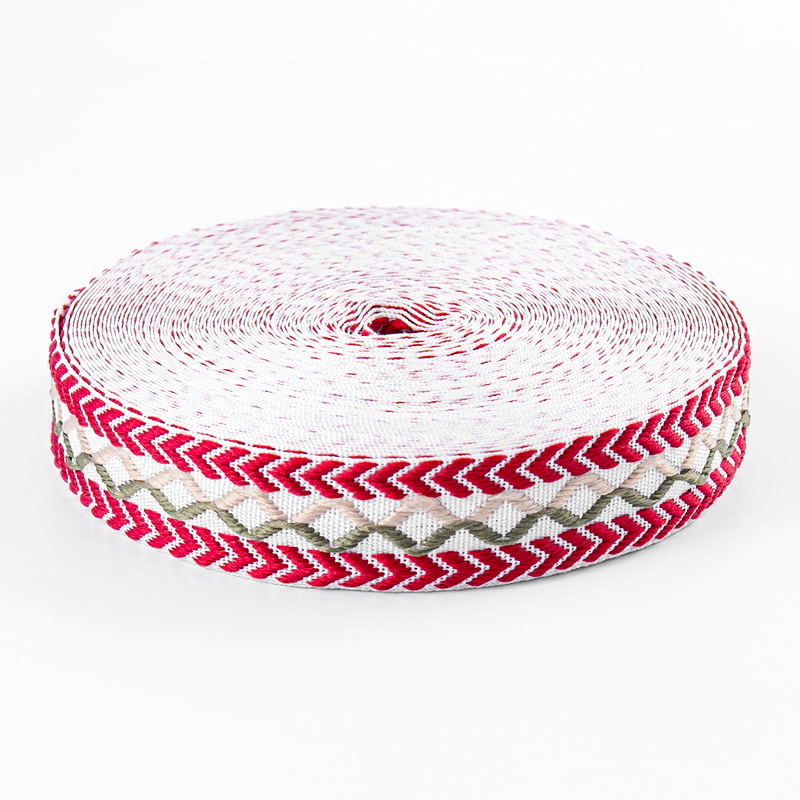
When the application is a utility or cargo belt, choose a construction built for load, such as the 2.0 cm wear-resistant polyester backpack and cargo webbing, which uses a dense weave to resist edge fraying under tension. For apparel belts where appearance matters, a 4.2 cm imitation-nylon jacquard webbing for apparel and shoes gives the visual structure of nylon with the weather stability of polyester.
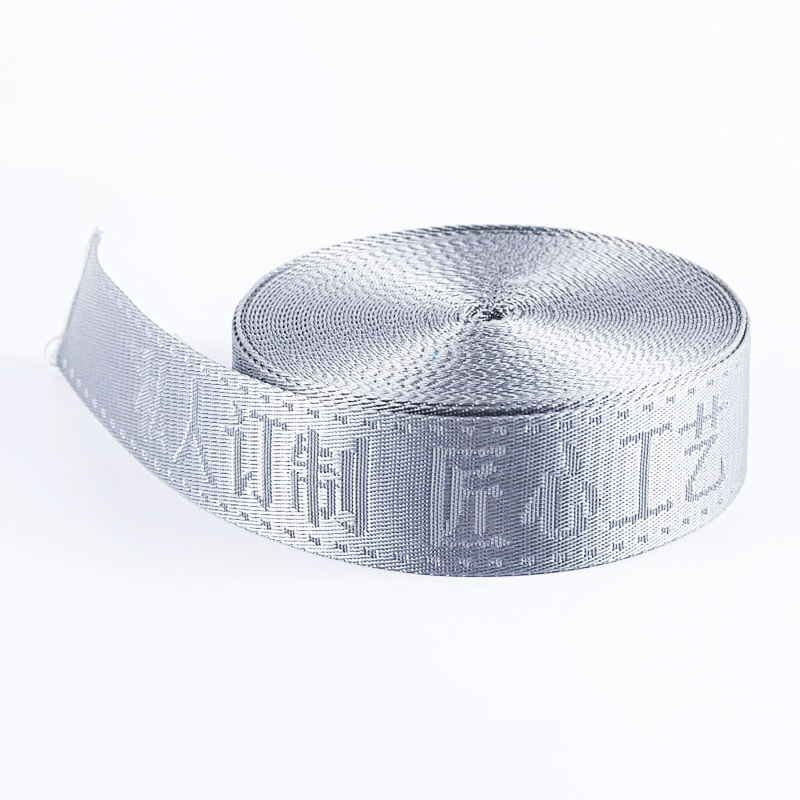 Оптовая торговля 4.2cm Imitation Nylon Jacquard Webbing for Apparel Shoes Hats AHaining Fengrun Rope Weaving Co., Ltd. Китайская оптовая торговля 4.2cm Imitation Nylon Jacquard Webbing for Apparel Shoes Hats Accessori...View Product →
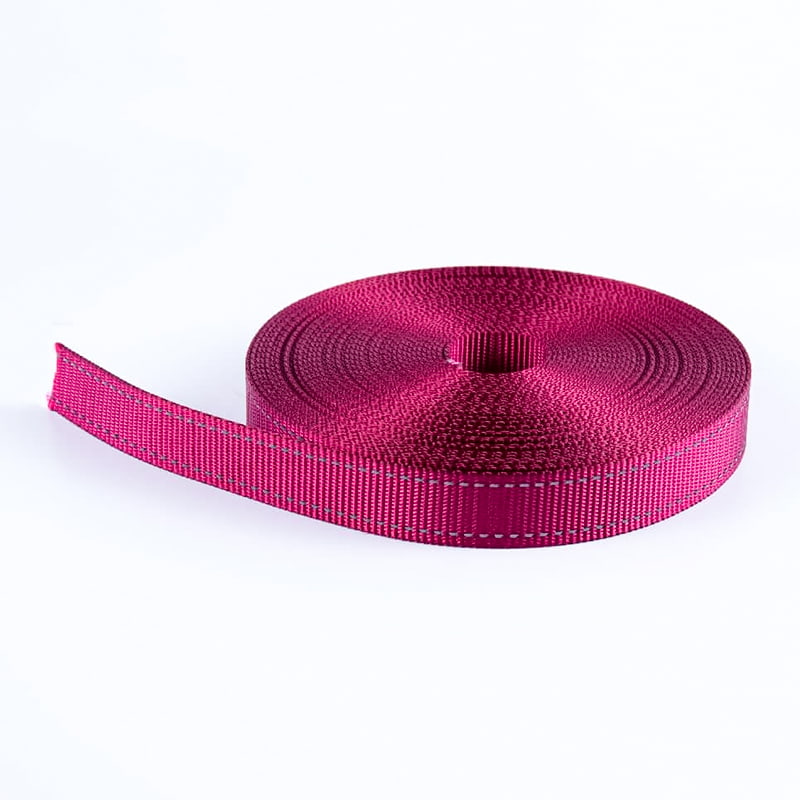 Оптовая торговля 2.0cm Safe Wear-Resistant Polyester Backpack Cargo Webbing ЗавоHaining Fengrun Rope Weaving Co., Ltd. Китайская оптовая торговля 2.0cm Safe Wear-Resistant Polyester Backpack Cargo Webbing Заводы и про...View Product →
Weave Structure and Manufacturing: Where Belts Actually Fail
Polyester belts rarely fail with a single clean snap in the middle. In field returns, they fail at the edges, at the stitching line, or at the point where the belt slides through a buckle. That is why weave structure and edge construction deserve as much attention as the polymer itself.
A Tight Weave Delivers More Than Thick Yarn
A dense plain or twill weave distributes load across more yarn intersections and keeps the yarns from shifting against each other. A loose weave feels soft in the hand, but the yarns migrate under load, producing localized abrasion and premature thinning. To check a sample, press the edge between your fingernails: a durable polyester belt should feel firm, not spongy. Twill structures also tend to resist abrasion better than plain weaves because the raised diagonal surface wears more evenly.
Edge Construction Determines How the Belt Fails
Heat-cut edges are fast and inexpensive, but for a durable belt you want folded, stitched, or woven selvedge edges. Once the edge starts to fray, the belt loses width rapidly, and strength drops far faster than a gradual center-line failure would. If your product will be cut into lengths and sewn into a finished item, specify locked or stitched edges from the start.
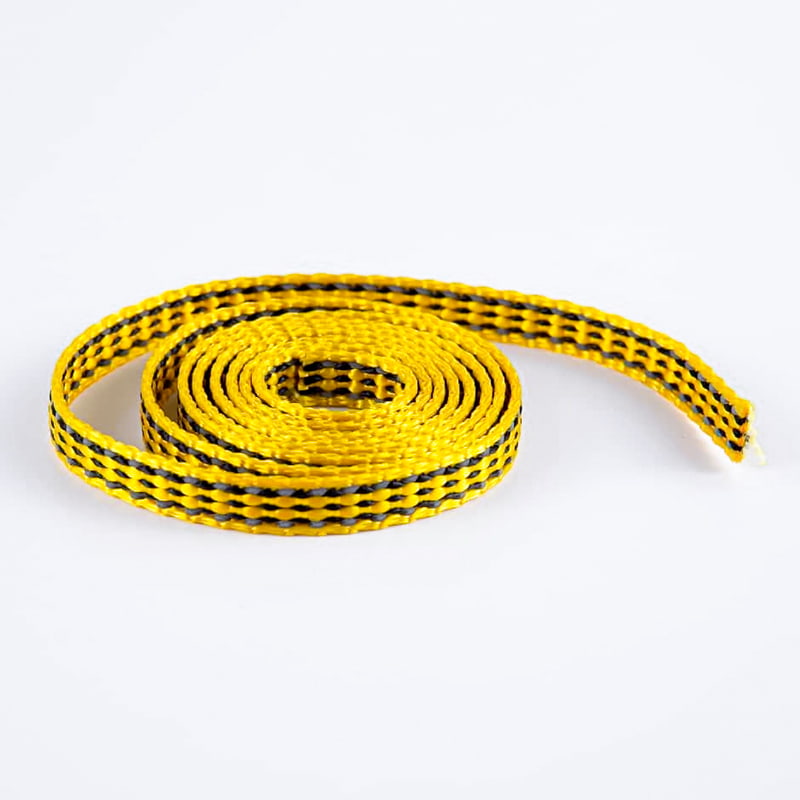
Jacquard polyester belts are a special case. A decorative pattern is woven directly into the belt, and if the pattern density is too low, the result is a garment trim rather than a structural belt. A well-engineered jacquard keeps pick density high enough to preserve tensile performance. For outdoor and industrial belt uses that do not require ornament, a 2.0 cm polyester webbing for outdoor and industrial rope accessories is a plain, dense construction that prioritizes longevity.
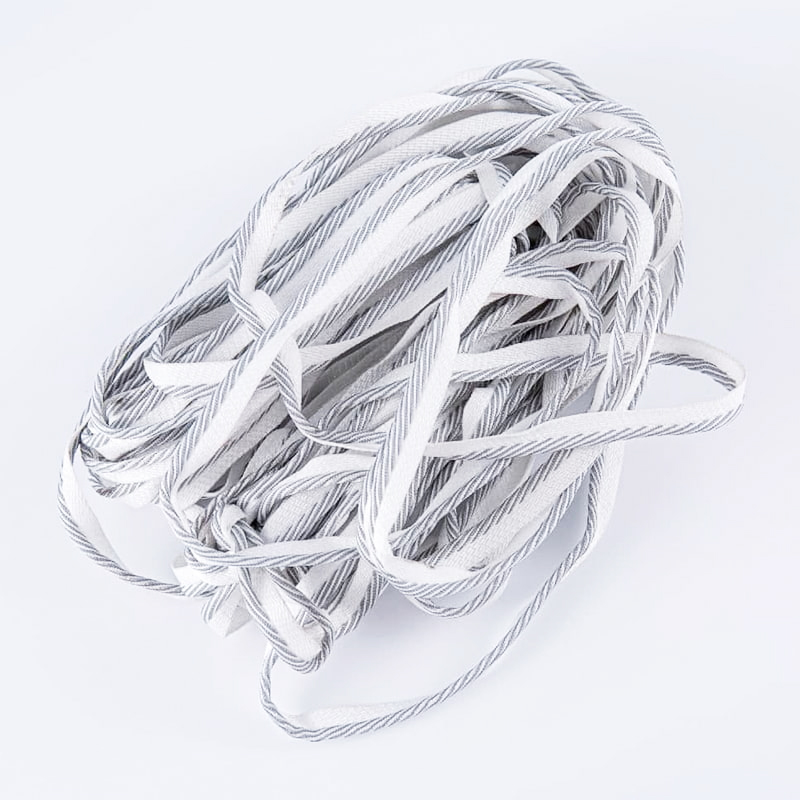
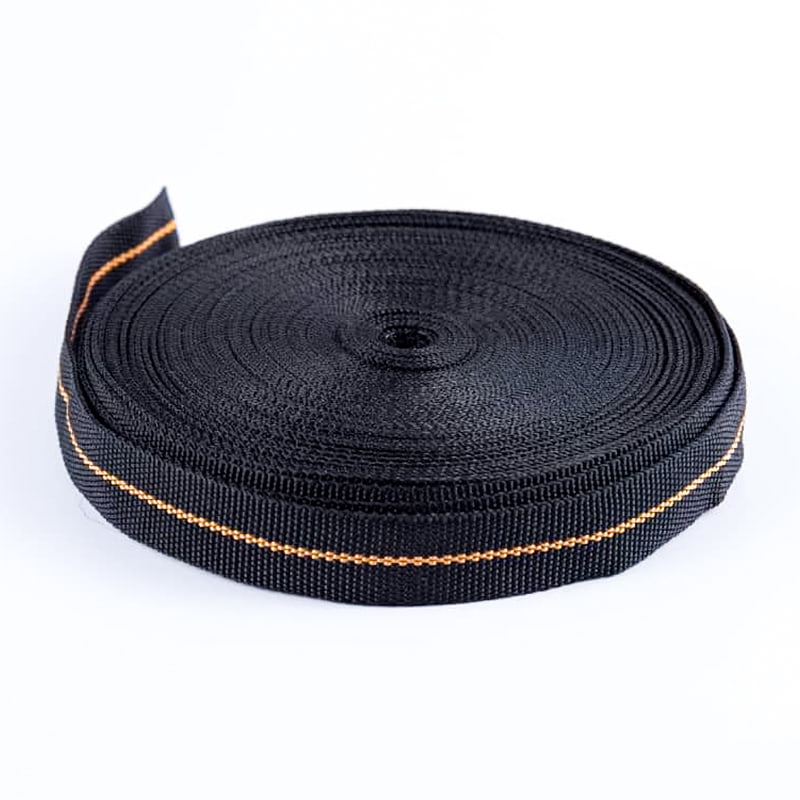 Оптовая торговля 2.0cm Polyester Webbing for Outdoor Industrial Rope AccessoriesHaining Fengrun Rope Weaving Co., Ltd. Китайская оптовая торговля 2.0cm Polyester Webbing for Outdoor Industrial Rope Accessories Заводы ...View Product →
Manufacturing also matters. Heat-setting locks the yarn in place and reduces future stretch; high-tenacity polyester yarn adds breaking strength without changing the look; and quality dyeing determines whether the belt keeps its color after sun and washing. These are choices made at the weaving stage, not features that can be added later.
What to Specify When You Order a Durable Polyester Belt
Because "polyester webbing" covers everything from light trim tape to load-rated cargo strapping, durability must be written into the specification. When you send an inquiry to a factory, include these points:
- Material and yarn: specify 100% high-tenacity polyester, not low-grade or heavily recycled filament, unless the product intentionally needs a softer hand feel.
- Width tolerance: state an acceptable range such as 2.0 cm with a tolerance of 0.1 cm, so buckles and hardware still fit after dyeing and finishing.
- Weave density: ask for picks per centimeter or a minimum breaking strength in kilograms or newtons.
- Environmental resistance: require UV-stabilized yarn for outdoor products and a color fastness rating of at least grade 4 for belts that will be washed or sun-exposed.
- Edge finish: confirm whether edges are heat-cut, folded, stitched, or selvedge-woven.
Judging a sample by hand feel alone is risky. A soft, flexible sample can hide a loose weave, and a very stiff sample can be brittle if the heat-setting was too aggressive. Fold the sample, twist it, and pull it with a known load before approving mass production.
As a weaving factory rather than a trading company, we produce custom polyester belts from customer samples with controlled width, color, and weave specifications. If you are writing your first specification, our summary of why polyester webbing suits industrial projects explains the material behavior you can expect before you commit to a production run.
The Bottom Line on Durable Polyester Belts
A durable polyester belt is not defined by the fiber name alone. It is the combination of high-tenacity yarn, low elongation, UV and moisture stability, a dense weave, and an edge finish that resists fraying. Width and thickness should follow from the actual load and use environment rather than from visual preference.
Start with the application, then set the specification. Outdoor and industrial use calls for UV-stabilized polyester with locked edges; load-bearing belts need a wider, denser construction; apparel belts can prioritize pattern and hand feel as long as the weave density stays adequate. If a supplier can answer questions about elongation, breaking strength, and edge construction with real numbers, you are probably dealing with a factory that understands durability instead of a trader reselling generic tape.