English
  中文简体
中文简体 We are a national high-tech enterprise. At present, there are many kinds of self-woven and cooperatively processed fabrics, including microfiber warp-knitted towel cloth, weft-knitted towel cloth, coral fleece, etc.
Content
- 1 How a Custom Pet Leash Webbing Quote Is Specified
- 2 Which Webbing Width Fits Which Leash
- 3 Polyester, Nylon or Polypropylene: Choosing the Leash Webbing Material
- 4 Reflective and Fluorescent Leash Webbing for Night Visibility
- 5 Customisation Levers: Colour, Jacquard Logo, Width Tolerance and Stitching
- 6 Defects to Inspect Before the Order Leaves China
- 7 MOQ, Lead Time and What Actually Drives the Unit Price
- 8 A Five-Point Sourcing Checklist
- 9 Frequently Asked Questions About Custom Pet Leash Webbing
A 25 mm polyester leash strap can pass every pull test in a showroom and still come back from a retailer six weeks later, because the production run drifted on weft density, dye lot or stitching. Sample-to-shipment consistency is where most leash programmes are won or lost.
Buyers searching for China custom pet leash webbing are not shopping for a generic roll of strap. They are buying a built-to-spec component that carries load, displays a brand, survives mud and salt water, and has to match a hardware set, a sewing line and a retail price. On a typical pet leash, the webbing is the largest single material cost, ahead of the snap hook and the neoprene handle pad.
Haining Fengrun Rope Weaving Co., Ltd. weaves in Haining, Zhejiang, and its leash-focused range covers 11 specifications between 10 mm and 25 mm: flat, twill, double-sided lockstitch, thickened and reflective constructions. That spread is a useful map of what a Chinese webbing factory can quote today.
DefinitionPet leash webbing is a narrow woven textile, usually 10 mm to 50 mm wide, made on needle or shuttle looms from high-tenacity polyester, nylon or polypropylene yarn and then cut, stitched and fitted with hardware to become a leash, a training lead or a harness strap.
How a Custom Pet Leash Webbing Quote Is Specified
A complete leash webbing specification has five fields: width, yarn, weave, colour method and finishing. Leave one blank, and the quote you receive will not describe the product you receive.
- Width and thickness: 10, 15, 20 and 25 mm cover the consumer leash market, while 38 mm and 50 mm belong to harness straps and large-breed tie-downs.
- Yarn denier: 600D is light and soft for small leads, while 900D to 1200D is standard for 20 to 25 mm straps rated above 500 kg.
- Weave structure: plain weave is the cheapest and most stable, twill gives a softer hand, jacquard carries the pattern, and tubular constructions add bulk without weight.
- Colour method: stock dyed yarn, piece dyeing or solution dyeing. This field alone decides the order minimum and how the shade behaves after a year in a shop window.
- Finishing: reflective yarn, fluorescent yarn, anti-curl heat setting or a light PU coating on the reverse.
Roughly half of a leash's ex-works material cost sits in the webbing, which makes shaving yarn denier tempting. Dropping from 900D to 600D often saves about 8 percent of strap cost and loses far more in returns once a large dog loads the handle fold.
Which Webbing Width Fits Which Leash
For most consumer programmes, 20 mm and 25 mm polyester webbing carry 70 to 80 percent of order volume, while 10 mm and 15 mm serve small-breed leads, cat leashes and training tabs.
Breaking load scales almost linearly with width and thickness, so a 10 mm strap rated at 2.4 kN and a 25 mm strap at 9.0 kN behave like different products even when they come off the same looms.
Typical warp breaking load by webbing width
Indicative warp-direction values for 1.2 mm polyester flat webbing, 200 mm gauge length.
Elongation matters as much as peak load. Over a 200 mm gauge length, polyester webbing typically stretches 12 to 15 percent before break, nylon 15 to 20 percent, and polypropylene sits near 15 percent with poor recovery. On an anti-pull lead that stretch is a feature; on a car restraint or a tie-down it is a fault.
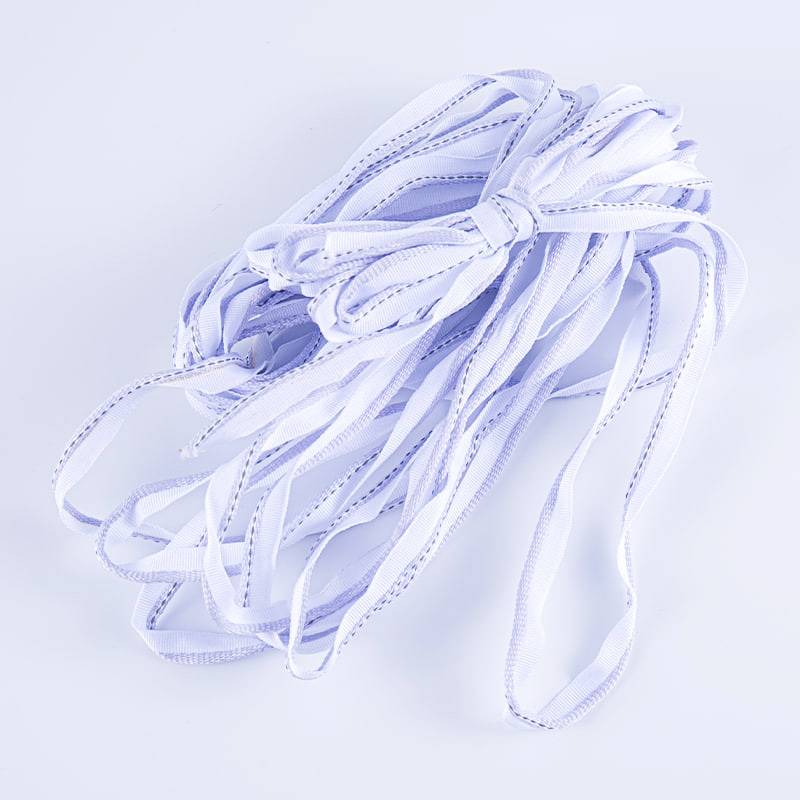
Large-breed programmes usually settle on a thickened 25 mm strap with higher weft density, which keeps the same hardware slot as standard 25 mm webbing while resisting the edge curling that appears after months of pulling.
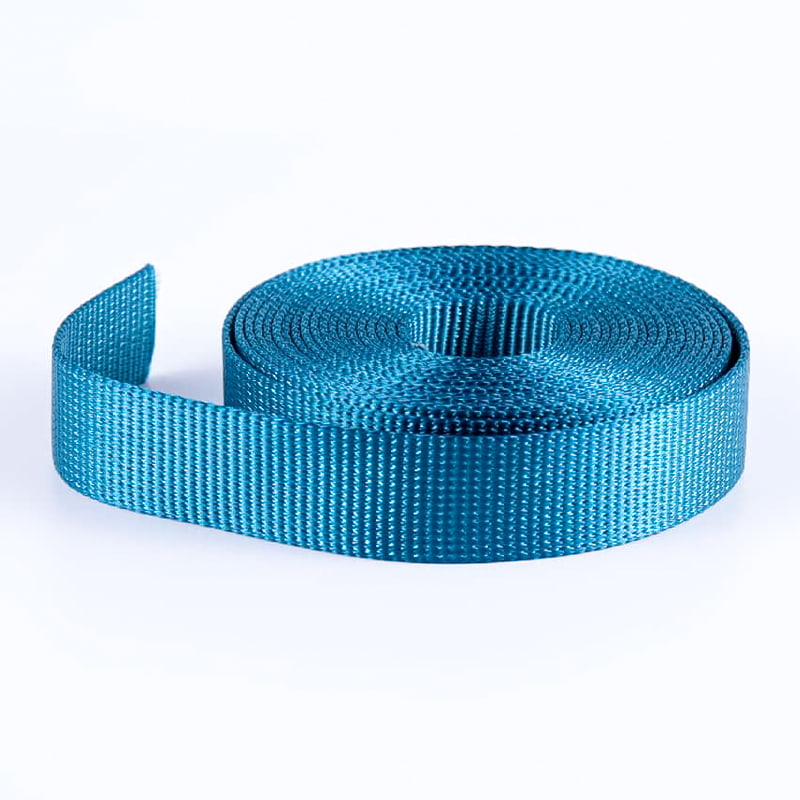 2.5 cm Thickened Polyester Webbing for Large Pet LeashesFor large-breed leash builds, this 2.5 cm polyester webbing offers reinforced edges, high strength, and resistance to curling under repeated pulling.View Product →
Polyester, Nylon or Polypropylene: Choosing the Leash Webbing Material
Polyester is the default for pet leash webbing. Nylon wins when elasticity and abrasion resistance matter most, and polypropylene is the budget option for light-duty and promotional straps.
| Material | Breaking load, 20 mm | Best at | Watch out for | Typical leash use |
| Polyester (PET) | about 6.0 kN | Colour retention, UV stability, low cost | Lowest elongation of the three | Everyday leashes, training leads, large-breed straps |
| Nylon 6.6 | about 6.2 kN | Abrasion resistance and shock absorption | Absorbs moisture, needs UV stabiliser, costs 20 to 40 percent more | Anti-pull leads, wet climates, harness straps |
| Polypropylene | about 4.0 kN | Lowest cost, floats, very light | Degrades under UV without stabiliser | Light leads, cat leashes, promotional items |
One practical trap: piece-dyed nylon can shift shade in humid storage, so ask for the dye method in writing. Solution-dyed polyester costs a few percent more per metre but holds its shade through two years of display, which matters when your packaging shows the product colour.
Reflective and Fluorescent Leash Webbing for Night Visibility
Reflective leash webbing only performs long term when retro-reflective yarn is woven into the strap during production; stitched-on tape is cheaper and starts peeling after a few months of pavement abrasion.
Reflective yarn suppliers typically quote 250 to 400 candelas per lux per square metre at a 12-degree observation angle. Two woven bands on a 20 mm strap push the distance at which a driver registers the leash past 90 m on low beam.
- Yarn grade: ask for the brand and the wash rating of the reflective yarn, not just the colour of the band.
- Wash durability: a common benchmark is 25 home launderings at 40 degrees Celsius with no more than 25 percent loss of initial retro-reflectance.
- Fluorescent versus reflective: fluorescent yellow-green lifts daytime contrast but returns almost nothing under headlights.
- Band layout: one continuous band, two parallel bands or a full-width reflective weft, each changing the look and the yarn cost.
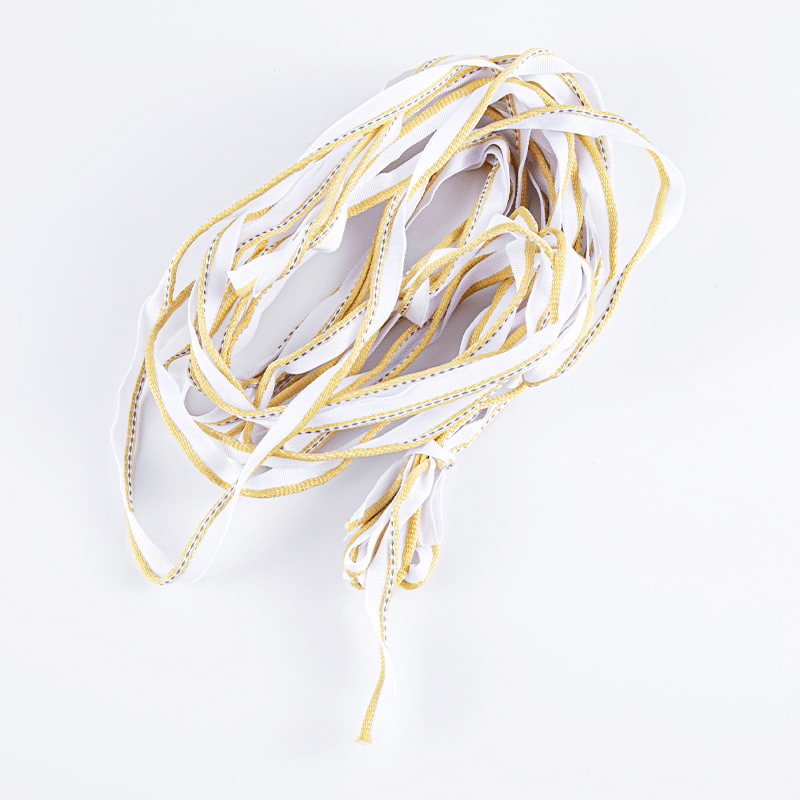
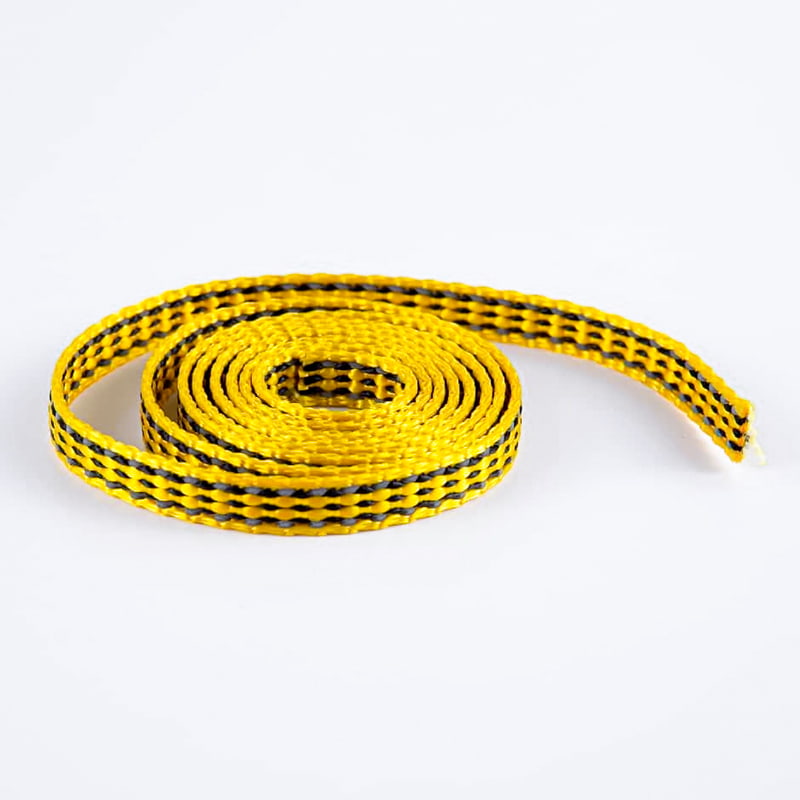 1.0 cm Polyester Reflective Webbing for Pet Training LeashesWoven reflective yarn supports dim-light visibility for high-frequency training, while the 1.0 cm polyester construction balances lightweight handling, abrasion resistance and quick-drying comfort.View Product →
Customisation Levers: Colour, Jacquard Logo, Width Tolerance and Stitching
Four levers change the appearance, the tooling cost and the lead time of a leash strap: colour method, woven logo, width tolerance and stitching construction.
- Colour method. Piece dyeing reaches a Pantone target at lower minimums, often 500 to 1,000 m per colour, but can fade about one grey-scale step after 40 hours of xenon-arc exposure. Solution-dyed yarn holds shade far longer and usually needs 2,000 m or more per colour.
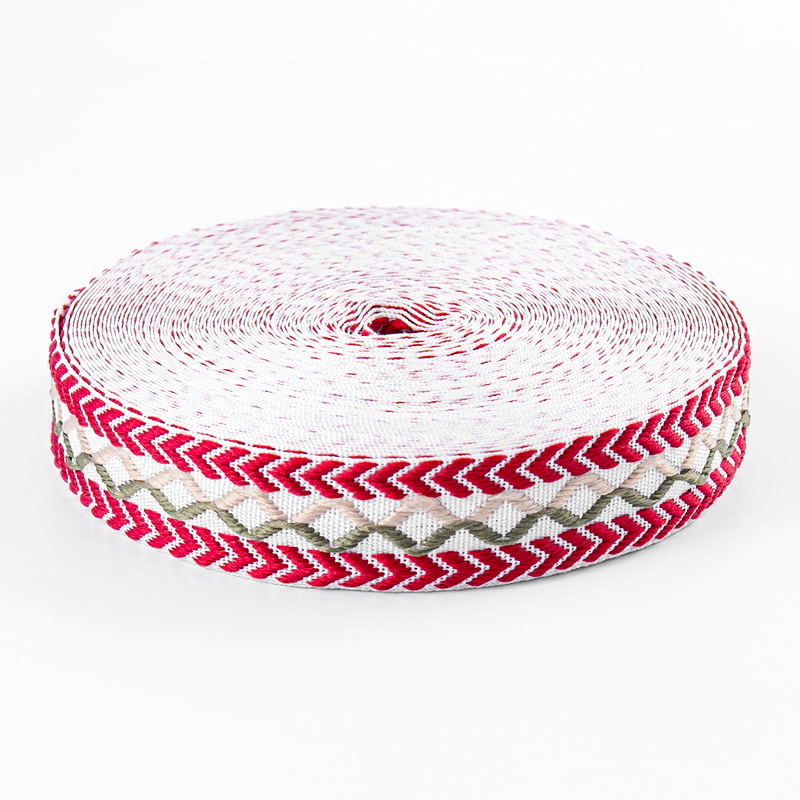
- Jacquard logo. A woven-in logo removes the sewn label and the risk of it falling off, but loom resolution limits detail: below roughly 3 mm character height, letters close up on a 20 mm strap.
- Width tolerance. Commercial tolerance is plus or minus 1 mm, tightened to plus or minus 0.5 mm whenever a metal slider or plastic buckle has to fit without a gap.
- Stitching. Double-sided lockstitch encloses the cut ends and stops fraying, and 8 to 10 stitches per inch is the usual density for a load-bearing handle joint.
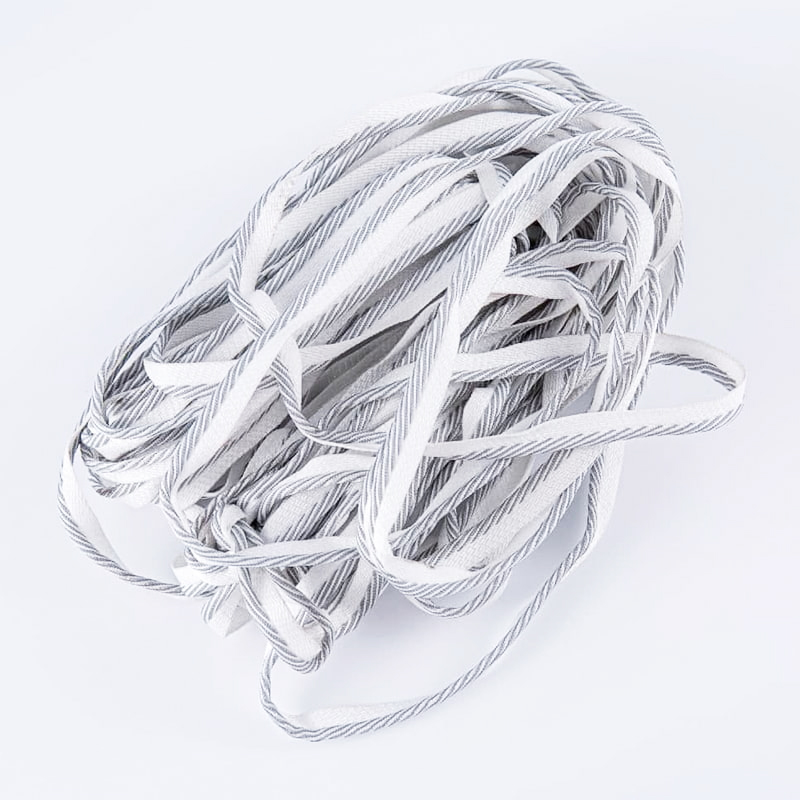
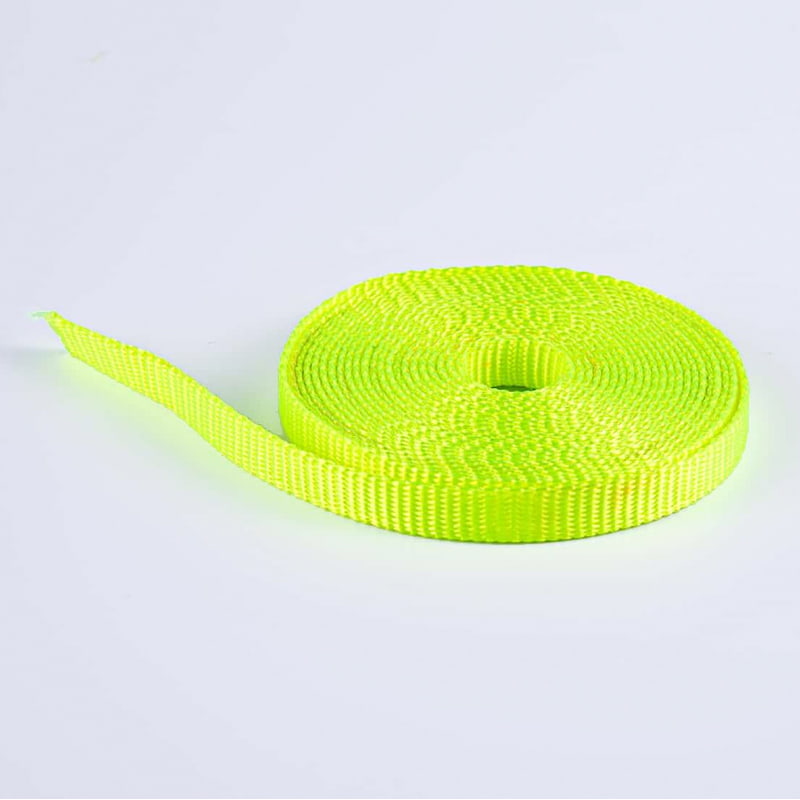 1.5 cm Double-Sided Lockstitch Polyester Webbing for Pet Training LeashesFor training leash construction, this 1.5 cm polyester webbing uses double-sided lockstitch edges to resist curling and tearing and should be checked on continuous samples.View Product →
Defects to Inspect Before the Order Leaves China
Three defects kill leash webbing orders: width drift, weft skew and dye-lot mismatch. All three are obvious on a 2 m continuous sample and invisible on a 10 cm swatch.
| Defect | Likely cause | How to check it |
| Width drift beyond tolerance | Loom take-up or tension drift | Measure at three points across a 50 m run with a steel rule, not a tape measure |
| Weft skew or bowing | Uneven warp tension, off-centre let-off | Lay 2 m flat and compare the pattern line with the selvedge along the full length |
| Dye-lot mismatch | Separate dye batches, piece-dye variance | Compare against the approved sample under D65 light, never under showroom lighting |
| Fraying at cut ends | Cold cutting or a missing lockstitch | Flex a cut end 20 times by hand and look for loose filaments |
| Lost retro-reflectance | Surface-coated reflective yarn | Wash five cycles at 40 degrees Celsius, dry, then re-check the reflective reading |
Order one continuous 50 m piece per dye lot rather than a bundle of 5 m cuts. Bowing, width drift and shade banding only reveal themselves over a long run.
MOQ, Lead Time and What Actually Drives the Unit Price
Expect a 500 to 1,000 m minimum for stock colours and 2,000 to 3,000 m for a custom Pantone or a woven logo, with 15 to 25 days of production once the sample is approved.
500 mTypical MOQ for stock colour webbing
2,000 mTypical MOQ for custom dye or jacquard
15-25 dProduction after sample approval
12 hWorking-day enquiry reply quoted by factory-direct suppliers
Stock colour webbing
- Sample in 3 to 5 days
- No dye fee per colour
- Shade limited to the existing palette
- Fastest route to a first production run
Custom dyed or jacquard webbing
- Sample in 7 to 12 days
- Dye fee per colour, often waived above 5,000 m
- Exact Pantone or brand colour
- Adds 5 to 10 days to the first shipment
Unit price is driven by four factors in this order: yarn denier and weft density, width, dye method, and the reflective yarn share. Reflective yarn alone can add 25 to 40 percent to strap cost, so confirm early whether the band is decorative or a genuine safety feature.
A Five-Point Sourcing Checklist
Run these five checks before you place a purchase order, and most of the expensive surprises disappear.
- Send a physical cut sample plus the exact hardware set, so the factory can match the slot, the thickness and the fold.
- Request a construction sheet covering yarn denier, warp and weft density, width tolerance, elongation at break and the colour standard.
- Ask for inspection results from the actual production lot, not a pre-production sample; what makes high-quality pet leash webbing comes down to those measurable fields rather than the look of the swatch.
- Confirm the light source used for colour approval and write it into the order.
- Agree in writing on who pays for reflective yarn upgrades, test reports and third-party inspection.
Frequently Asked Questions About Custom Pet Leash Webbing
What is the minimum order quantity for custom pet leash webbing from China?
Most webbing mills quote 500 to 1,000 m for stock colours and 2,000 to 3,000 m for custom-dyed or jacquard-logo constructions, because loom setup and dye baths are amortised across the run. Below those volumes, a trading company will consolidate your order and add a margin.
How long does a custom leash webbing order take?
Sampling takes 3 to 5 days for stock colours and 7 to 12 days for custom dyeing. Production after approval runs 15 to 25 days, plus 3 to 7 days for inspection and booking. Imported reflective yarn can add another week.
Is polyester or nylon better for pet leash webbing?
Polyester is the better default: it holds colour, resists UV and costs less. Nylon is the right choice when the leash needs shock absorption or maximum abrasion resistance, at roughly 20 to 40 percent higher yarn cost.
Can a brand logo be woven directly into leash webbing?
Yes. Jacquard weaving places the logo in the strap itself, which removes the sewn label and the risk of it falling off. Keep character height above about 3 mm on a 20 mm strap, or the letters will not read cleanly at retail distance.