English
  中文简体
中文简体 We are a national high-tech enterprise. At present, there are many kinds of self-woven and cooperatively processed fabrics, including microfiber warp-knitted towel cloth, weft-knitted towel cloth, coral fleece, etc.
Content
- 1 What Counts as Woven Webbing and What Falls Outside the Term
- 2 How Much Load 25 mm Woven Webbing Really Holds
- 3 How to Write a Woven Webbing Spec That Every Supplier Quotes the Same
- 4 Fibre Choice for Woven Webbing: Polyester, Nylon, Polypropylene and Cotton
- 5 Where Woven Webbing Fails in the Field and How to Test for It First
- 6 Woven Webbing FAQ
Five suppliers, one line item, five different prices. Ask for 25 mm black woven webbing rated at 1,200 kgf and the quotes will spread by more than double, because webbing names a family of narrow fabrics rather than a single product.
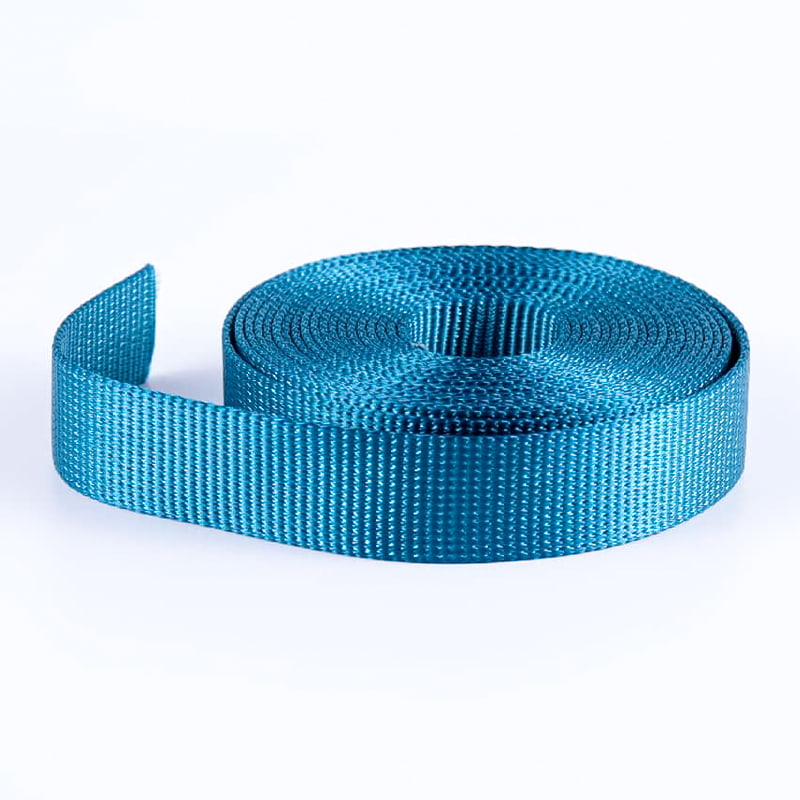
Woven webbing is a narrow fabric, normally 10 mm to 100 mm wide, made by interlacing lengthwise warp yarns with crosswise weft yarns on a shuttle, needle or jacquard loom, then heat-setting and finishing it to a declared width, thickness and breaking load. The warp carries the load; the weft holds the warp in place.
Two rolls can therefore look identical and behave nothing alike. A 25 mm polyester roll woven at 90 warp ends will not match the same width at 130 ends, even when both are dyed to the same colour and finished to the same thickness. The useful buying question is not whether a roll is woven webbing, but which construction the price actually covers.
Woven webbing, in purchasing terms: a narrow fabric whose strength comes from warp density and yarn tenacity, and whose appearance comes from weave structure and finishing. Jacquard, twill, tubular and reflective webbing are construction variants of one family, not separate product lines.
What Counts as Woven Webbing and What Falls Outside the Term
Woven webbing requires interlaced warp and weft. Knitted elastic, braided cord and cut-and-sewn tape sit outside the category, even when they are sold at the same width and colour.
Five constructions cover most commercial quotations, and each behaves differently under load.
| Construction | Build | Load behaviour | Typical use |
| Plain weave flat | Single layer, tight sett | Highest strength, low stretch | Leashes, cargo straps |
| Twill | Warp floats over two wefts | Softer hand, more elongation | Collars, bag straps |
| Jacquard | Individually lifted warp ends | Pattern floats cut local density | Trim, bedding, logos |
| Tubular (hollow) | Flattened tube, joined selvedges | Lower load at equal width, reversible | Lanyards, handles |
| Reflective | Retro-reflective yarn inserted | Base strength similar to flat | Safety wear, pet gear |
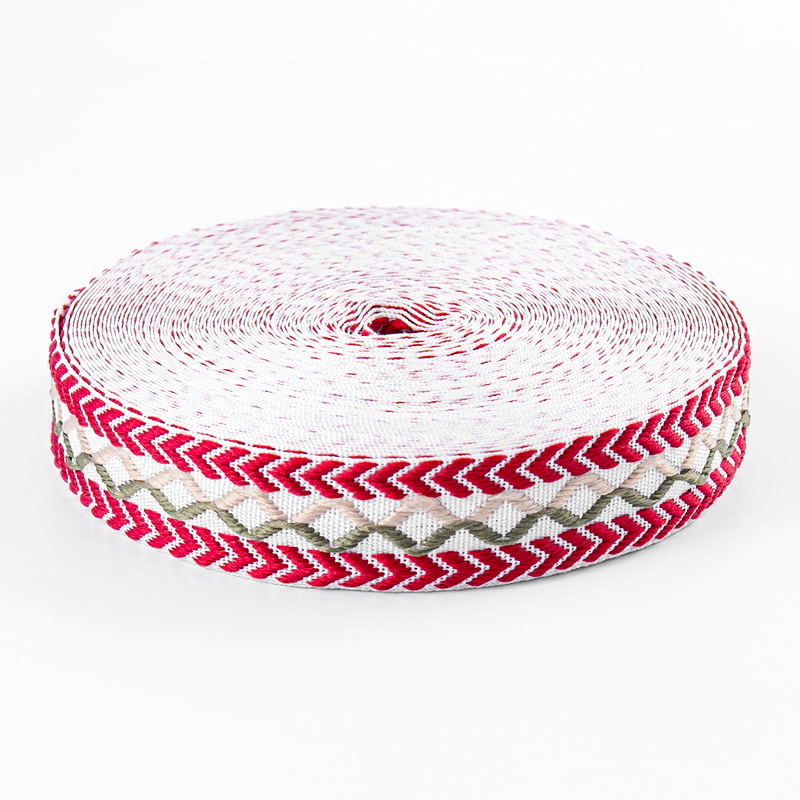
Jacquard needs its own note. Pattern floats are formed by lifting individual warp ends, which lowers local density and softens the load path, so jacquard webbing is specified for appearance and hand feel rather than maximum tension. That trade-off is acceptable in furniture trim, bedding and apparel accessories, where a decorative band rarely carries more than a few kilograms.
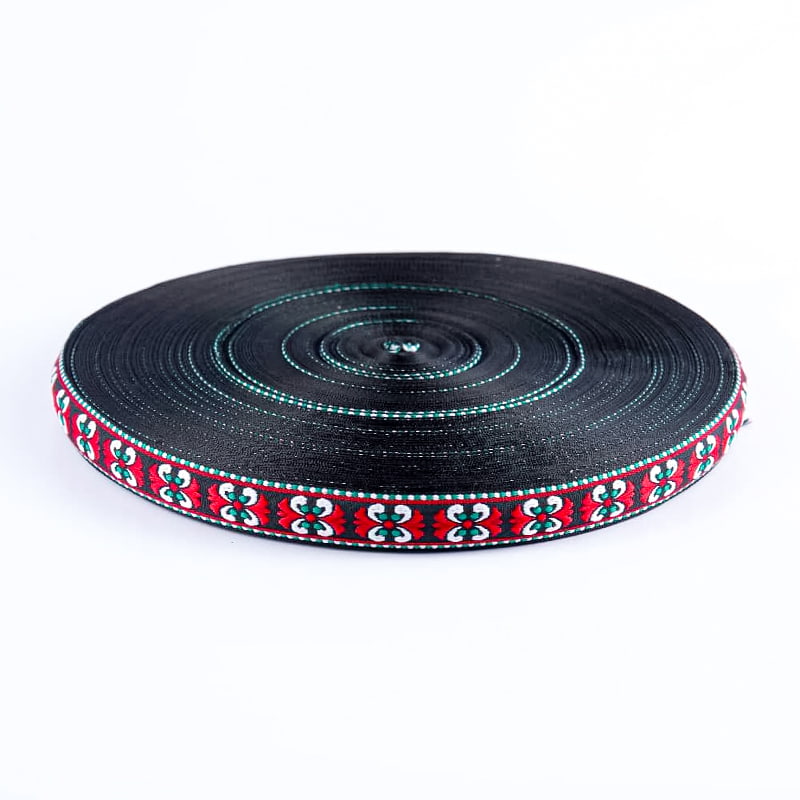 2.5 cm Ethnic-Style Jacquard Polyester Webbing for Decorative UseDecorative 2.5 cm polyester jacquard ribbon for furniture trim and apparel accessories, offering custom ethnic patterns and hand feel rather than maximum tensile strength.View Product →
If a quotation for 25 mm webbing arrives without a single question about weave, yarn tenacity or warp density, treat the figure as a placeholder. The full loom sequence, from warp creeling to finishing, is set out in this woven webbing production breakdown.
How Much Load 25 mm Woven Webbing Really Holds
Width is not a strength rating. At 25 mm, commercial woven webbing typically breaks between 600 kgf and 1,600 kgf, and that spread comes from fibre, yarn tenacity, warp density and thickness rather than from the tape measure.
1,600 kgfNylon 6.6, tight plain weave
1,300 kgfHigh-tenacity polyester, plain
620 kgfPolypropylene tubular, hollow
Typical breaking load, 25 mm woven webbing
Nylon 6.6 1,600 kgf
Polyester HT 1,300 kgf
Jacquard PET 950 kgf
PP flat 750 kgf
PP tubular 620 kgf
Bands assume 1.1 mm to 1.3 mm thickness. Values shift with yarn lot and test method.
Those figures describe 25 mm webbing at roughly 1.1 mm to 1.3 mm thickness. Move a single variable and the number moves with it: stepping down from high-tenacity to standard polyester yarn removes a large share of the breaking load while the price falls far less.
Two webbing quotes can only be compared when both state the test standard, the gauge length and the jaw speed. Breaking load measured over a 200 mm gauge is not the same number as a test over a 100 mm gauge on the same roll.
How to Write a Woven Webbing Spec That Every Supplier Quotes the Same
A repeatable woven webbing specification fixes six fields. Leave any of them open and the supplier will optimize it for price, quietly, somewhere in the yarn or the finish.
Fibre and yarn
Name the polymer and the yarn, such as polyester high-tenacity 1000D or nylon 6.6 840D. Denier and filament count drive both strength and cost.
Width and thickness with tolerance
Write 25 mm with a stated tolerance and 1.2 mm plus or minus 0.1 mm. Webbing is finished under heat and tension, so the finished size is the size on the drawing.
Weave structure and warp density
State plain, twill, jacquard or tubular, plus ends per 10 mm. Density is the strongest lever on breaking load at a fixed width.
Strength and elongation
Give a breaking load in kgf or newtons plus elongation at break, and tie both to a method such as ASTM D6775 or ISO 13934-1.
Colour, finish and fastness
Add the colour reference, the crocking grade and the UV requirement. A grade 4 colourfastness minimum removes most disputes before they start.
Roll length, packing and delivery
Roll length, core size, carton marking and the delivery window belong in the specification, not in a separate email thread.
Four fields are left blank more often than the rest:
- Edge finish: hot-knife, ultrasonic or woven selvedge, which decides fraying after cutting
- Elongation at break, without which a webbing can pass on strength and still creep under static load
- Colourfastness to crocking, the usual source of complaints from apparel and furniture buyers
- Roll length tolerance, which controls how much usable webbing actually arrives
Fibre Choice for Woven Webbing: Polyester, Nylon, Polypropylene and Cotton
Polyester carries most woven webbing volume because it keeps its strength when wet and holds colour under UV better than nylon. Nylon 6.6 wins where abrasion resistance and elasticity matter. Polypropylene is the lightest and cheapest option and the weakest under sunlight. Cotton is chosen for hand feel, printability and dye uptake, not for load.
| Fibre | Wet strength | UV resistance | Abrasion | Relative cost | Best fit |
| Polyester (PET) | Excellent | Good | Good | 100 | General purpose, outdoor, luggage |
| Nylon 6.6 | Excellent | Moderate | Excellent | 130 to 160 | High abrasion, elastic webbing |
| Polypropylene | Very good | Poor | Moderate | 70 to 90 | Light trim, printed hollow webbing |
| Cotton | Lower when wet | Moderate | Moderate | 95 to 120 | Hand feel, dyeing, pet leads |
The polyester versus nylon decision usually comes down to service environment rather than unit cost. A lead that lives outdoors in strong sun will outlast its warranty in nylon; a strap that rubs steel edges every day will fail in polyester. The trade-offs are worked through in this polyester versus nylon webbing analysis.
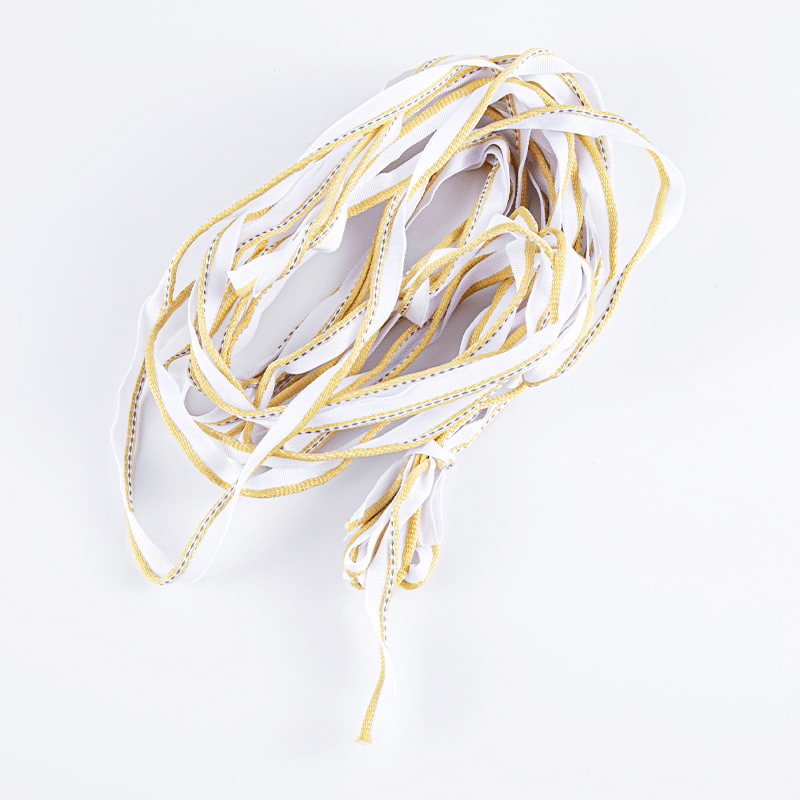
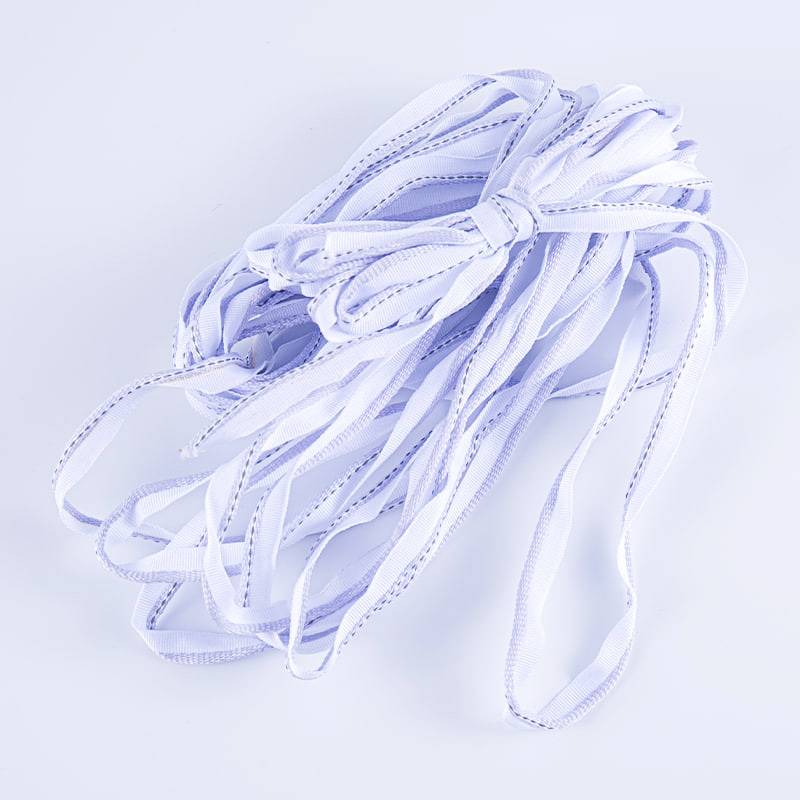 1.0 cm High-Density Polyester Reflective Tape for Clothing AccessoriesNarrow reflective polyester webbing with high-density woven construction, abrasion and weather resistance, useful for clothing accessories and nighttime visibility where edge durability and safety matter.View Product →
30%
Raising warp density from 90 to 130 ends across a 25 mm body can add roughly 30 percent to breaking load in the same polyester yarn. It also adds yarn cost and weight, which is why the cheapest quote is almost always the looser weave.
Where Woven Webbing Fails in the Field and How to Test for It First
Most woven webbing complaints are not tensile failures. They are edge and surface failures that appear after weeks in service: frayed selvedges, creep under sustained load, colour transfer and UV fading.
- Selvedge fraying after cutting, when a hot-knife or ultrasonic seal is missing
- Creep, where webbing holds its breaking load but lengthens slowly under a static load
- Colour transfer onto light garments and upholstery, usually a crocking grade problem
- UV fading and embrittlement on outdoor polypropylene, visible within one summer season
- Weft slippage in low-density jacquard, where pattern floats let yarns shift under abrasion
Before releasing a production run, request a 5 m sample woven on the actual loom with the actual yarn lot, then test it the way the product will be used: cut the edge the way the factory cuts it, sew the seam the way the assembly line sews it, and cycle it at working load rather than breaking load.
Pet products show the pattern clearly. A 25 mm twill webbing for dog collars can pass a straight tensile test and still fail at the seam after months of daily walks, because twill stretches more than plain weave and the seam takes the wear.
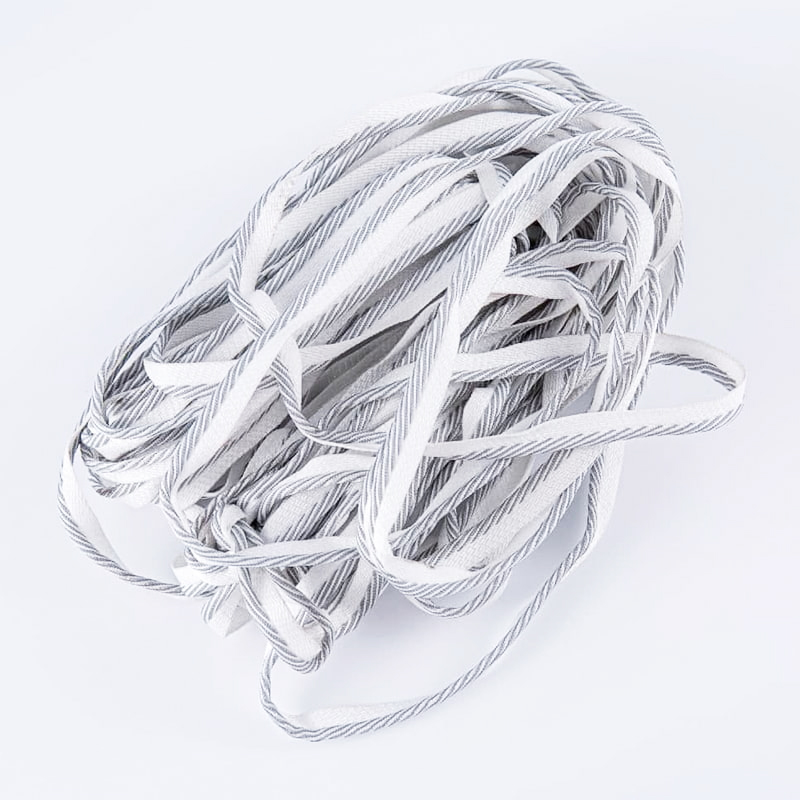
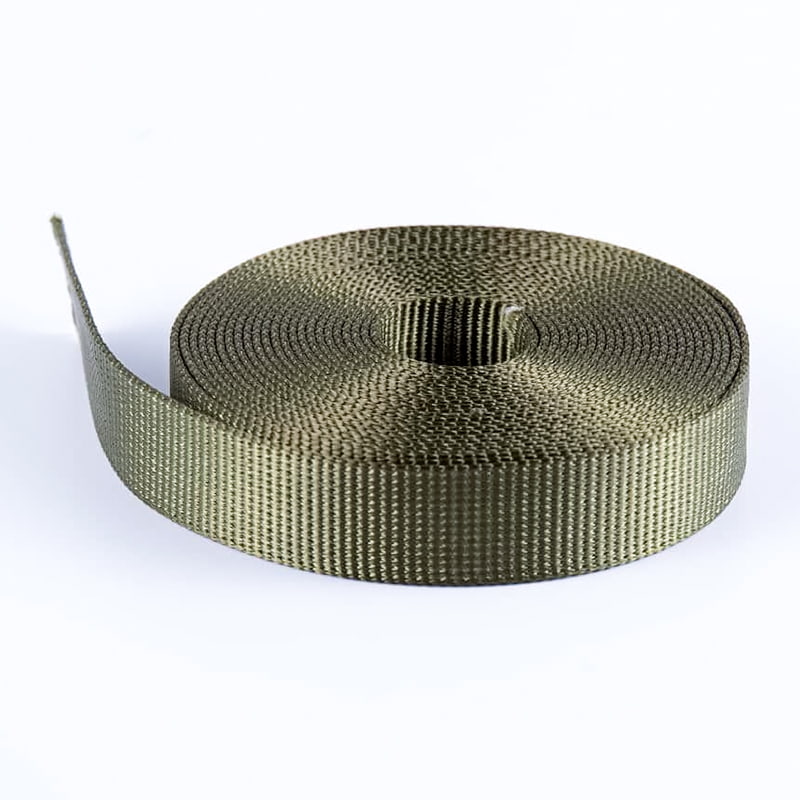 2.5 cm Polyester Twill Flexible Webbing for Dog CollarsFlexible 2.5 cm twill polyester collar webbing with antibacterial, anti-fouling treatment and sealed edges, built for pet comfort, durability, and easier cleaning.View Product →
Woven Webbing FAQ
What is woven webbing made of?
Woven webbing is made from warp and weft yarns of polyester, nylon, polypropylene or cotton. Polyester and nylon dominate load-bearing applications, polypropylene dominates lightweight printed and tubular webbing, and cotton is used where hand feel and dye uptake matter more than tension.
Is woven webbing stronger than knitted or braided webbing?
For a fixed width and fibre, woven webbing generally carries more load with less stretch than knitted elastic, because warp yarns run straight and continuous through the fabric. Braided constructions can match woven strength in cord form, but they are not woven webbing and are specified differently.
Which fibre should I choose for outdoor woven webbing?
Choose solution-dyed polyester for anything that spends its life in sunlight. Polyester resists UV degradation better than nylon 6.6 and keeps its strength when wet, while nylon remains the better answer where abrasion and elasticity dominate and the product is stored indoors.
Does woven webbing shrink during dyeing and finishing?
Yes. Warp shrinkage of a few percent is normal through heat-setting and finishing, so the specification must state finished width and finished thickness. If the drawing quotes greige width, the delivered roll will be narrower than expected and the tensile rating will be measured on the wrong dimensions.
Every dispute over woven webbing traces back to one missing line in the specification. Fix the weave, the density, the tolerance and the test method, and the price conversation becomes a product conversation.