English
  中文简体
中文简体 We are a national high-tech enterprise. At present, there are many kinds of self-woven and cooperatively processed fabrics, including microfiber warp-knitted towel cloth, weft-knitted towel cloth, coral fleece, etc.
Content
- 1 Polyester vs Nylon Webbing: The Short Answer Buyers Actually Need
- 2 Strength and Stretch: Where Nylon Takes the Lead
- 3 Water, UV and Temperature: Where Polyester Webbing Pulls Ahead
- 4 Abrasion, Sewing and Cost: The Factory-Floor Trade-Offs
- 5 Which Webbing Should You Spec for Pet Leashes, Bags and Outdoor Gear?
- 6 Frequently Asked Questions About Polyester and Nylon Webbing
Ask a pet-gear product manager about the strap return that still annoys them, and you will hear the same story: the leash looked identical to its rival on the spec sheet, then one wet coastal season stretched it out of shape and faded the woven logo. The strap was nylon. Its polyester twin, sewn on the same line with the same hardware, would have come back unchanged.
That scenario is the whole polyester vs nylon webbing decision in miniature: nylon delivers higher raw strength and useful stretch, while polyester delivers dimensional stability, water resistance and UV staying power. Neither fiber wins everywhere. What decides the purchase order is whether the strap's main job is absorbing movement or holding position through sun, water and years of cycling loads.
0.4%moisture uptake for polyester versus roughly4.5%for nylon under standard textile conditions, which is why soaked-strength tests separate these two materials so sharply.
Polyester vs Nylon Webbing: The Short Answer Buyers Actually Need
Polyester and nylon webbing are both continuous-filament synthetic straps woven flat on needle looms, but they fail in opposite ways: nylon soaks up water and typically loses 10 to 20 percent of its breaking strength when soaked, while polyester barely absorbs water, keeps nearly all of its strength wet, and stretches far less under the same load.
Core definition
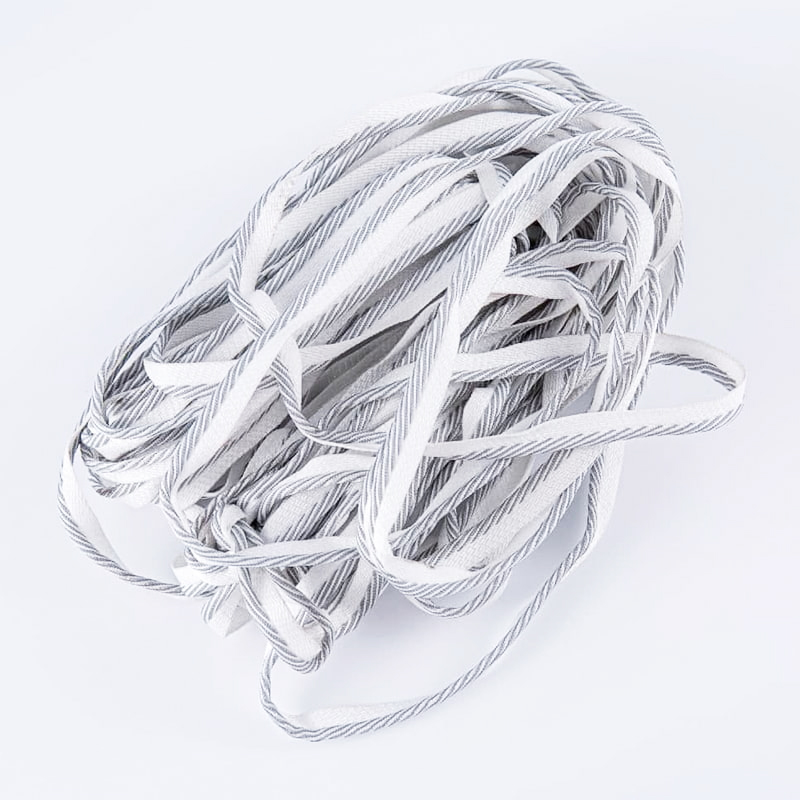
Webbing is a flat, tightly woven strap made from continuous-filament yarn. Polyester webbing uses PET fiber, which resists water and sunlight; nylon webbing uses polyamide fiber, which is stronger and more elastic but absorbs moisture and weakens when soaked.
Construction matters nearly as much as fiber, and experienced buyers price that in. A high-density jacquard, a twill and a double-sided overlock build woven from the same yarn will post different tensile numbers, edge-wear results and stitch holding. Compare finished-strap test data rather than fiber claims on a flyer, because the loom can erase or amplify a material advantage.
Strength and Stretch: Where Nylon Takes the Lead
Nylon is the load and shock material. In straight tensile tests, wide nylon webbing commonly rates a step above polyester of the same width and thickness, and its real advantage appears under sudden loads: the strap elongates and absorbs energy instead of transferring the shock to hardware and stitching.
4,000-5,500 lbstypical break strength, 1 in. nylon webbing
3,000-4,500 lbstypical break strength, 1 in. polyester webbing
20-30%typical elongation at break, nylon
10-15%typical elongation at break, polyester
Engineered stretch becomes a feature when you spec it deliberately. Towing slings, lifting bridles and energy-absorbing lanyards rely on nylon elongation to decelerate a load, and elastic jacquard bands built on nylon keep consistent recovery through thousands of stretch cycles, which is exactly what garment and bedding manufacturers expect from trim.
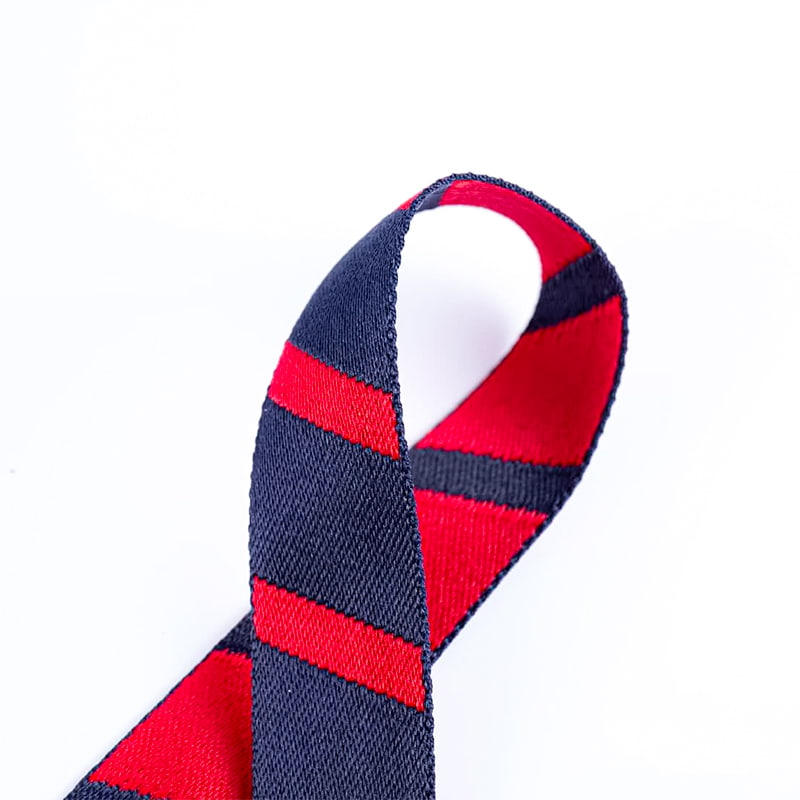
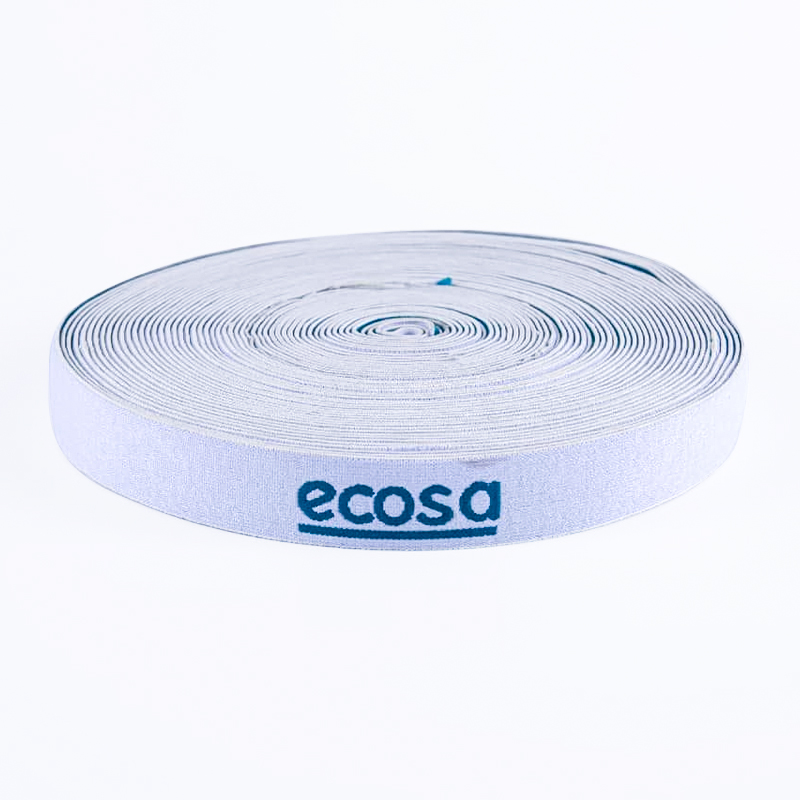 2.5cm Nylon High-Stretch Elastic Jacquard WebbingMade of nylon with computerized jacquard weaving, this 2.5cm elastic tape offers strong recovery, customizable patterns and wear resistance, fitting the stretch-and-recover trim needs described for apparel, bedding and sportswear.View Product →
If a strap must absorb movement, nylon is the honest choice. If a strap must hold position under sustained load, that same stretch turns into your warranty claim.
Water, UV and Temperature: Where Polyester Webbing Pulls Ahead
Polyester is the all-weather material, and outdoors the gap is not close. It absorbs almost no water, retains breaking strength when soaked, and keeps both color and tensile strength through sunlight exposure that will dull and degrade nylon within a single season of weekend use.
Fiber behavior in water, typical textile values
Moisture regain, standard conditions
Polyester
0.4%
Nylon
4.5%
Breaking strength retained when soaked
Polyester
100%
Nylon
87%
Typical published ranges; exact figures shift with weave density and finishing.
Temperature follows the same pattern. Polyester serves from roughly -40 F up to about 300 F in continuous use and melts near 500 F. Nylon 6 softens around 420 F, while nylon 6,6 approaches the upper polyester range. For gear shipping to marine, desert or alpine buyers, those margins decide warranty claims long before brochures do.
Sunlight and salt water are polyester's home ground. It is the fiber behind reflective outdoor trim, camping straps, cargo tie-downs and marine hardware.
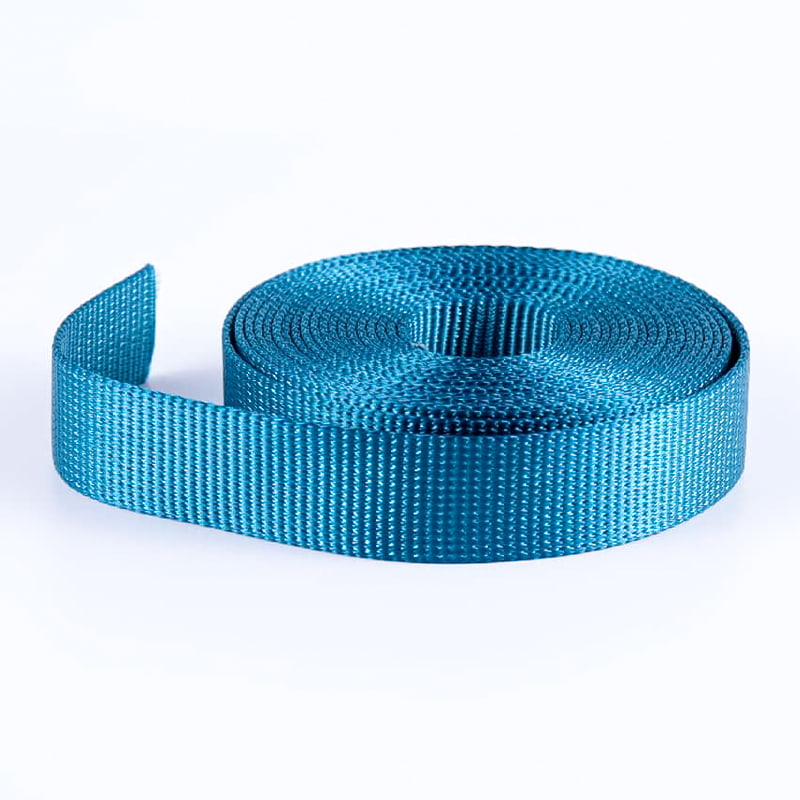
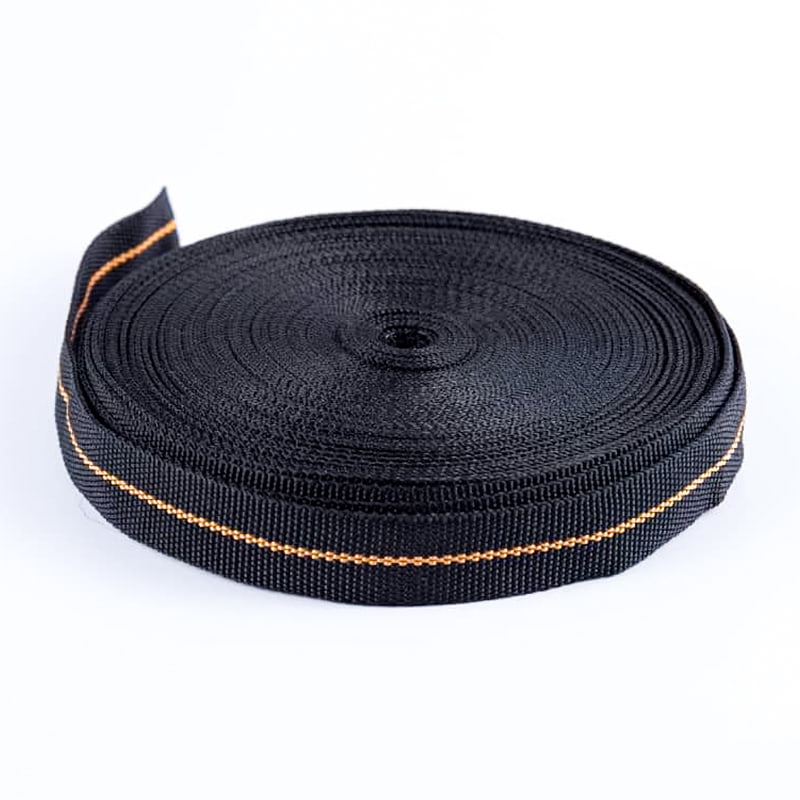 2.0cm Polyester Webbing for Outdoor and Industrial UseThis 2.0cm polyester webbing delivers high tensile strength, wear and UV resistance with stable wet strength, matching the surrounding discussion of outdoor straps, cargo tie-downs and cost-stable polyester for demanding service.View Product →
Abrasion, Sewing and Cost: The Factory-Floor Trade-Offs
Nylon abrades better, polyester sews cleaner, and polyester prices move less across petrochemical cycles. Those sentences decide more purchase orders than any datasheet column, because most straps in service fail from rubbing, seam slippage or a cost miss, not from a clean straight pull.
| Property | Polyester webbing | Nylon webbing |
| Moisture regain | 0.2-0.4% | 4.0-4.5% |
| Strength when soaked | near 100% retained | drops 10-20% |
| Stretch under load | low, holds position | roughly 2x higher |
| UV resistance | high, color holds | moderate, fades sooner |
| Abrasion resistance | good | excellent |
| Melting point | near 500 F | 420-500 F by type |
| Sewing behavior | stable feed, crisp stitches | needs tension control |
| Best fit | outdoor, marine, pet, cargo | shock loads, elastic trim |
The table also shows where the fibers nearly tie. Melt points overlap for nylon 6,6 and polyester, so heat alone rarely disqualifies either. Weave density, yarn denier and finishing shift finished numbers by a wider margin than the fiber choice itself, which is why sample approval, not catalog math, closes these orders.
TIP
Ask suppliers for wet break-strength and UV-aging results on the finished strap, then confirm pick count, width tolerance and edge treatment on the sample report before releasing the production order.
On the loom, polyester's low stretch makes fine jacquard friendlier: pattern edges stay crisp at high pick counts and logo clarity survives daily handling. Nylon's give has to be compensated in take-up tension, which is one reason elastic jacquard remains a specialty of its own.
Which Webbing Should You Spec for Pet Leashes, Bags and Outdoor Gear?
Match the fiber to the failure mode you can least afford, then let the application settle the argument. The mapping below reflects patterns in sample requests across pet, luggage and outdoor product lines.
- Pet leashes, collars and harnesses: polyester, for wet strength, low stretch and colorfast jacquard patterns that survive mud, rain and washing.
- Backpack straps and cargo tie-downs: polyester, because loads stay cinched without creeping longer through the day.
- Camping and outdoor equipment trim: polyester for UV exposure, with polypropylene hollow webbing as the budget option where weight and cost matter more than longevity.
- Elastic straps and stretch panels: nylon, the only practical choice when recovery and rebound are the product's core function.
- High-drag contact points: nylon, where the strap scrapes rock, pavement or hardware all day and abrasion sets the service life.
Where a SKU sits between the two, the fastest answer is two stitched samples run through a month of real use, not a longer spec debate. Factory-direct weavers such as Haining Fengrun Rope Weaving Co., Ltd. handle sample-based custom orders in custom widths, colors and weaves, which makes that side-by-side test cheap to run before committing a production run.
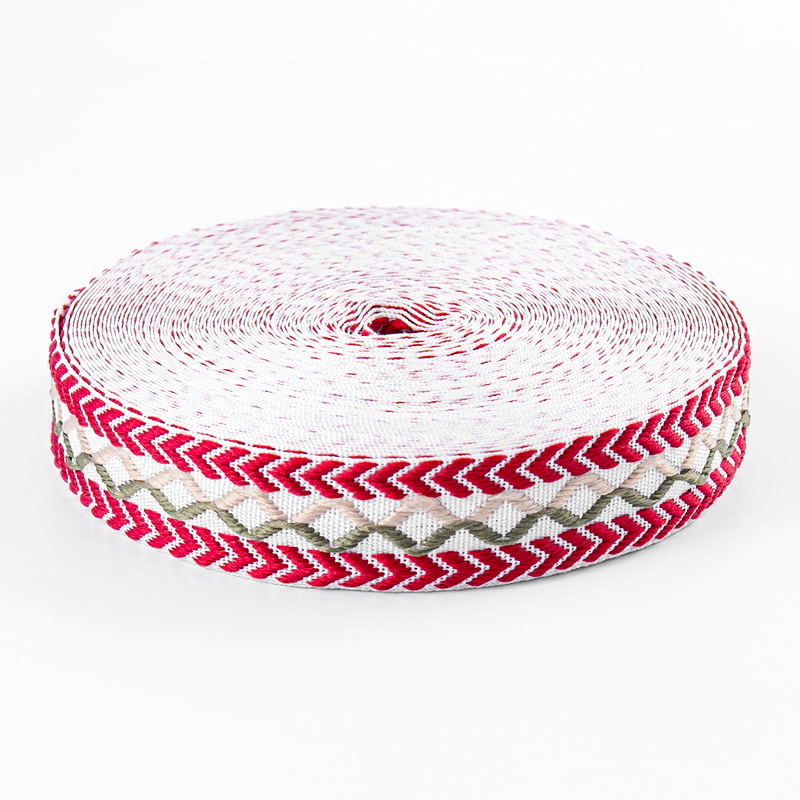
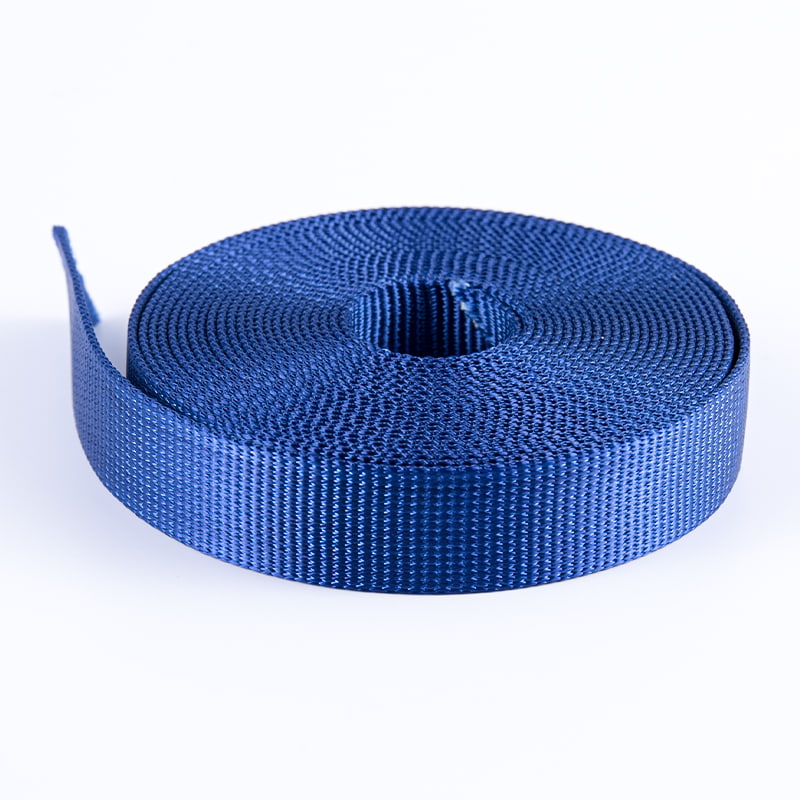 2.5cm Polyester Twill Webbing for Pet Leashes and BackpacksA 2.5cm twill-woven polyester webbing with low moisture uptake, UV and mildew resistance, plus EN71-2 flame retardancy, illustrating why polyester suits leashes and marine-style straps where wet strength must be retained.View Product →
Rule of thumb The strap should move: nylon. The strap should hold: polyester. The strap lives outdoors: polyester, every time.
Frequently Asked Questions About Polyester and Nylon Webbing
Does nylon webbing really lose strength when it gets wet?
Yes. Nylon absorbs roughly 4 to 4.5 percent of its weight in water at standard conditions and typically drops 10 to 20 percent of its breaking strength when soaked, recovering as it dries. Polyester stays near 0.4 percent moisture uptake and keeps essentially all of its wet strength, which is why leashes and marine straps default to polyester.
Which webbing is stronger, polyester or nylon?
In straight tensile tests, nylon of equal width and thickness usually breaks at a higher load, with typical one-inch straps rating around 4,000 to 5,500 pounds versus 3,000 to 4,500 pounds for polyester. Weave density and finishing can swing finished-strap numbers by more than the fiber difference, so judge test reports on the actual strap.
What is the best webbing material for outdoor use?
Polyester. Near-zero water absorption, full wet strength, high UV resistance and low stretch make it the default for pet leashes, cargo tie-downs, camping straps and marine applications. Nylon earns its place where shock absorption or engineered elasticity matters more than weather exposure.
Can I order both materials in custom widths and colors?
Yes. Webbing factories produce polyester and nylon straps to customer samples, including jacquard logos, widths from about 1 cm to 5 cm, and reflective or elastic constructions. Send a physical or reference sample, confirm tensile and colorfastness targets, and run a small pilot lot before scaling.
Still between the two? Order both versions of the same strap and put them through one month of real use. The fiber difference will announce itself.