English
 中文简体
We are a national high-tech enterprise. At present, there are many kinds of self-woven and cooperatively processed fabrics, including microfiber warp-knitted towel cloth, weft-knitted towel cloth, coral fleece, etc.
Content
- 1 What Counts as Colorful Woven Tape and How Color Enters the Weave
- 2 Material and Color Method Decide the Colorfastness You Actually Get
- 3 Width, Weave and Decorative Detail: The Specifications Buyers Argue Over Most
- 4 Where Colorful Woven Tape Sells Best
- 5 Colorfastness and Strength Numbers to Write Into the Purchase Order
- 6 From Lab Dip to Bulk: The Colorful Woven Tape Ordering Sequence
- 7 Quality Checkpoints Before You Release the Bulk Run
- 8 Colorful Woven Tape FAQ
A 25 mm colorful woven tape order rarely fails on the loom. It fails earlier, when a buyer approves a paper lab dip, the mill weaves to a yarn-dyed standard, and the delivered rolls read half a shade warmer under the shop's own lighting.
Colorful woven tape covers a far wider family of products than the name suggests. The same 25 mm band can be a yarn-dyed polyester jacquard for a dog collar, a solution-dyed polypropylene hollow tape for a camping strap, or a printed ribbon for seasonal packaging. Width, fiber, weave structure and the way color is introduced all change what the finished tape can survive in the field.
This guide sets out the specifications, the colorfastness figures and the sampling sequence that keep a colorful woven tape order on spec from the first lab dip to bulk delivery.
10-50 mm standard width band
4 fiber options in production
12 h weekday inquiry reply
Sample based custom runs
What Counts as Colorful Woven Tape and How Color Enters the Weave
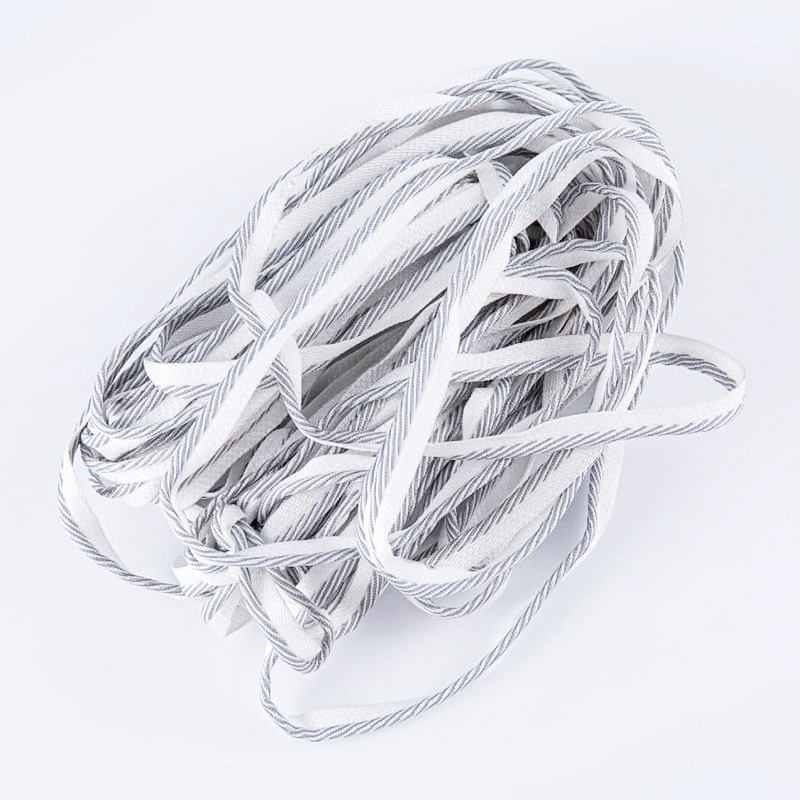
Colorful woven tape is a narrow woven fabric, most often 10 mm to 50 mm wide, in which the color is built into the weave with colored warp and weft yarns rather than applied as a surface print or a post-weave dye bath.
That single distinction drives every performance argument that follows. Four color routes dominate production:
- Yarn dyeing: warp and weft yarns are dyed before weaving, which delivers deep repeatable shades and the widest color-matching flexibility across reorders.
- Solution dyeing, also called dope dyeing: pigment is added to the polymer before yarn extrusion, so the color runs through the fiber instead of sitting on it.
- Jacquard color programs: several colored wefts are selected thread by thread, which is how stripes, dots, lettering and ethnic patterns are woven directly into the tape surface.
- Surface printing and coating: ink sits on top of a woven or hollow tape, which is the fastest and cheapest way to test a seasonal pattern before committing to yarn.
Definition: colorful woven tape is colored at the yarn stage, which is why the shade survives the abrasion that strips a printed layer within a season of use.
The distinction also shows up in the families a mill actually stocks: jacquard webbing, webbing for pet leashes, nylon webbing, polyester webbing and polypropylene hollow webbing. A buyer searching for colorful tape is usually looking for one of those five, and the choice of family matters more than the shade card.
Material and Color Method Decide the Colorfastness You Actually Get
Polyester and solution-dyed polypropylene hold color best, typically grade 4 to grade 4-5 on dry rubbing, while surface-printed tape usually lands between grade 3 and grade 3.5 and fades first under ultraviolet exposure.
| Tape construction | Color method | Dry rubbing grade | Where it earns its price |
| Yarn-dyed polyester jacquard | Dyed warp and weft yarns | Grade 4 | Apparel trim, bags, home textile borders |
| Solution-dyed polypropylene hollow | Pigment in the polymer | Grade 4-5 | Outdoor, camping and pet gear |
| Printed polypropylene hollow | Surface print on hollow tape | Grade 3-3.5 | Seasonal patterns, promotional trim |
| Nylon elastic jacquard | Dyed nylon with elastane | Grade 4 | Pet leashes, adjustable straps |
| Reflective polyester tape | Colored ground with retro-reflective yarn | Grade 4 | Visibility trim and safety clothing |
Rubbing grade is only half the story. Outdoor tape usually fails on light exposure before it fails on rubbing, so request a light fastness figure in hours alongside the rubbing result.
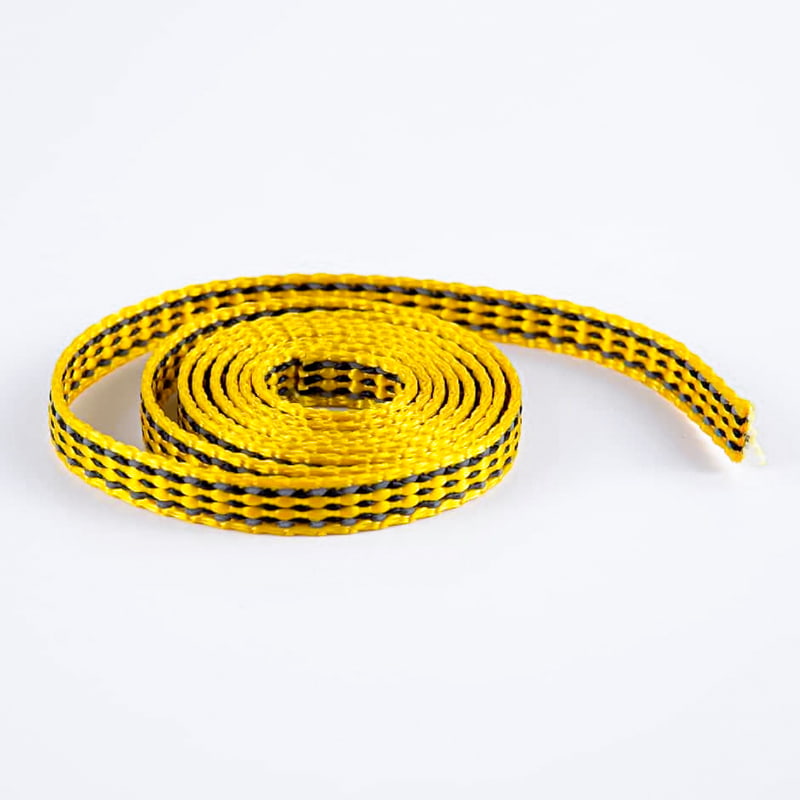
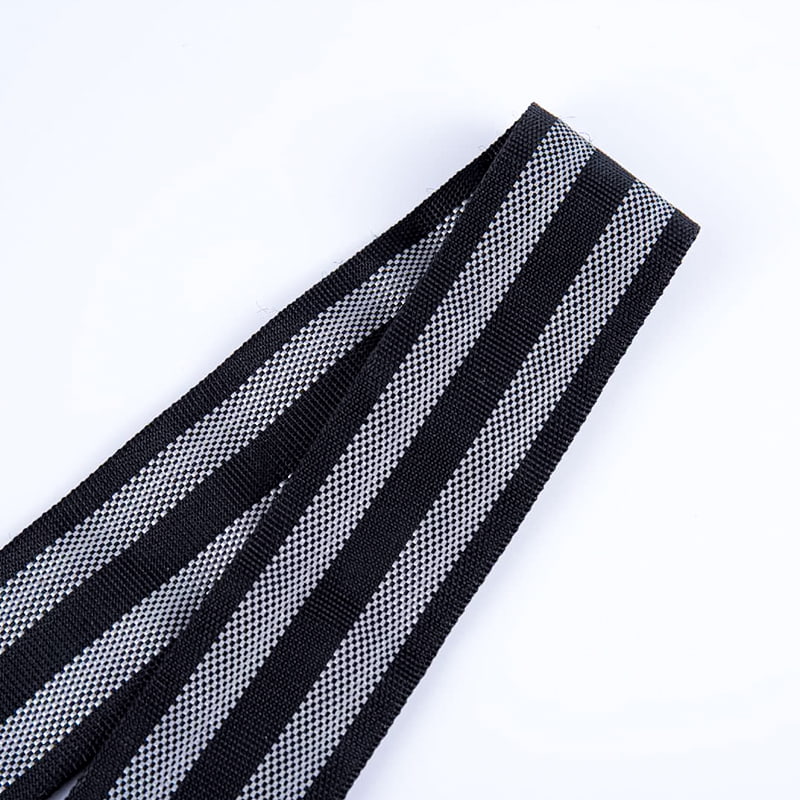 Reflective Hollow Polypropylene Webbing for Sports and Camping GearThis hollow webbing combines reflective visibility with breathability for sports and camping details; lock width and weave before sample approval.View Product →
Width, Weave and Decorative Detail: The Specifications Buyers Argue Over Most
Width and weave structure trigger more rework than color does, so lock both before you approve the first woven sample. The standard width ladder is short and predictable:
- 10 mm: pet grip leashes, zip pulls, cord edging
- 15 mm: pet training leashes, apparel piping
- 20 mm: bag handles, cargo straps, curtain tiebacks
- 22 mm: hollow outdoor tape and cable-knit structures
- 25 mm: dog collars, furniture trim, wardrobe straps
- 42 mm: apparel and footwear trim, camping straps
- 50 mm: packaging ribbon and decorative bands
Structure then decides hand feel and durability. Plain weave is fast and inexpensive, twill gives a denser diagonal face, jacquard carries the pattern, mesh adds breathability, double-sided overlock secures both edges for bedding and pet products, and hollow or tubular tape provides cushioning plus a broad print surface for outdoor gear.
Thread density is the second lever. A denser pick count produces crisper jacquard edges and cleaner small lettering, but a stiffer hand that shows on curved seams. Test the tape on the real seam, not on a flat table.
Decorative detail is where colorful woven tape earns its margin. Interlaced gold thread, two-tone mesh faces and coordinating edge colors lift a plain band into a visible design feature, which is exactly how decorative jacquard webbing straps move from commodity trim into a brand element.
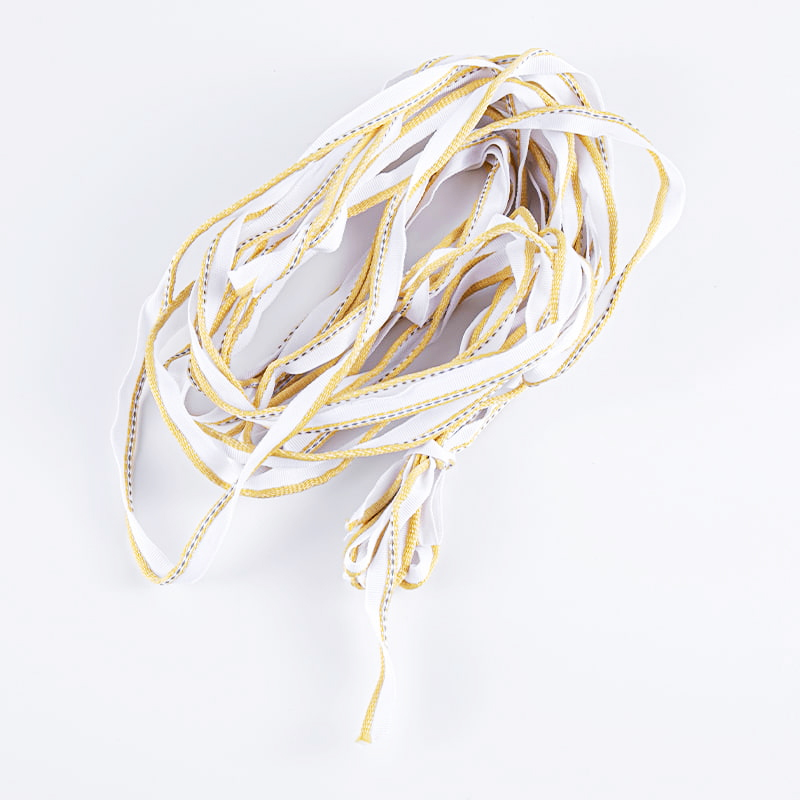
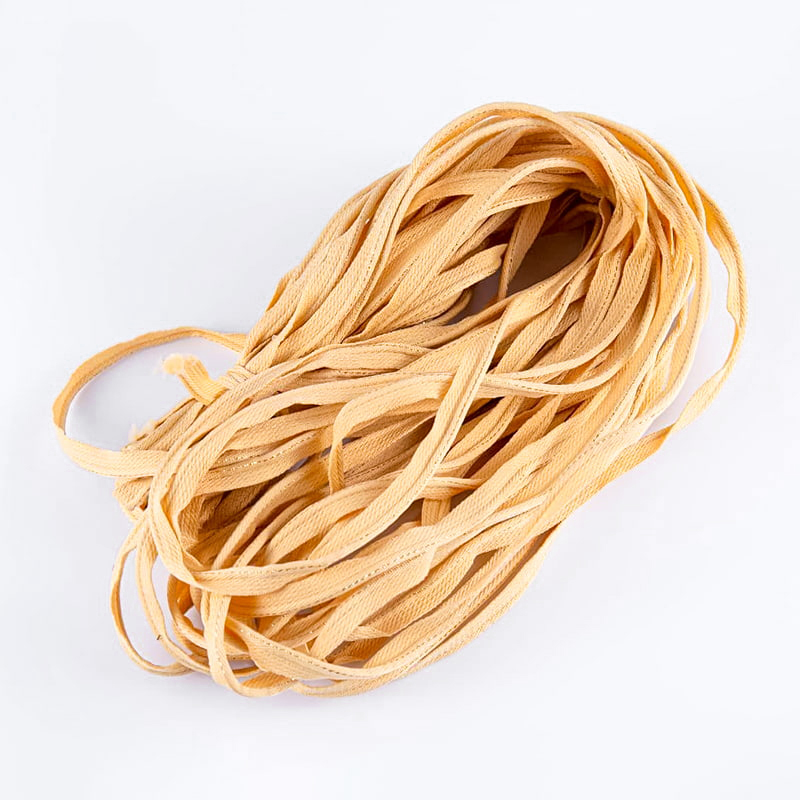 1cm Gold-Thread Polyester Webbing for Curtain and Home Textile TrimDecorative polyester webbing with gold thread for curtains and soft furnishings; its narrow 1.0cm width suits edging and high-end home decor.View Product →
Where Colorful Woven Tape Sells Best
Apparel trim, home textile and furniture, pet gear, outdoor and camping equipment, and packaging absorb the bulk of colorful tape production, and each one weights a different specification.
Apparel and footwear buyers care about shade consistency across sizes and about how the tape behaves under a needle. A 42 mm imitation nylon jacquard tape used on shoes and hats has to survive folding without whitening at the crease, which is a fiber and finish question rather than a color question.
Home textile and furniture buyers weight abrasion resistance and edge stability, because tape on a curtain header or a sofa frame is rubbed and pulled daily. Pet gear buyers weight tensile strength, elongation and visibility, with reflective and fluorescent options almost standard on training leads. Outdoor and camping buyers weight light fastness plus a waterproof fiber such as polypropylene, since hollow tape dries quickly and keeps its print.
The most useful early decision is woven color versus printed color, because it fixes cost, lead time and service life in one move.
Woven jacquard color
- Color lives inside the yarn, so it resists washing and rubbing
- Repeatable shades across reorders from retained yarn lots
- Higher unit cost and a longer path for new artwork
- Best for products with a two-year or longer service life
Printed or coated color
- Fastest and cheapest route to test a seasonal pattern
- Wide pattern freedom on hollow and tubular tape
- Surface layer wears first under friction and sunlight
- Exact shade repetition between runs is harder to hold
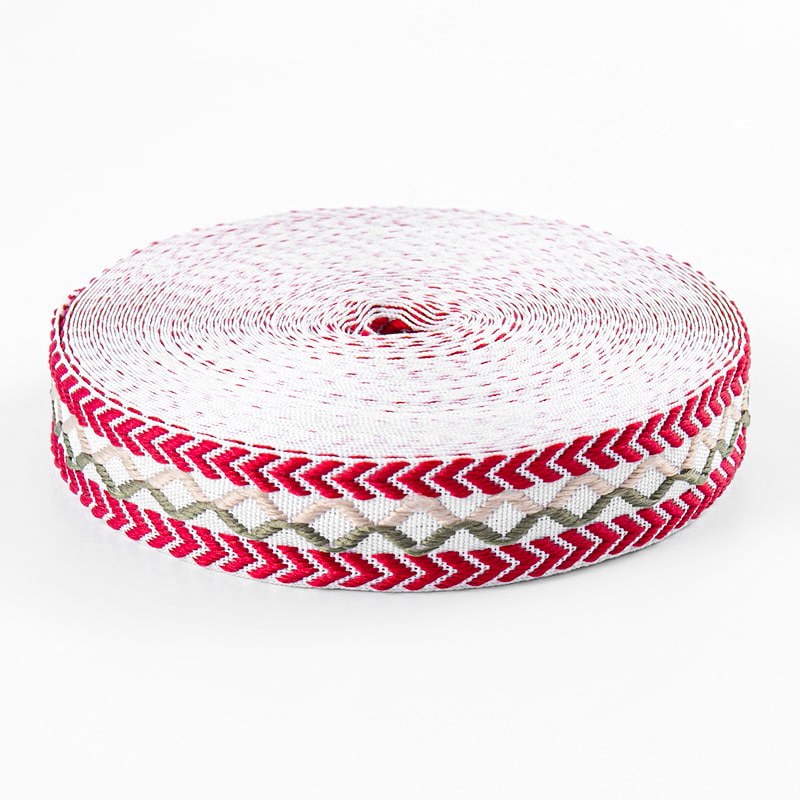
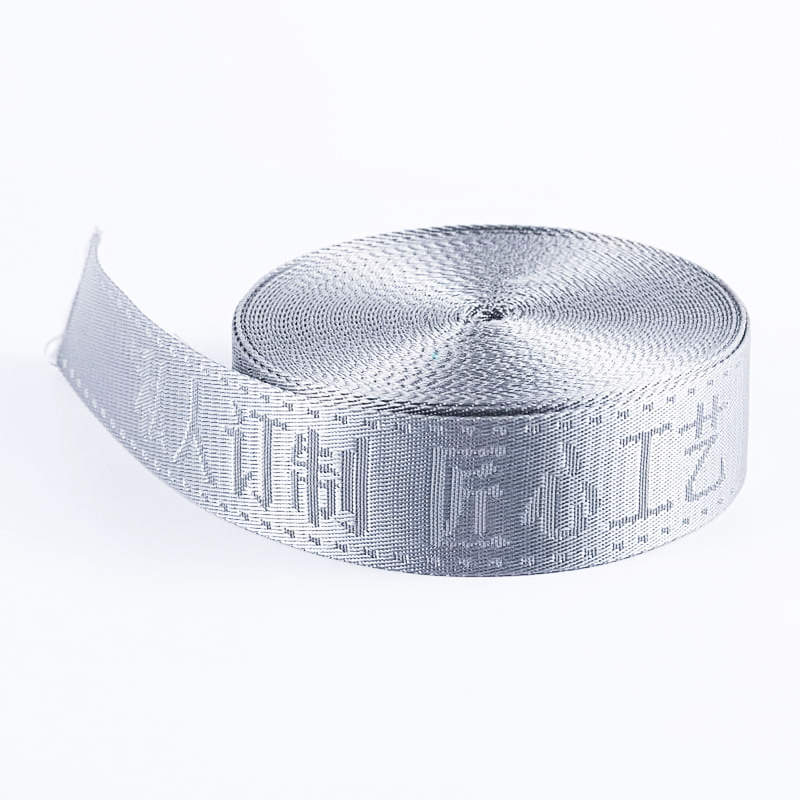 4.2cm Imitation Nylon Jacquard Webbing for Apparel and AccessoriesComputerized jacquard webbing with a decorative pattern for apparel, shoes, hats, and bags; define rubbing, light, and strength standards before ordering.View Product →
Colorfastness and Strength Numbers to Write Into the Purchase Order
Write four numbers into the purchase order: dry rubbing grade, wet rubbing grade, light exposure hours, and minimum breaking strength. A tape order without those four figures has no objective acceptance standard.
Typical dry rubbing colorfastness by tape type, grade 5 = best
Solution-dyed PP hollow 4-5
Yarn-dyed polyester jacquard 4.0
Nylon elastic jacquard 4.0
Gold-thread decorative tape 3.5
Surface-printed PP hollow 3.0
Chart: typical reported ranges by construction. Confirm against your own lab dip and a full-size production sample.
Strength figures depend on denier and pick count rather than on width alone. A 25 mm woven polyester tape in the 1.0 mm to 1.2 mm thickness band commonly breaks between 2.5 kN and 4 kN, so a specification that names width and color but not yarn count is not a strength specification at all.
Dimensional tolerance belongs in the same clause. Narrow woven tape is normally quoted at plus or minus 0.5 mm on 10 mm to 25 mm widths and plus or minus 1 mm on 42 mm and 50 mm widths, with thickness held to a similar relative band.
Key number: for pet and cargo applications, specify elongation at working load, not only breaking strength. A tape that stretches 12 percent under load makes an unstable tie-down even when its break point looks impressive.
From Lab Dip to Bulk: The Colorful Woven Tape Ordering Sequence
A colorful woven tape order runs through five gates, and skipping any one of them simply moves the risk into the bulk run where it costs more to fix.
Lock the specification sheet
Fix width, fiber, weave, target shade reference, thickness band, roll length and packing before any sample is made.
Request a lab dip and a woven sample
A dip on paper proves the color recipe. A woven sample proves the color on the actual structure, which is the only version your customer will see.
Confirm the pre-production sample under real light
Compare the sample with the approved reference under daylight and under the lighting used in your own facility, since fluorescent light shifts reds noticeably.
Approve the bulk with a signed standard
Attach the sample, the four performance figures and an agreed inspection level to the purchase order so both sides inspect against the same document.
Plan delivery and packaging
Confirm lead time, roll or spool format, carton marks and shipping terms early, because a color approval that arrives late compresses the production window.
Factories that run on sample-based custom orders handle this sequence routinely. Haining Fengrun Rope Weaving Co., Ltd. weaves polypropylene, polyester, cotton and nylon tape in Haining, Zhejiang, works directly from customer samples, and answers inquiries within 12 hours on business days, which shortens the round trips that stretch a color approval.
Quality Checkpoints Before You Release the Bulk Run
Six checks catch almost every colorful woven tape defect before shipment, and each one takes minutes on the inspection table.
- Measure width at the first, middle and last meter of three separate rolls, not once at the roll head.
- Compare the first roll and the last roll of the lot under the same light source for shade continuity.
- Run wet and dry rubbing tests on a finished piece, not on a raw off-loom strip.
- Inspect both edges for fraying, loose picks and overlock density on double-sided styles.
- Check elongation at working load for pet, cargo and safety tape, since break strength alone hides stretch.
- Verify roll length by weight against the declared meterage, because short rolls quietly reduce your yield per unit.
Retain one meter of approved bulk tape per color and keep it with the signed standard. It resolves most shade disputes on the next reorder faster than any colorimeter reading.
Colorful Woven Tape FAQ
What widths does colorful woven tape come in?
Standard production widths run from 10 mm to 50 mm, with 10, 15, 20, 22, 25, 42 and 50 mm covering the overwhelming majority of orders for apparel trim, pet gear, bags and packaging.
Is jacquard woven tape more colorfast than printed tape?
Yes, in most cases. Yarn-dyed and solution-dyed tape typically holds grade 4 to grade 4-5 on dry rubbing, while surface-printed tape sits around grade 3 to grade 3.5 and wears through its ink layer first under friction and sunlight.
How is a custom color matched across repeat orders?
Agree on a shade reference such as a Pantone TCX chip, keep a retained physical sample from the approved run, and hold yarn lots for repeat production. Accurate shade control depends on yarn lot discipline more than on any single color reading.
What information should a sample request include?
Send width, fiber, weave structure, shade reference, thickness and strength requirements, roll length, packing format and target quantity. A request with those eight items usually returns a workable sample on the first attempt.